Category: Family Survival

Activism to Prevent a Disaster?

Share
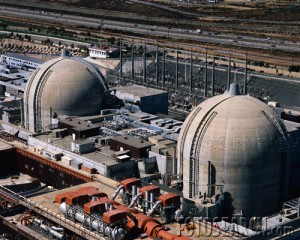
San Onofre Power Generating Station

“SONGS: Watch for Grand Re-Opening?”

We spend most of our time on how to survive a disaster, particularly an earthquake, since that’s the risk that’s highest on our Southern California list. However, there are other risks that emerge from time to time, and an active Emergency Response Team can make a difference by taking what can be considered political action.

Here is an example from this week from right here in my back yard!

San Onofre Nuclear Reactor was shut down in January.

Along with about 8 million other people, I happen to live within 50 miles of the San Onofre Nuclear Reactor, managed by Southern California Edison. Located on the California coast about midway between Los Angeles and San Diego, the plant has been closed since January. The reason? Leaks of radioactive steam from tubes within the generator – tubes that have been replaced within the past couple of years but are mysteriously degrading! No reason for the damage has yet been advanced.

Pressure is on to re-open the plant.

Since the costs of keeping the plant closed now exceed $300 million, Edison is eager to reopen it. In fact, a hearing to re-open the plant — at reduced power levels — is scheduled to take place later this week.

As a concerned citizen, I realize that San Onofre presents two real dangers.

  1.  First, if San Onofre is reopened with the same damaged tubes in place, radioactive leaks are bound to continue. “Safe to operate at reduced power?!” Give me a break!
  2. Second, San Onofre is located in a major earthquake zone. If it is hit by a power outage as a result of an earthquake, its weakened state plus a compromised cooling capacity could result in another Fukushima – with no realistic option for evacuation.

November 30, 2012 Meeting.

The Nuclear Regulatory Agency and Edison are holding a public meeting on November 30. It will be webcast live, and people can phone in to listen to the proceedings.

Action Item: find out more by attending the meeting virtually. Then follow up by submitting your questions or comments. For more information, head to http://video.nrc.gov (The meeting is labeled SONGS, referring to the San Onofre Nuclear Generating Station.)



CERT Doorhanger

Share
Bright yellow doorhanger captures attention

Doorhanger breaks preparation into four stages.

When it comes to being prepared, storing water and food are just the beginning. Unfortunately, many people stop there.

Our neighborhood CERT team wanted to get a better result. We researched and then broke preparation down into four stages to make it easier for people to get started building their emergency survival kit.

Our Doorhanger

Detailed instructions were published on a bright yellow doorhanger, distributed by the local block captain. Each hanger had the name and contact information of the  block captain, along with other emergency phone numbers.

The Process

Completing the four stages will take people several weeks. But they will be well prepared when they have accomplished it. Here’s how the doorhanger was laid out.

Stage One: Stay-at-Home Stash. Eleven things you and your family (including pets) need to Shelter in Place for at least a week. Superstorm Sandy showed just how important the Stay-at-Home Stash is.

Stage Two: Medical and Personal Care. These items – seven categories of them — will keep you alive and functioning. For senior citizens, this list includes spare glasses and hearing aid batteries.

Stage Three: Important Papers. Collecting papers and having them in one location, preferably protected from fire AND available to be moved, is the biggest challenge for everyone. Certainly, you can’t pull them together in just a few moments, and that may be all the time you have.  (We are working on getting electronic copies of important papers onto flash drives that would be easy to carry.)

Stage Four: Evacuation Kit. A bag or backpack contains items from the earlier stages, plus extra car keys, computers, etc.

Action Step for YOUR neighborhood

What would it take for YOUR neighbors to get prepared? You can download and duplicate excellent “Be Prepared” lists from the Red Cross, from CERT, and probably from your city.

We believe that customizing the message to our neighbors will make it more likely that they will follow through. Printing the list on a brightly colored door-hanger, instead of on a sheet of paper, makes it memorable. And delivering the message door to door is an important way to introduce and involve our CERT team.

P.S.  We’ll keep you updated on our progress!

UPDATE: It has been two years since the first Doorhanger was distributed. This year we updated, reprinted and distributed it again. So many people remembered it and still had the original in a drawer or on the refrigerator!


Keeping Your Car’s Gas Tank Full

Share
Cars trapped trying to evacuate

Evacuation nightmare!

It’s More Than a Convenience. It Could Be a Matter of Life or Death.

It used to be a far-fetched fantasy, this idea of evacuating a whole town or city. But after the New Orleans debacle most Americans – and many people around the world – have a vivid picture of the massive traffic jams and cars lined up as far as you could see in either direction on main highways and vehicle arteries. Gasoline and diesel fuel was at a premium . . . if it could be found anywhere.

Rule of Thumb

One rule of thumb in our household is to never let the gas tank on either of our cars fall below ¾ full when parked at home overnight. It doesn’t cost anything extra, but if we ever had to evacuate, the cars each have an emergency pack and extra clothes in the trunk and enough gas to get us at least 200 miles.

And, while “Shelter-in-Place” is normally the recommended action in our community, the full tanks and up-to-date maintenance on our cars are added peace of mind.

Driving After a Disaster 

Delays.  There are safety issues you need to keep in mind when driving the car following an event of major proportions.

First, of course, is to be aware of the condition of the roads.  Traffic lights are likely to be out.  Many streets could be blocked by debris, water or by emergency crews.  Bridges could be down.  Wherever you are headed, it could take hours and hours for you to get there.

Fire.  Second, your car could start a fire! The catalytic converter on most cars runs extremely hot and passing over dry grass or leaves can actually start a fire. Likewise, in many communities – especially where homes are close together – broken gas lines (a real possibility in a major earthquake) can leak gas up through the pavement, making vehicles passing over them a potential fire starter.

We Americans love our cars.  In an emergency, they may save our lives — or imperil us further.  Be prepared!

Joe Krueger
Your Emergency Plan Guide Team


Where to Get Free CERT Training

Share
CERT logo

CERT provides in-person and online training.

As we pointed out in a previous entry, you can access a list of CERT organizations by visiting the Citizen Corps website at http://www.citizencorps.gov/cert/ and clicking  on the box that says, “Find nearby CERTs.”  If you don’t find an organization nearby, you can start your own individual CERT training right now, online!

The CERT Basics Course, called IS-317, is made up of six modules (17 lessons). It can be found at  http://www.citizencorps.gov/cert/training_mat.shtm#IS317. There is no cost to take the training.

Here is a list of the modules and lessons:

Module 1: CERT Basics

Lesson 1-0: Course Overview

Lesson 1-1: CERT Overview

Lesson 1-2: Family and Workplace Preparedness

Lesson 1-3: CERT Organization

Module 2: Fire Safety

Lesson 2-1: Introduction to Fire Safety

Lesson 2-2: Fire Hazards in the Home and Workplace

Lesson 2-3: Safe Fire Suppression

Module 3: Hazardous Materials and Terrorist Incidents

Lesson 3-1: Introduction to Special Situations

Lesson 3-2: Hazardous Materials Safety

Lesson 3-3: Terrorism and CERT

Module 4: Disaster Medical Operations

Lesson 4-1: Introduction to Disaster Medical Operations

Lesson 4-2: Principles and Guidelines for Victim Care

Lesson 4-3: Disaster Psychology

Module 5: Search and Rescue

Lesson 5-1: Introduction to Light Search and Rescue

Lesson 5-2: Search Operations

Lesson 5-3: Rescue Operations

Module 6: Course Summary

Lesson 6-1: Finishing Up

While this on line training is good and something you want every member of your team to complete at a minimum, nothing can take the place of hands-on training where it is available.


The Fire Next Door!

Share

It could have been so much worse.

We had an emergency in our neighborhood this last week. Didn’t fall into the category of widespread disaster, but we are all still shaking our heads about “what could have been” if it had been a windy day…

House burning

A total loss

One of our elderly neighbors called AAA because her car wouldn’t start. She hadn’t used it in months. Well, AAA came, started the car, and suggested that the owner let it run “for a while.”

An hour later, she had fallen asleep. And that car, parked right alongside the house, was beginning to smoke.

Quick action by observant neighbors.

When the mailman came by, the car and carport were engulfed in smoke, and flames were licking at the house itself. About that time neighbors saw the flames, too, and called the fire department. The mailman pounded on the door and pulled the shaky and confused resident right out into the street. She was safe.

Meanwhile, the house was burning.  Three different fire stations responded to the 911 calls, as did a number of police cars.

By the time First Responders arrived…

By the time they arrived, CERT members had taken in the homeowner and called her relatives, and were clearing the streets of gawkers in order to allow ready access to the First Responders.  CERT training made it easy for these neighbors to act promptly and with authority!  The CERT team members didn’t save the house — even the fire department couldn’t do that — but the neighborhood was definitely safer as a result of their actions.

Action Item: Make sure all your cars are properly maintained, exercised on a regular basis, and always have at least a half-tank full of fresh gas in case you need to evacuate. This simple discipline will save your investment, and may well save your life.


Random Acts of Violence — Really Random?

Share
violence on campus

Emergency Evacuation

It may seem a bit off target here to deal with a crime that is outside of the strict definition of “terrorism.” To victims of mass shootings by deranged individuals however, it is as much an act of terrorism as any cause-motivated shooting.  This is true whether the act is perpetrated against co-workers or randomly-selected victims as in the case of the Virginia Tech shootings or the movie theater in Aurora, Colorado.

Less workplace violence than expected?

Perhaps surprising is the fact that workplace violence has not appreciably escalated in the past four years, despite the economic downturn and record unemployment.

But more violence in schools

What is noteworthy is the occasional outbreak of violence in public places and around schools — college campuses and more recently, on an elementary school campus.

While it’s true that few people in the movie theater in Aurora, Colorado had any opportunity to foresee the events that would unfold that fateful night in the summer of 2012, many people did know or “sense” that something was wrong with James Holmes. And there were warnings about Seung-Hui Cho at Virginia Tech.

Plenty of warnings

Still, most people likely were deterred from doing or saying anything by fear of civil lawsuits or being branded alarmists.

How to defend against this kind of violence?

It starts with co-workers and supervisors in the workplace. In the case of university communities, it starts with fellow students, teachers and administrators in close coordination with appropriate authorities. This is, of course no easy path to even a partial solution.

Education and an atmosphere of open communication without fear of reprisal are admittedly easier talked about than accomplished. They are elusive goals complicated by the fact that every environment is unique and has its own culture and circumstances.

The best advice is to stay tuned in to your surroundings and resist the temptation to ignore the danger signals.  If you can’t defend against this violence, know how to respond.

Run, Hide, Fight

The City of Houston, with the assistance of a Homeland Security Grant, created a 4-minute training video on how to survive an active shooter event.    You can view “Run, Hide, Fight” here:

http://youtu.be/5VcSwejU2D0?hd=1

CAUTION:  This video, although simulated, contains some intense scenes.  Prepare any audience, even your CERT or neighborhood team, before using it as training.


Your Team Will Save Your Life

Share

The Single Most Important Preparation Factor is Your Team

CERT team in training

CERT team practices for emergency response

Community Emergency Response Team (CERT) training is, in itself, only a beginning. The real value is in the “Team.” As we have pointed out previously, your neighbors and co-workers are the people you will be most dependent upon for life-saving assistance in a sudden emergency . . . and vice versa.

The more you act as a team, the better your chances of survival. The more people in your circle at work and at home have knowledge of the life-saving and recovery skills taught in CERT classes, the better everyone’s overall chances are. But, there’s more to being a team than shared knowledge.

Here is an overview of the steps to effective team building:

  1. Individual CERT training – If provided by your city or county, you are ahead of the game.
  2. Identifying and maintaining contact with other CERT trained individuals at your work and in your neighborhood . . . two different teams in most cases.
  3. Forming a core-leadership group – preferably 6-10 trained and motivated individual volunteers in each area (home and work).
  4. Building a basic Action Plan – The simpler you can keep it, the better. (We’ll be dealing with this step in much greater detail in future posts.)  Keep in mind that this is a “voluntary” activity and no one should be required to do anything or even asked to do something that will endanger them.
  5. Choosing activities people feel comfortable heading up – Key considerations are light Search & Rescue, Communications, Logistics, Planning & Operations, First Aid & Triage, Damage Assessment, Hospitality, Training, etc.
  6. Recruiting will be an ongoing process as people come and go in the workplace or the neighborhood. Training is a continuing activity to keep skills up and participants interested.

Maintaining the edge 

Once you have a plan and have divided up the operational tasks, recruitment and training become the biggest ongoing challenges. Your team — whether in your neighborhood or at work – will only be as effective as the level of skill, knowledge and commitment of the participants.

Overcoming resistence or lack of responsiveness

Don’t settle for lame excuses!

“I don’t have the time to participate, but I’ll be available to help in an emergency”

You’ll hear this from too many people. When disaster strikes, you won’t have much time or patience for training people.

Instinctive action by each member of the team is what will be required. Untrained people, well-meaning as they may be, are likely to be of little effective help.  In fact, they could become part of the problem rather than add to the solution.

Some of these people may be impossible to motivate and the best you can hope for is to get them to prepare themselves with enough food, water and medicine to take care of their own household or their business unit. At least that way they won’t be begging for food & water from their more pro-active neighbors.

Get all our team-building Advisories. Sign up below so you don’t miss a single one!


Triage — What the heck is it, anyway?

Share
Triage Card

Triage Card identifies status of victim.

Let’s Talk About Triage.

Whether it’s an earthquake, an industrial or major railroad accident, or a devastating weather event, there are likely to be a number of casualties. Where do you start to sort everything out, who needs help first, what sort of help do they need, who can wait?

Triage is the process of sorting out the severity of injuries and classifying people according to the urgency of their needs.

Some injuries will require only first aid. Some will require more sophisticated medical care and some critically injured will require immediate care to save their lives. And, unfortunately, some are beyond help.

Performing triage involves making the judgments and identifying each person with a color tag so that medical personnel can provide help on a priority basis.

Who performs triage?  Every member of a CERT group should be capable of performing triage. Yes, some training is recommended and, of course, we never know for sure how we will react in the face of a major tragedy so no amount of training can assure a team that its members will perform at 100%.

Where do you perform triage? Most often triage is performed on site or as close to the point of injury as safe or practical. The goal is to make the assessments before moving the injured to avoid compounding injuries by forcing movements that could make the injuries worse.

Request a Triage Decision Tree, available for download.


Easy Water Storage Plan

Share
Bottles of water

Essential to survival

Our bodies are made up mostly of water . . . something like 98%! That means that access to drinkable water following a major earthquake or other cataclysmic event is your most important link to survival. Unfortunately, many of the so-called “survival packs” of potable water are going to prove inadequate or distasteful in an emergency.

The 3-Day Water Window

Again, not to be boorish or monotonous, but we are not in the long-term survivalist camp. We’re focused on the 3-day to two-week window that it will take first responders, FEMA and relief organizations like Red Cross to get organized to provide real assistance to a distressed population. Therefore, we recommend a conservative approach to emergency preparations.

Weekly Rotation

Calculate the amount of water your household needs per day (don’t forget the pets), add 25% and set up a rotating supply of drinking (&/or cooking) water that you use and replenish on a weekly basis. That way, your water supply never gets old or stale. In our household, we keep three cases of bottled water on hand and we refill and rotate the plastic bottles on a regular schedule.

The Inconvenience Factor 

You may find this inconvenient and we wouldn’t argue with you. But, there’s nothing convenient about living through a tornado, an earthquake or any major calamity. And, there’s nothing convenient about being stuck across town or out of state for several days or a week or more and not knowing if your children at home have enough water to survive on.

We’re focused here on water for short-term survival. It’s so easy to ignore but procrastination is a lame excuse.

Joe Krueger
Your Emergency Plan Guide Team

P.S. Storing and finding water is a recurring theme here. You may want to check out these Advisories about water, too:

Heat Wave Kills

Share

Since we live in California, we are always thinking about earthquakes.  But the recent heat wave in the middle and eastern part of the US. reminds us that there are other emergencies, too – and they can be just as deadly.

Heat waves and storms go together.

Big differences between temperatures and air pressure create climate “events” that bring down electric power lines.  That stops electricity to refrigerators, to air conditioners, to fans. That’s what happened last week and that’s what killed some people.

Could they have done things differently?

Some of them could probably have found safer places to ride out the storm.  But most had no defense against the ultimate killer – the heat!

At night, no electricity means no light.  Unless you have flashlights or lanterns.  You can’t read, watch TV, cook, or repair things.  You are pretty much stuck where you are, not moving.

During the day, no electricity means no air conditioning. . . for day after day after day, and at night, too.

  • At home, you simply swelter.  Meanwhile, all your food goes bad because your freezer and your refrigerator are off.
  • Freezers and refrigerators at local stores are off, too, so they run out of supplies very quickly.
  • And roads, the lifeline for supplies, may be blocked by downed trees and power lines.

What would YOU have done?

Whether it’s high winds or heavy rain that took out the electric service doesn’t matter.  What does matter is whether people had water.

Water saves people two ways.


  1. When it’s hot, you need to drink.  Steadily, and a lot.  You can tell if you’re getting enough if you have to pee often, too.
  2. When it’s hot, you can spray or sprinkle yourself (your children and your pets) with water and let evaporation help keep skin temperatures down.

A couple of the people who died were hit by debris from the storm, or crashed because of rain.  But most of the casualties simply succumbed to too much heat and too little water.

Don’t let this happen to you!  Make sure you have water supplies at home and at work and enough to save someone else besides yourself. It’s the simplest preparation of all!

Battery Power

Share

Batteries! Gotta have ’em!

If you are suddenly separated from your electrical outlets, you are going to quickly realize that the only real alternative is whatever supply of working batteries you have on hand.  You will require them for flashlights, communications, computing and virtually any electrical tool or device you require . . . even entertainment.

Energizer Batteries

Winner in test

Batteries come in a wide variety of sizes and values.  Most of the batteries that power flashlights, portable radios, popular games, etc. are all rated at 1.5 volts.  The bigger they are, the more amps they can produce (amperage = direct current flow). You probably have a lot of devices that require the small AAA and AA sizes and some larger equipment that requires the larger sizes C and D.

What about rechargeable batteries?

If you’re tempted to rely on rechargeable batteries, you might want to consider the fact that rechargeable batteries don’t last as long as their disposable counterparts and what source of power will you use to recharge them if the wall plugs don’t work?

If the obvious conclusion is the purchase and storage of disposable batteries, how many do you purchase, what sizes and how long is their shelf life? The reality is that these batteries have a limited life span and you will need more of some sizes than others.

Winner in our 2012 battery test?  Energizer.

Batteries kept in electronic devices or stored on shelves will gradually lose their power.  Some batteries deteriorate faster than others.  We have tested various brands in our neighborhood C.E.R.T. organization over a ten year period.  The Energizer Brand seems to be the best for long-term use.  (We have never had any breakdowns).

The other major brand we used to use, Duracell, has proven unreliable over long periods. The casings break down over time and the leakage ruins the electronic device.  If you go with Duracell, be sure to check your devices frequently after a year of use.  Duracell also makes a premium brand that is used by police and fire departments that may prove more reliable, but they aren’t available everywhere and are more expensive.

Joe Krueger
Emergency Plan Guide

P.S. We regularly test batteries and update our findings. This Advisory was written in 2012. Head over to the SEARCH bar and plug in “batteries” to get the latest.

Defend Your Stash From Intruders

Share

Doomsday Preppers arm themselves for a total breakdown of society.

Guns for self protection

Protection against whom?

As we watch some of the reality TV programs on “Doomsday Preppers,” we are appalled at the extent to which many people go to arm themselves against anticipated attackers, looters and other lawless elements.  Some of these folks have virtual armories, full of weapons and ammunition they feel they will need to survive in a world gone mad . . . right out of Mad Max or the Postman, with a total breakdown of society!

Well, here at Emergency Plan Guide we’re not really preparing for that extreme situation.  Our objective is to help you and your neighbors prepare for the possible emergency that would be caused by an earthquake, a local or regional weather phenomenon, an industrial accident or even the unlikely event of a major terrorist attack.  You may have to take care of yourself and your family for a few days until adequate help can arrive.

Will there be looting or other lawless activity?

Perhaps.  But are your neighbors likely to pose a serious threat to your safety because they have been caught unaware and starving?  Probably not.

And even if you were to find yourself in a situation where you were to feel threatened, are you prepared to take another person’s life?

We’re not suggesting you shouldn’t prepare for this kind of eventuality.  That’s a decision you have to make for yourself, depending on where you live and other factors.

One way to minimize the risk . . .

What we are suggesting is that there are things you can do to minimize the risk of this happening.  You can distribute information about preparing for emergencies to the homes, apartment complexes and stores in your area.  In fact, the more successful you and your neighbors are in organizing a Community Emergency Response Team in your neighborhood, the more likely your neighboring communities will become interested . . . and at least take personal responsibility for their own preparations.

Joe Krueger
Your Emergency Plan Guide Team

As a quick distinction . . .

  • Survivalists plan to use their wilderness skills and ingenuity to live off the land for however long it takes.
  • Preppers plan to survive in the aftermath of an emergency thanks to the preparations they have made, using the supplies they have assembled.

Emergency Food and Water Supply – An Intro

Share

You have numerous choices in putting together an emergency supply of food, water and medicines.  You can purchase kits that include a year or more supply of freeze dried food or even MREs (Meals Ready to Eat).  And this kind of preparation may well fit your plan.  A lot depends on where you are located, the density of population in your “neighborhood,” etc.

Medicines for the family and pets take extra care. 

Medicine supply

Enough to last 10 days?

Of primary importance is your supply of medicines that members of the family (including pets) require.  Making sure that prescriptions are refilled promptly so that you always have at least two weeks worth of them on hand can be life saving.  Some prescriptions are timed to renew closer to the end of the supply so a discussion with your doctor or pharmacist may be necessary.

A realistic food supply. 

Before you go out and spend several hundred dollars on food packets that are likely to sit in a closet or on a storage shelf for months or even years waiting for a cataclysmic event, we suggest that you take a more practical, less expensive route and simply buy extra portions of the canned & packaged goods that you eat regularly and “rotate” their usage so that
you always have items with the longest shelf life on hand. 

Will it need cooking? 

Obviously, if these are to include frozen items, you will want to have an alternate supply of electricity, such as a gas generator available to run periodically.  Likewise, if chosen foods will require cooking, you will need a portable camp stove to use in preparing meals.  What you choose to “stock up on” will depend on your regular eating habits as well as your physical situation. 

Let’s not forget pets.

MREs don’t work too well for them. They are not likely to want to taste “pet MREs” any more than you want to eat human ones.  In fact, pets also may not be prepared to eat ANY new food. Keep that in mind as you pack food supplies for their emergency kits.

How much to store? 

How much of a supply you keep on hand is up to you.  Some foods have a shelf life of more than two years.  Many are best used within six to nine months.  We’re really focused on having a supply to last us for 3 to 10 days.  Anything longer than two or three weeks and we would expect outside help of some kind.  And a case in point – something of an embarrassing admission – we have a ten gallon container of dried foods that we purchased several years ago that is nearing the end of its useful life.  That turns out to be a not-so-good investment.  We’re not likely to replace it. 

If you are a serious and experienced survivalist, you will find these references to emergency food and water mighty simplistic. But if you have just begun to think about pulling together emergency supplies, it can be a start.

You’ll find much more detail on these topics right here in the Advisories. Just head up to the “search” bar at the upper right of this page, type in “water” or “food” or “pets” to get a lot more info!

Virginia
Your Emergency Plan Guide Team


Portable Power: Generator or Inverter

Share

Power for when the power goes out

Before you run out and invest in a portable generator (or two) “just in case,” it’s a good idea to figure out what you think you will need in the way of electric power. The operative word here is “need.”

This is NOT a casual purchase decision. The size and nature of your home, any special medical needs, your finances — all have to be taken into consideration when shopping for portable power. Your personal experience and level of knowledge about electrical circuits is also a factor.

Some portable power rules of thumb 

Because of the wide range of applications, variations in needs and technical considerations, we cover this subject in greater detail in our Personal Plan section. Basically, however, here are a few sample estimates as simple guidelines to a complex equation:

Refrigerator

When there’s no power . . .?

  • The average refrigerator will require up to 2kW (2,000 watts) to run by itself . . . but, you don’t need to run it consistently to preserve the contents.
    That depends on the age, size, contents, frequency of door opening and time door is kept open, etc.
  • Any heating device — microwave oven, coffee pot, hot plate —  will require higher wattage than lighting or computer needs.  Blow dryers, toasters and toaster ovens require at least 1 kW to operate.  Mechanical items like clocks or breathing devices that connect to oxygen tanks require far less power to operate.
  • Any generator over 2kW is not likely to be truly portable. An 8-9 kW generator had better have wheels and sturdy handles and will be about the size of a dishwasher, requiring real muscle power to move. And, if you live in California, a gasoline-powered generator must meet the California Air Resources Board (CARB) standards for emission in order to be legally sold or operated.

Inverters are a different technology.  They typically change the direct current from your automobile (or other 12 volt) battery into alternating current (115 volt AC) like the output of the portable generator. While they don’t require gasoline (or propane) to operate, the size and life of the battery sources will determine their usefulness.

How large a unit do you need?

Obviously, if you live in an apartment or condominium complex, emergency power is more problematic than if you live in a single-family home. Where will you store it?  How will you move it?

Businesses have widely varying degrees of emergency power needs — and the widespread inventory of laptop computers and handheld devices have to be factored into the business equation.

The bottom line is really dependent upon your personal, neighborhood and/or business needs balanced against your physical situation and financial resources. You should analyze all of the contributing factors – including the technical and practicality of operating instructions – before purchasing any alternative power device/s.

Joe Krueger
Your Emergency Plan Guide Team

If this topic interests you, you may also want to take a look at these Advisories:

Get all our safety updates by signing up below for free Advisories.