Author: Volunteer

Stay Safe in Hotels

Share

Summer may find you traveling to new places, and staying in new hotels.

Hotels have their own risks

. . . worth noting and being aware of.

Smoke in hotelFire:

High-rise hotels (or any high-rise building, for that matter) are vulnerable to fire. The causes? malfunctions in electrical equipment, carelessness, smoking (in bedrooms), temporary decorations for festivities, use of combustible cleaning materials, and, of course, arson and sabotage.

In a hotel, fire danger is increased because guests, people attending conferences, patrons at restaurants and bars, etc. probably don’t know the layout of the property and have no idea about security or emergency policies.

Terrorism:

Particularly in developing countries, hotels have become the popular target for terrorists. There are a number of reasons why.

  • Over the past couple of decades, embassies and military buildings have been “hardened” against attack.
  • Hotels remain areas where many people come and go, where entrance to the building is seldom restricted, and where politicians and other high-profile individuals are likely to be found.
  • Even when security is improved, by definition a hotel is a “soft target.”

If you are traveling and can make a choice about which hotel to stay in and where in the hotel to sleep or conduct your business, you may wish to consider these recommendations, culled from a variety of sources including the Stratfor Weekly, National Fire Protection Association, and Siemens Switzerland Ltd.

What to do to reduce the risks

Before you arrive

  1. Find out about hotel security. Is parking secured? Is the desk manned 24 hrs. a day?
  2. Ask about smoke/fire alarms and sprinkler systems. There is no guarantee that they will work, but if they are absent altogether, you may wish to look for another hotel.
  3. Choose a room between the 3rd and 5th floor, where terrorists can’t easily reach you from the street and fire department ladders can reach if you need to evacuate.
  4. Choose a room away from the street to avoid an explosion or violence at the entrance, which is where most terrorist activity occurs.
  5. On your floor, confirm the location of fire extinguishers. Have they been certified?
  6. Check on emergency stairs, exits and signage. Confirm that there are no items stored in stairwells.
  7. Keep emergency items next to your bed: shoes, a flashlight, and a smoke hood if you carry one. See below for more details.

If there is a fire in the hotel

  1. Grab your smoke hood and be ready to put it on if you smell smoke.
  2. Escape from your room if you can safely.
  3. Stay low and use walls as a guide.
  4. Use stairs; do NOT use elevators.
  5. Do not enter a staircase or hallway if it is filled with smoke. Try to find another path.
  6. If you must, stay in your room. Protect against smoke by sealing the door with duct tape and/or wet towels; stay low to the floor.

If you suspect terrorist activity

  1. Escape from the hotel if you can.
  2. If you are trapped in your room, protect yourself. Lock the door. Use a door wedge. If you can do it quietly, move furniture in front of the door for further protection. Turn off the lights. Turn off the TV and silence your cell phone. Close the drapes to protect from explosions that might create broken glass, and stay away from the windows. YOUR GOAL IS TO MAKE THE ROOM APPEAR EMPTY so terrorists will go on to an easier target.
  3. If terrorists are evident, and you cannot escape and cannot hide, you must fight. Improvise weapons with whatever is at hand – a lamp, a piece of furniture, a hot iron, a full water bottle, a battery charger at the end of a cord or in a sock, etc. In this case, your SURVIVAL MINDSET IS MORE IMPORTANT THAN WEAPONS. Fight, and don’t stop.

Emergency items for travelers

In this article we’ve mentioned just a few items that are recommended for travel safety. We haven’t used all of them ourselves, but it they make sense to you, check them out.

Door wedge

You may have a couple of these in the house already! Simple, small, easy to pack. Very effective at keeping any door closed — and you can get a couple of them for less than $10. Here’s an example from Amazon:

Shepherd Hardware 9132 Rubber Door Wedges, Brown, 2-Pack

If you’re traveling by car, you can also consider carrying a sliding glass door security bar. We always have one for peace of mind when we stay in hotels with balconies. Cost is right around $20. Here’s a link to a good one (no photo – I figured you know what a bar looks like!):

Master Lock 265DCCSEN Dual-Function Security Bar


Smoke hood

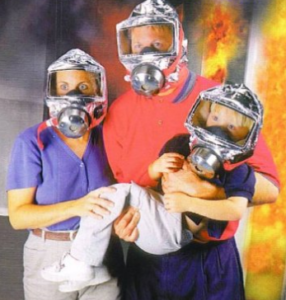
Rather like a gas mask, a smoke hood goes over your head and seals tightly to protect you from inhaling smoke. A filter allows you to breathe. Smoke hoods cost anywhere from $25 to $150 or even twice that, so you’ll want to shop carefully.

The filters in smoke hoods screen out particulate matter, fumes and gases. Unfortunately, the most deadly gas, carbon monoxide, can’t be filtered out. But carbon monoxide can be converted to carbon dioxide. Look for this feature in the smoke hoods you’re considering.

Other features to consider: How big is the hood — will it go over eyeglasses? Will it fit a small child? How good is visibility? Can others see you in the smoke? How long will protection last?

Here are three different models from Amazon, for comparison. Look at the photos (provided by the sellers) to answer some of the questions above. Click on the links to go directly to the detailed product page.

1 – FIREMASK
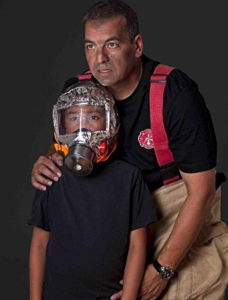
FIREMASK Emergency Escape Hood Oxygen Mask Smoke Mask Gas Mask Respirator for Industrial and Urban Survival – Protects for 60 Min Against Fire, Gas, & Smoke Inhalation . Great for Home, Office, Truck, High Rise Buildings. Get Peace of Mind 

Firemask

Firemask claims 60 minutes effectiveness. Of course, it is one-time use, replaced if you need to use it. Its Polycarbonate visor looks to provide good visibility.

Easy to put on, fits children as young as 3. Amazon low cost (as of today), $28.95.


2 – SAFESCAPE

Safescape ASE60A Fire Escape Smoke Hood Respirator Hard Case with Glow in the Dark Side Straps and Labels

safescape

From the photos and reviews, it looks as though the hood on the Safescape is bigger and perhaps more heat resistant than other hoods. The hard case can be mounted in a strategic place, and the glow in the dark strips would make it easy to find.  Any hard case might make packing a smoke hood more difficult.

60 Minutes of breathable filtered air. Easy to put on without special instruction.

Five year shelf life – Free Replacement if used in documented emergency.

Amazon price today: $69.95. Note that there is also a less expensive Safescape 30-minute hood.


3 – iEVAC

iEvac® the only American Certified Smoke/Fire Hood

ievac

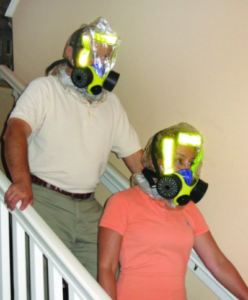
This is most expensive and heaviest of the three hoods here. Notice the reflective tape top and sides, which will stand out in smoke and darkness.

This hood is the only “certified” hood. It gets top reviews and carries some strong endorsements:

  • Designated as an Anti-terrorism technology by the US Department of Homeland Security Safety Act
  • Tested by the US Army Research, Development and Engineering Command, Edgewood Chemical Biological Center
  • Currently being used by numerous Federal, State and local Government Agencies including every branch of the Military

The iEvac costs $149.95 at Amazon (and more in other places).


Of course, you can’t avoid every potential danger when you’re traveling. But some simple, common sense preparations may make your trip a lot more comfortable and safer.

Virginia 
Your Emergency Plan Guide Team

If you actually live full-time in a highrise building, you may want to take a much closer look at what would happen if a fire broke out. Here’s an Emergency Plan Guide Advisory with more ideas.

 

Lies Your Employer Is Telling You

Share

Just a month ago we exposed some “lies” about FEMA coming to the rescue in an emergency.

Today it’s the turn of employers, and the lies they tell you and themselves.

The biggest lie?

“In an emergency, we’ll just work from home.”

Work From Home(Ha, ha! When you hear that, do you laugh along with me?)
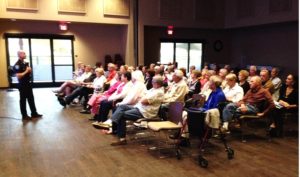
It’s not that working from home is impossible. Many of us do it, some on a regular basis.

The ridiculous part is thinking that in a disaster you can save the business by working at home without having designed an emergency plan to do it.

Granted, every company is unique. But when it comes to operating by working at home, your company needs to have thought through and come up with answers to some essential questions.

Here are 7 of the issues you’ll want to consider beforehand.

1 – Who makes the decision? Who will decide that there is a disaster and that employees should stay home?

Not every disaster is as dramatic as a hurricane or earthquake. Something as simple as a construction bridge collapse or partial power outage might not make the emergency airwaves, but still could mean your business is shut down. Who makes the call? (And how does the word get out to every employee?)

2 – Who assigns roles? How will employees be notified about the disaster, who should be working from home that day, and who should be planning to take the day off?

And will it be with or without pay?

Not every employee may need or be able to work from home. But to counter concerns about what’s fair, employees need to know in advance what emergency policies are, how they will be activated – and how that will impact their particular job.

3 – What functions need to continue? A company that’s prepared may be able to limp along for some time before it experiences serious damage. Which functions are vital for that interim period?

You’ll only know the answer to this question if you plan ahead. That planning will identify jobs that can be performed by employees working at home and will determine what resources they need to perform them.

Your planning will also identify which jobs need to be able to be performed by more than just one person – i.e., where cross-training is called for.

4 – What resources do we need? Doing research, drafting a report or even responding to business emails or calls may be easy for an employee on the road or working at home.

Other jobs, however – such as customer service, accounting, project management, etc.— may be difficult if not impossible for an employee who doesn’t have full access to company files, the right software and hardware, appropriate communications lines and phones, and a stable internet connection with plenty of bandwidth.

Which employees would need these resources to be able to keep YOUR company afloat? Who will pay to have these resources in place, or put in place?

5 – What security will be required?

It’s relatively easy to control security within your organization. This can include restricting entrance to certain areas of the plant, restricting access to different areas within the company network, restricting what people can download and/or take home with them.

In an emergency, information may need to be accessed or manipulated at many different locations, all of them away from the office. Electronic files may need to be shared; paper files may end up being transported in private vehicles; laptops and tablets may be put to use in coffee shops or who knows where.

What level of security do you need to consider to safeguard your operations (and, perhaps, to meet legal requirements)?

6 – Will employees be accountable? During the regular workday, it’s pretty clear who is working and who is goofing off.

Employees working at home may need to track their own hours and progress, actively check in, and make the decision when to call for assistance or approvals. Understanding employees’ level of self-reliance will determine, in part, whether or not they belong on the “work-at-home emergency response team.”

7 – What about Plan C? While working from home may seem to be a reasonable Plan B, back-up to an anticipated power outage or short-lived storm, by definition a disaster causes “great damage or loss of life.” The “work from home” Plan B may not be adequate!

What if a number of your key employees have had to evacuate their entire families and are not at home at all? What if employees are at home, but power is out there just as it is at the downtown office? What if employees are safe at home but your entire office, and all the files the employees need to connect to, are still standing in 12 inches of floodwater?

Plan C can take different forms.

  • Your Plan C might start, for example, with your committing some key operations and/or data to “the cloud,” which would make them accessible from anywhere by those displaced key employees. I found this overview of how small businesses might use the cloud for disaster recovery, from Network World.
  • It might include a contractual arrangement with a disaster continuity company to replace or restore your flood-damaged equipment within 24 hours. Agility Recovery Solutions, a company we’ve followed and written about for several years, specializes in recovering four areas for small business: office space, power, communications, and computers. (Check out their videos.)
  • Or Plan C might even require a service that is prepared to set up – or continually maintain – an off-site back-up office that mirrors your daily operation (a so-called “hot site”), where key employees could simply walk in and sit right down to work. You can get a good description of hot, warm and cold sites here.

As you may have gathered by now, Plan C could become costly! But . . .

If your Plan C keeps the business going, when otherwise it would collapse . . .

— well, then, you really must consider it.


This article is not meant to be a complete program for business continuity planning.

It’s goal is simple — to dispel the “myth” that working from home is an adequate back-up plan.

For most businesses, working from home will be a partial solution at best. Even then, it will require some serious pre-planning.

So don’t let your employer – and if that’s you, don’t let yourself! – be fooled by thinking, “We’ll just work from home.”

Virginia Nicols
Your Emergency Plan Guide Team

As they say on TV, “Watch this space.”  We’ll be back with another “lie” very soon! (It you don’t want to miss it, sign up below to get all our Advisories!)


Guest Speaker Sparks New Interest

Share

Our neighborhood Emergency Response Group meets pretty much monthly, but when we go for weeks and months without a fire, or an earthquake, or even a downpour, sometimes it’s hard to keep up members’ enthusiasm.

Last month’s meeting “hit the spot” with a guest speaker.

Training sessionWe invited the new head of our city’s Office of Energy Management. And since he is new to the job, we provided him with . . .

Some questions to start the discussion.

Here are his answers, with a few comments from me. You might be able to use these same questions for your own group, or for your own guest speaker representing an official position. In any case, even if it takes some research, your neighborhood group members should know the answers.

Q: What kinds of emergencies does the City prepare for?

A: Our City’s Emergency Plan lists 9 threats — natural, man-made and what we call “technological incidents.” It’s not just earthquakes; we could be hit by an airplane crash, a chemical spill, a wildfire . . . you name it.

Q: Who’s in charge?

A: When the City activates its EOC (Emergency Operations Center), which is part of the Police Department, all directions come from there. The EOC coordinates local, city, county, and even state and federal resources when necessary.

Q: How often is the EOC activated?

A: It wasn’t activated at all in 2015, which was unusual. In prior years it’s been activated for a major power outage and also for a big manhunt.  Training takes place regularly, though. We train using table-top exercises, functional exercises (testing one particular function, like evacuation or communication) and full-scale exercises.

Q: In an emergency, how will we residents know what to do?

A: If all communications are out, expect a delay before you hear from us. But you have a better chance of getting the news if you have a landline (for reverse 911 calls), an emergency radio (channel 1640), and have access to social media via the internet.  Both the City and the County have smart phone apps, too, that send out automated alerts and news.

Q: Should we turn off our gas if there’s an earthquake?

A: Use your nose as a sniffer! If you smell gas, contact the property manager or 911. In the case of multiple leaks, trained residents can turn off the gas to the whole neighborhood – but then you will ALL be without gas for days. In an earthquake, if there are multiple gas leaks, the real danger is fire, so do NOT start your car or otherwise cause a spark!

Q: What about evacuating?

A: Don’t go anywhere unless you’re told to by authorities.  Our City has a number of evacuation centers and depending on the emergency we will choose which ones to use. We also have vans filled with supplies stationed throughout the City. The Red Cross has a goal of having an emergency shelter set up within 2 hours, but in a large-scale emergency that goal is not likely to be met.

It will take a while to organize everything – so be sure you have what you need to take care of yourself at home. (Note from Virginia: In our neighborhood, the plan is Shelter-in-Place for as long as it takes. We will be better off in our own beds and with our own things if at all possible.)

Q: How long a wait should we plan for?

A: We ask that you have supplies for AT LEAST 3 DAYS. Enough for 7 days would be better. That means water, food, medicines, flashlights, warm clothing, etc., for you and your pet.  We recommend a gallon of water a day per person. (Virginia: We recommend 10 days to 2 weeks’ worth of supplies as being more realistic.)

Q: What about people with special needs?

A: Our city makes no particular plans for special members of the community because we can’t anticipate what will happen. If you are on oxygen, register with your oxygen company so you will be on their list. In a big emergency, it’s your neighbors who will be most able to help right away. Make friends! (Virginia: This answer wasn’t satisfactory. Watch for more in an upcoming Advisory.)

Q: What role does the Neighborhood Emergency Response Team play?

A: The City has free Community Emergency Response Team (CERT) training, and a number of people here have had that training. CERT graduates will have an idea  — and the SAME idea —of how to respond in an emergency: how to check on neighbors, assess damage, and manage communications. If you have taken the training, you will be safer yourself, and be able to step up to help.

(Virginia adds: Because our neighborhood team has its own ham radio station, it can listen in to emergency communications and actually report in on conditions here. Most neighborhoods won’t be able to do that.)

Q: How will we know what to report?

A: It all depends on having Block Captains who know their neighbors and know how to use their walkie-talkies to report in. You will always need more members of the team because you don’t know who will be here when an emergency hits.

Q: How do we find out more about CERT?

A: Contact the City.

Q: How do we find out more about our local group?

A: Contact your group leader to find out more.

At this point, we took over the meeting.

We passed out maps of our neighborhood, showing the Divisions, with the names and phone numbers of the Division Leaders. We introduced the Division Leaders. Our guest from the Police Department handed out some lists of emergency supplies and some brochures with general safety tips.

Then we adjourned to cookies and punch.

As follow up to the meeting we will publish notes similar to this Advisory, and contact some people who seemed interested in CERT training. (Unfortunately, our City’s classes are full for the next few months.)

A new face, even with the same message, helps a lot to keep up the momentum of your preparedness efforts. Who can you get to speak to YOUR group?

Virginia
Your Emergency Plan Guide Team

CERT Meeting IdeasP.S. If you have taken on the responsibility of planning meetings for your local group, you may want to take a look at the collection of CERT Meeting Ideas we put together last year. It has over 20 proven ideas with agendas, timing, materials needed, etc.

And stay tuned to Emergency Plan Guide, because we share our experiences — great and not-so-great — on a regular basis right here.


IEDs — Improvised Explosive Devices — In Your Neighborhood

Share

IED soda cansAs I pulled out into the street today, I noticed a cardboard box on the curb, with trash spilling out of it. It hadn’t been there yesterday.

Suddenly a thought flashed into my head – could this be a bomb?

I drove off and forgot about it until later, when two news reports practically jumped off my computer screen at me.

IEDs in the today’s news.

  • Fox News reported that two brothers in Pennsylvania were arrested for building and detonating multiple IEDs in their own community over winter break from college. (Nobody was injured.)
  • A completely different article mentioned that Eric Harris and Dylan Klebold, the two boys responsible for the Columbine High School attack in 1999, had built and placed 99 IEDs as part of their plan. (15 students were killed and more than 20 injured.)

Of course, we’re familiar with IEDs in wartime settings. For a few years that seemed to be the biggest part of the news coming from Afghanistan.

But that was elsewhere. This article is about IEDs here in the U.S. and about the importance of “situational awareness.”

If IEDs are so easy to build that kids can do it, we can only assume that more explosions will take place, just like the ones reported on today.

How can we protect ourselves?

We need to know more.

This advisory is meant only as the briefest introduction. We are not explosives experts and, unlike most of the equipment we write about here, we have not personally tested any of the items we may talk about.

The questions we asked today . . .

What is an IED?

The name says it all. An improvised explosive device is not a traditional military weapon. It can be made out of a combination of “found” and conventional materials. An IED has five components: a switch to set it off, an initiator (fuse or blasting cap), the charge or explosive, some sort of power source, typically a battery, and a container to hold it all.

The image at the top of this article includes a couple of regular coke cans and two IEDs – the soda can upper left whose bottom has been punctured and “resealed,”  and the yellow Fanta can with the battery power source and fuse stranding beside it, ready to be inserted (yellow can image thanks to Renful Premier Technologies).

The bomb can be set to go off using a timer, or when it is jostled, driven over or stepped on, remotely by radio frequency, or by a suicide bomber him or herself.

What does the IED do?

It explodes. Depending on the size of the bomb, its blast (with smoke, shrapnel and heat) can spread for 100’s of yards. A bomb aimed at bringing down people can be filled with nails, pellets, rocks, etc. to create more injuries.

Of course, an IED could as easily be filled with “dirty” radioactive material.

How can we recognize an IED?

Not easily. Of course, bomb detection technologies continue to be developed. They include machines – and dogs – that can detect traces of explosives in the air.

But everything I read, including several reports from Homeland Security, says that even security personnel can only look for:

  1. People exhibiting unusual or suspicious behavior (the guys in the airport each wearing just one glove!)
  2. Items where they don’t belong (an abandoned backpack – or that box of trash on the street by my house)

“Soft targets” of course will likely be the most attractive to bombers. These include landmarks, special events (like the Boston Marathon, or sporting events), infrastructure including transportation systems, and malls and parks.

All these are easy to get into, and often people are unfamiliar with the venue and thus will not notice things or people that are out of place.

What can we do?

In 2013 President Obama signed a special report: Countering Improvised Explosive Devices. The only paragraph in it that appeared useful to me was:

“[We must] Improve public awareness of IED threats and corresponding reporting of suspicious activity to local authorities through enhanced information sharing resources;”

So, the number one thing we can do is be alert to our surroundings, and report anything suspicious.

  • If we see something that feels or looks doubtful, has a weird smell, is leaking or dripping — report it immediately to authorities.
  • If we notice someone buying large quantities of what could be bomb-making supplies — chemicals, fertilizers, fuses, tape, peroxide — take note and report. (The Pennsylvania brothers purchased multiple cans of lighter fluid.)

Obviously, if you’re familiar with a given environment, you will be the best person to sense that something is out of the ordinary.

It’s the simple rule that our local police repeat often:

“See something? Say something!”

So, start paying more attention to your environment. Train your kids to get their noses out of their cell phones. This is a case where YOU have the biggest role to play for the safety of all.

Virginia
Your Emergency Plan Guide Team

P.S. I feel there is a lot more to this topic. If you are interested in more details, check out this recent article from Jan Glarum, counter-terrorism consultant and instructor:

http://www.abetteremergency.com/blog/2016/04/ieds-training-impact/

And the report from the Department of Homeland Security, quoted from above:

https://tripwire.dhs.gov/IED/resources/docs/Countering%20Improvised%20Explosive%20Devices.pdf


Emergency Radio Update

Share
Panasonic Emergency Radio

How old do you think this radio is?

Radios — The Most Popular Piece of Emergency Gear

More of our readers “invest” in emergency radios than in any other one piece of emergency equipment. (Makes sense, of course. Without a reliable emergency radio, when disaster hits you could be completely cut off. Without a good emergency radio, you may not even know that a disaster is COMING!)

Because of this interest, we continually comment on what to look for when you’re shopping for a radio. And we regularly update our Best Emergency Radios review page to be sure the radios listed there are still available.

So it’s time for yet another radio update.

Status of our long-time favorite emergency radio

The Ambient Weather Adventurer, original cost around $30, has been our favorite for a while. We own more than one, and many of our readers have them, too. It’s a great radio to tuck into your pack or simply have on the kitchen counter.

Bad news! This model seems to have been discontinued. Here and there online you can find one for sale, but their prices make no sense! I saw one yesterday at $281!

So we aren’t recommending this model anymore. (Maybe you want to try to sell yours for a profit???)

New favorite, the Eton FRX5

Eton makes several different radios, and the brand carries a number of labels including one from the American Red Cross.

The FRX3 costs about $10 more than the original Ambient Weather, and has most of the very same features.

The one we’re recommending today, though, is the Model FRX5.  It costs nearly twice as much, but for that you get double the power, more lighting options, the ability to charge a smart phone, capture localized emergency alerts, etc.

Here’s a link to the radio: Eton FRX5 Hand Crank Emergency Weather Radio with SAME Alerts

And here’s what it looks like:

This is a very compact radio, just over 7 inches tall and a couple of inches wide. It operates on battery, AC, solar and crank. In fact, this radio earned the best score in a recent test measuring how much listen time was created by 2 minutes of cranking. (In this case, something like 10-12 minutes.)

What I like is the SAME Alert feature — stands for Specific Area Message Encoding. You enter in your county and the radio will automatically send alerts for that area.  (Seems to me this would be essential in Tornado Alley of the U.S.!)

When you click the link above, you’ll go directly to Amazon. Scroll down to the bottom of the Amazon page for a full description of this radio, with several more photos.

First time radio purchaser? Get answers to 7 important questions.

If you haven’t yet added a radio to your survival supplies, check out the Eton model above. Just click on the blue link to get started.

If you have NEVER shopped for an emergency radio before, go first to our Best Emergency Radio Reviews page because you’ll find there the 7 questions you need to consider before adding a radio to your pack, or to the survival kit of any of your family members. And you’ll see a number of other radios that we have reviewed and recommend.

The radio we would upgrade to if we were flush

I’ve mentioned before that we have an old Panasonic shortwave radio. (Joe’s had it ever since we’ve been together, and that’s over 33 years now, so its age is something older than that!) That’s the radio in the picture at the top of this page. Joe was changing the batteries, which explains the red ribbons at the bottom.

We have hauled this radio from coast to coast and back again, and Joe loves it.

Yesterday Joe handed me a spec sheet for the radio he would LIKE to have. It’s also available at Amazon, and also made by Eton. As far as I am concerned, it certainly looks a lot like the old Panasonic (!), but . . .Joe assures me that it’s “the ultimate” in radio receivers. It gets AM, FM, Aircraft, Longwave and Shortwave bands, has a rotating antenna plus you can tune-in stations by keying them in or searching for them. You can actually store 1000 stations!

If you’re really serious about emergency radios, check this one out.

Alert – Prices for the SAME RADIO vary considerably. Shop carefully to get the best deal!

Eton Grundig Satellit 750 Ultimate AM/FM Stereo also Receives Shortwave, Longwave and Aircraft Bands – Black (NGSAT750B)

And doesn’t it look a LOT like the Panasonic collector item above?


You need at least one emergency radio, and probably several. The good thing about radios is you can select the features you need (for each use or each person) and not have to buy features you don’t want, and you’ll save by choosing carefully.

Do you already have an emergency radio? Would you recommend it?  Let us know in the comments!

Virginia
Your Emergency Plan Guide Team

Don’t miss any of our equipment updates. Sign up below to get our Advisories directly into your email each week.


Plastic Bags – Use or Reuse for Emergencies

Share

PlasticBagsToday I stuffed 20 or so plastic bags into one, so I can take them back to the store to be recycled. It’s amazing how many accumulate in just a couple of weeks – and we carry reusable shopping bags!
Be that as it may, I always keep some bags handy for emergency use! Here are 20 ways they can come in handy or even save the day!

And the best part? You can collect these bags and add them to your kit for free. (Or at least you MAY get them for free. A new law was just passed in California to ban free plastic bags . . .)

Keep out moisture

  1. Use a plastic bag to line your Bug Out Bag, to help keep it water proof.
  2. Use zip-lock bags for storing food, small items, cosmetics, etc. in your bag.
  3. Put a plastic bag OVER a backpack to keep out the rain.
  4. Turn a large plastic bag – like a trash can liner – into a rain poncho. Just make a slit along the seams for your head and arms.
  5. Use bags inside your boots to keep your feet dry.
  6. “Wear” underneath your clothes for extra insulation.

Protect from dirt

  1. Pull a plastic bag over your hand before picking up something dirty. Then just turn the bag inside out and dispose of it.
  2. Tie a bag over your face to keep out blowing dirt or sand. (Of course, don’t use thin plastic that clings for this!)
  3. A plastic bag can work as a diaper. (Why, I remember the earliest plastic diapers that I used on my daughter really weren’t much different!)
  4. Water out of order? Use plastic compactor bags in the toilet to capture waste. (These won’t likely be bags that are reused. But having a supply is essential for your emergency stash.)

Aid for First Aid

  1. Use zip-lock bags to store different first-aid supplies, keeping them clean and dry. You can pack full small bags into a larger bag for easier and more efficient access. (For example, pack gauze in one bag, band aids in another, tape and scissors in a third; put them all in one larger bag.)
  2. Fill a bag with ice and apply over an injury to keep swelling down.
  3. Turn a plastic bag into a sling.
  4. Tie a bag over a bandaged wound to help keep it dry.
  5. Somebody sick? Use a bag to catch vomit or diarrhea. Yukky, but better than having it spread all over the car or your living area.

Other smart uses

  1. A bag with no holes can be a temporary carrier for water, snow, berries, etc.
  2. Twist a bag or two together and use them as a belt or a carrying strap.
  3. Fasten a number of bags together end to end to use as rope. Braid several strands for more strength.
  4. Use a white bag as a signal or strips of bag to mark the trail.
  5. If an emergency keeps you trapped in the house, use trash bags – for trash! You can always dispose of it later.

As you’re packing your Survival Kit, use a few extra bags as padding, to cushion the sharp corners on tools, keep shoes separate, etc. That way you’ll always have some at the ready.

And one last note about the “secret ingredient”

Many of the ideas above would work a lot better if, in addition to the right sized bag, you have DUCT TAPE. (That’s an old roll in the image, above. Recognize it now?)

Use duct tape to close gaps, make sure the bags stay put, and even to seal them up when they’re full of waste.

These two essentials – plastic bags and duct tape — should be in every one of your kits. And the good news? They’re practically free!

Virginia
Your Emergency Plan Guide Team


Readers and friends send me ideas all the time. Don’t hesitate if you have one. And don’t miss ANY of them. Sign up below to get all our Advisories.


Has the Zika Virus reached your neighborhood?

Share

Like the Killer Bees, the Aedes mosquitoes carrying the Zika Virus have spread across the southern part of the U.S. and are steadily expanding northward.

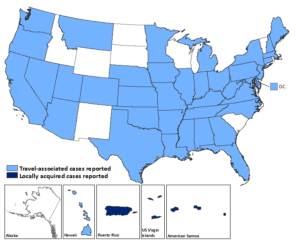
But people travel much faster than mosquitoes, and so the disease has outpaced the mosquitoes. Zika Virus MapHere’s a Center for Disease Control map (from April, 2016) showing where cases of the disease occur. UPDATE from December, 2016. Every state in the U.S. now has reported infections — a total of 4,756 in all!

So far, most of these illnesses are travel-associated.

But it is only a matter of time before the mosquitoes get here. In fact, because symptoms of the disease are typically mild and like those of a lot of other diseases, the mosquitoes may already be here and we just don’t know it because infections haven’t been reported.

Symptoms: fever, rash, joint pain and red eyes (conjunctivitis). People don’t get sick enough to go to a hospital, and rarely die. The concern, as we know, is for pregnant women, whose unborn babies may be affected.

So how to avoid bites from disease-carrying mosquitoes?

No matter where you live, or how old you are, here are three important steps to take to protect yourself and your family.

1 – Get rid of standing water!

It’s simple. Mosquitoes lay eggs in water, the eggs hatch, and you have bugs. So take a tour around your home and office and clean up or get rid of any standing water. In particular, look for . . .

  • Water barrels and recycle bins
  • Flower pots, saucers, toys
  • Areas around drains
  • Old tires
  • Pet or animal water bowls
  • Bird bath


2 – Wear long-sleeved shirts and long pants.

Mosquitoes are particularly active for an hour before and after dawn and dusk. Cover up and, if necessary, go inside to avoid getting bit.

3 – Use insect repellents.

We’ve probably all experienced that slippery smelly stuff that we slathered on as kids. It worked, but wasn’t very comfortable.

From what I can tell, things have improved somewhat. Here are some of the decisions you’ll want to make before buying any insect repellent.

  • What insects do you want to repel? We’re talking here at Emergency Plan Guide about mosquitoes, but some repellents are good for ticks, chiggers, etc. as well. Read the labels.
  • Do you want to use DEET? DEET (N,N-Diethyl-meta-toluamide, or diethyltoluamide), developed in the 1940s for use by the army, is the (yellow) chemical ingredient that is the standard for repellents. Tests show that the higher the concentration, the longer the protection. (For example, 100% DEET was found to offer up to 12 hours of protection while several lower concentration DEET formulations (20%-34%) offered 3–6 hours of protection.) Most of what I read suggests that non-DEET repellents shouldn’t be relied on for prolonged protection where mosquito-borne diseases are a substantial threat.
  • How long do you need protection? Note the concentration and buy and re-apply accordingly. Labels are very clear as to the percentage concentration, and will give you an idea of how long to expect the repellent to last.
  • Three chemical alternatives to DEET are Picaridin, Permethrin and IR3535. They don’t seem to affect plastic or vinyl the way DEET does, and have similar protective capabilities. Again, check percentage concentrations.
  • Looking for a natural repellent? Consider Oil of Lemon Eucalyptus. It seems to provide good protection with a pleasant odor (!) but protection may not be as long lasting as the chemical repellents.

All these repellents come in lotion, cream or pump, and some as wipes.

Note for children: Some repellents come as the ingredient in a “repellent bracelet,” but reviews suggest these bracelets may not be as effective as advertised. In any case, if you have children, be sure to note age restrictions that appear on some of these products.

What do repellents cost?

With all that info behind us, let’s move on to the good news.

Repellents are easy to get and quite inexpensive — less than $10.

There is no reason not to have a bottle or two handy in the car and in the house as part of your personal program to prevent the spread of disease.

Some recommendations for repellents.

These can be readily found at drugstores; clicking the link will take you to Amazon, where you’ll find a lot of detail and reviews from users, which I find particularly useful.

A DEET product at 98.1% concentration: Repel 100 Insect Repellent, 4 oz. Pump Spray, Single Bottle

Up to 10 hours of protection. Comes in a pump bottle small enough to carry easily.

From the same company, a natural ingredient formula: Repel Lemon Eucalyptus Natural Insect Repellent, 4-Ounce Pump Spray

This product is advertised as having a “cool, refreshing scent”. Up to 6 hours of protection.

Another version of repellent designed to be sprayed on outdoor clothing: Sawyer Products Premium Permethrin Clothing Insect Repellent Trigger Spray, 12-Ounce

This is advertised as being “as effective as 100% DEET.” Spray it on clothing, it won’t stain or damage, and will last through multiple washings.

My recommendation — Don’t wait until you read that the virus has hit YOUR town. Clean up your yard, then get and start using insect repellent. Pretty simple precautions.

Virginia
Your Emergency Plan Guide Team


A note: We’ve talked about mosquitoes carrying the virus. Be aware that it can also be transmitted through sex. If someone is infected, abstinence is the best protection.

Solar Security Lights — Do they work?

Share

Worried about someone lurking in the shadows?

Security for backyardWe’re known as the “Survival People” on our block, so it’s not uncommon for people to stop and ask for our opinions about anything connected to survival, which seems to include security.

Last week we got asked TWICE:

“What outdoor lighting do you recommend for security?”

We’ve written about this topic before, but the questions pushed us to do more research and ask our own questions, so before we give any answer, here’s more of what we’ve learned.

Question 1. Do bad guys prefer to operate in the dark?

According to all the stories we’ve read, and we’ve read a lot of them, the simple answer is, “No.”

In fact, there are many reports of cities or neighborhoods in both the U.S. and other countries where street lighting was turned off – to save money, usually – and street crime went DOWN.  Why?  Apparently bad guys don’t like tripping over things in the dark any more than you do.

And when they use a flashlight, it’s immediately noticeable.

Question 2. So does outdoor lighting actually encourage bad guys?

That depends. Lights that are on all the time give bad guys the ability to see what they are doing and get it done more easily.

However, if someone is watching the premises, and sees suspicious activity and acts quickly to stop it, then the lighting is useful. The key is to have that alert human presence.

At your house or business, who is keeping watch at night? Are they watching all night?

Question 3. What about motion activated lights?

Now we are getting somewhere.  A light on all the time is predictable and becomes unremarkable. When a light goes on suddenly, it is startling – and noticeable. Anyone within sight of the light is going to look to see what set it off.

So from a security standpoint, motion activated lights are the obvious choice.

Here’s what we have at home.

Now at our house, we actually DO have a light that burns all night. It’s on the porch and is designed to light the steps for us and for visitors. It’s a hardwired fixture with energy-efficient LED bulb, and we have checked to be sure our neighbors aren’t bothered by it. The bulb has lasted for years.

We have hardwired motion sensor lights where we park the car. They make it easy for us to get to and from the backdoor and into and out of the car.

Finally, behind the house, we have solar powered motion-activated lights. When they come on at night, we are awakened instantly and are able to look out to see what may have set them off. (Usually we can’t tell! Perhaps it’s a bird flying by. Occasionally we suspect an animal like a possum or raccoon. We haven’t seen any people crossing the backyard, yet.)

One of these lights actually has an audible alarm that can be turned on or off, too.

If you’re shopping for lights, here are some recommendations and suggestions about what to look for.

Recommendations for Solar Powered Lights

We started years ago with simple battery-operated lights. While they were easy to install, they seemed always to be dim and dying. So, we quickly turned to hard-wired lights. They work great but you need a ladder, patience and some handy-man smarts to install them.

When solar powered lights came on the scene, we were thrilled.  Particularly since we live in Southern California!

Solar lights are either one self-contained unit (solar panel + storage battery + light itself) or have separate components: solar panel (that must be mounted where it gets sun) connected via a thin wire to the actual battery + lighting fixture.

Whether you select the self-contained unit or the component unit depends on where you’re installing the light and where the sun is.

Over the years we have tried small, inexpensive solar-powered lights and moderately priced ones and have concluded that you pretty much get what you pay for. You can get great deals at Amazon, where, as you know, we are affiliates.

Here are two lights that we really like. Click on the images to get all details.

This Litom Bright 60 LED Solar Powered Security Light seems to be top of the line in its price range (around $40). We have found it to be as bright as we need, and some of the reviewers at Amazon say that it is brighter than any others they have tried! This light is also waterproof, essential for an outdoor fixture.

The best part is how adjustable the light is. You can set it for dim or strong, set it for always-on or motion-activated, and you can adjust the “activation” area as well as the “lighting” area. Really, it ought to work for whatever you need!

Read the reviews at Amazon, and they will give you more ideas about installing and using the light. (If you want a white finish, take a look at the Sunforce 82080 80-LED Solar Motion Light model. It costs within a dollar of the Litom model.)

The second recommendation is for a light made by the same company. The Litom 20 Big LED Solar Sensor Powered Wall Light is smaller, more compact, and even brighter! (And less expensive — around $25.) Many of the Amazon reviewers say that they got several in order to cover different areas of their property. Last time I looked, you could purchase packs of 4 for a discounted price.

As I wrote this, Litom was offering some special deals on Amazon. (Scroll down on the page below the photos.) And different sellers were charging quite different prices!  So take the time to shop!

To get details and current prices, click on the images.

To summarize.

Lighting alone will not deter a determined bad guy. But good lighting can make it safer for you and visitors, and motion-activated lighting can cause an unwanted visitor to change plans.

Let us know your experiences with lighting!

Virginia
Your Emergency Plan Guide Team

We have full reviews of several popular emergency items. See all our product reviews and recommendations here.


Lies Your Mother Told You

Share

“In a big emergency, FEMA will be there to help.”

You’d think that after what happened after Katrina, all of us would be tuned in to the role that FEMA plays to help with disaster recovery.

Apparently, we’re not.

Some recent headlines got my attention and prompted me to take a closer look at FEMA. Check these out:

  • Louisiana: Some who sought FEMA assistance after Katrina being forced to pay back ‘debt’
  • Iowa: ‘Serious Risk’ Federal Flood Protection Money Not Coming
  • New Jersey: Hurricane Sandy Anniversary 2014: Billions Of Dollars In Federal Aid Still Unpaid

Bridge down after floodIf you are counting on government money after a disaster, you’d better keep reading.

This article is not meant to give you legal or financial advice. You need to check with your own state’s emergency management agency for details. Still, the examples we’re providing raise some pertinent questions.

Question #1: Who gets FEMA money after an emergency?

FEMA money is meant to help two major groups: local governments and local citizens.

Before any money starts flowing after a disaster, though, there’s a procedure to follow. The FEMA website describes it this way:

  1. Local Government Responds first, supplemented by neighboring communities and volunteer agencies. If overwhelmed, it turns to the state for assistance;
  2. The State Responds with state resources, such as the National Guard and state agencies;
  3. Damage Assessment by local, state, federal, and volunteer organizations determines losses and recovery needs;
  4. A Major Disaster Declaration is requested by the governor. It describes the damage and agrees that the state will commit state funds and resources to the long-term recovery;
  5. FEMA Evaluates the request and recommends action to the White House based on the disaster, the local community and the state’s ability to recover;
  6. The President approves the request (or FEMA informs the governor it has been denied). This decision process could take a few hours or several weeks depending on the nature of the disaster.

So that’s the process. Disaster recovery is designed as a partnership between the state and the Federal Government. If the state doesn’t want to play, the government won’t play either.

And, even when a request goes through the process and is approved, that doesn’t seem to mean the funds always arrive as anticipated.

In 2014, for example, Congress authorized $73 million for flood protection for Cedar Rapids, IA (things like flood walls, levees and pump stations) but never appropriated the money.

Even though both New Jersey and New York suffered roughly the same amount of damage from Hurricane Sandy in late 2012, New York has received over $7 billion in assistance and New Jersey has received only $1.7 billion.

If you live in either of these places, you have to ask “Why?”

Question #2: What can FEMA money be used for?

First, FEMA money can be used for “public assistance,” which is money aimed as repairing a community’s infrastructure – roads, bridges, buildings, schools, etc. FEMA can pay for 75% of the costs; the state is required to come up with the rest of the money.

Individuals apply for – you guessed it – “individual assistance.”

Disaster aid to individuals generally falls into the following categories:

  • Disaster Housing, available for up to 18 months, for people whose homes were damaged or destroyed. Funding also can be provided for housing repairs to make them habitable again.
  • Disaster Grants can help replace personal property and provide money for transportation, medical, dental and funeral expenses.
  • Low-Interest Disaster Loansare available after a disaster for homeowners and renters from the U.S. Small Business Administration (SBA) to cover uninsured property losses. Loans may cover repair or replacement of homes, cars, clothing or other damaged personal property. Loans are also available to businesses for property loss and economic injury.
  • Other Disaster Aid Programs may supplement state or local help with counseling, unemployment assistance, legal aid and assistance with income tax, Social Security and Veteran’s benefits.
  • Assistance Process– After you apply, your damaged property will be verified. If you are approved, you’ll get a grant for rental assistance. A loan application requires more information and it may take weeks for it to be approved.

The deadline for applying for most individual assistance programs is 60 days following the President’s major disaster declaration.

This leads us to question #3.

Question #3: Why would some people be forced to pay back FEMA money?

After FEMA funds have been approved and distributed, the program is audited. Through the audit, FEMA is looking to “recoup” funds that have been issued to the wrong people or used incorrectly.

First, FEMA is looking for duplicated payments. This is where the homeowner has received money from both their insurance company or from an SBA loan and from FEMA — for the same purpose.

Second, auditors look for ineligible uses. This is where the recipients of FEMA money have used it for unintended purposes. For example, a recipient got money to repair the home and used it, instead, to pay off the existing mortgage.

In some cases, months after the disaster and receipt of FEMA funds, residents receive letters seeking “recoupment.” These letters are reported to threaten legal action, negative reports to credit agencies, property liens, and impacts on residents’ future eligibility for federal disaster assistance if they fail to pay.

A couple of examples:

FEMA has so far determined that $34.7 million given to Floridians for recovery from the 2004 hurricanes was improperly spent and must be repaid,

And in 2014, over 1,000 New Jerseyans still displaced from superstorm Sandy started receiving letters from FEMA telling them they had received too much money and would have to pay it back.

If anyone tells you to count on FEMA as your disaster plan, you may want to pause before you believe it.

Aren’t you glad you read this far?!

Virginia
Your Emergency Plan Guide Team

If you have any experiences with FEMA to share, good or bad, please do!


Don’t miss any of Emergency Plan Guide’s Advisories. You can sign up below to receive them automatically.


How Small Business Owners React to Questions about Emergency Preparedness

Share

Who do you think you're kiddingLast week we attended a business expo: 1,000+ people talking, laughing, and sharing their business ideas. Energy and American ingenuity on display!
We figured these people wanted their business to succeed, so we offered a couple of quizzes to get a conversation started about Emergency Preparedness. As you can imagine, results were mixed.

  • Some people (10%) took one look at us, saw the word “Emergency,” and shouldered their way past. Not interested, or threatened.
  • A few (5%) grabbed the quiz and proceeded to show off how well they and their businesses were prepared. They were enthusiastic!
  • Most (85%) came out with a version of the same thing: “Oh, I know I should be doing something, but . . .” (They usually said this with a shrug and a weak smile.)

Do these reactions sound familiar?

They should. As we’ve reported before, more than 60% of small businesses have no plan for emergency preparedness or response. In this crowd of very small businesses – many being operated out of home offices – apparently things were even worse.

Familiar doesn’t mean good. The impact of an emergency on a business with no plan is just plain dreadful. Historically, in nearly half the cases,

  1. The business shuts down and never reopens.
  2. Employees lose their income.
  3. The owner loses his or her income and the entire investment.

Here’s our answer – and our commitment.

At Emergency Plan Guide we research and write about all aspects of preparedness, focusing on three main groups of people: families, neighborhoods and business.

Naturally, there is overlap. A family that is prepared can be an inspiration to neighbors. A neighborhood response group can attract resources to benefit many. A prepared business can stay afloat and support its families and the wider economy.

So, our Advisories and our articles and books strive to meet the needs of each of these groups. But . . .

We think the small business community is most often overlooked.

Resources for the small business seem to fall into two categories – free government websites and programs, and commercial business continuity services including insurance.

All of these have plenty of excellent information, in fact, page after page of it.

And there’s the problem. The typical small business owner is already overwhelmed!

So, here at Emergency Plan Guide . . .

We present basic business continuation information in small, easily digestible bites.

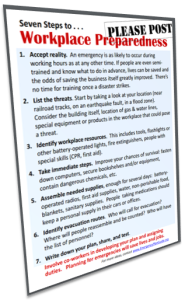
Emergency Preparedness PosterOne of our favorite business tools is a simple, one-page flyer that lists 7 things you can do at work to improve preparedness. The list could be used to develop a full-blown preparedness plan, or it could be used, just one question at a time, to start informal conversations around the lunch table or at a staff meeting.

However you want to use it at your business, feel free. You can get your copy of the flyer here and take a look at how you want to proceed.

Disclosure: Yes, we know this one-pager is awfully lean. We’ll take a look at each item in more detail in coming months. The main thing is for you and your business to get started!

Planning for emergencies will save lives and jobs. There’s no time for planning or training once a disaster strikes.


Virginia and Joe
Your Emergency Plan Guide Team

Small business owners sometimes confuse emergency preparedness with workplace safety as required by OSHA. Click to get our Advisory that gives more info on OSHA and its limitations.


5 Ways to Create Your Own Home-Grown Disaster

Share
Danger, Not a Step.

Look familiar? See #4 below.

Not knowing is one thing. Just not thinking is another.

Here are five really dumb things that people do that lead to emergencies and even disaster.

Don’t do any of them, please.

 Dumb Act #1: Mix household cleaners.

The classic mistake is to mix household ammonia (like window cleaner spray) with liquid bleach — “because two cleaners ought to work better than just one.”

The result: a gas that can cause nausea, eye irritation, sore throat, headache, cough, and difficulty breathing.

In fact, the chloramine gas that’s released could even send you to the hospital for an emergency tracheostomy — surgery to create a hole through the neck into the trachea (windpipe) to allow you to breathe.

OK, so you know about not mixing.

Did you know that you can create the same noxious gas by simply using two cleaning agents one after another on the same surface?

Every cleaning agent should be suspect:

  • liquid cleaners for the toilet bowl
  • gel for unclogging drains
  • powdered cleansers for counter tops and grout
  • spray foams for the shower.

Check the label for ingredients (look for sodium hypochlorite) and warnings.

If you smell or feel ANY strange or strong fumes, get out of there immediately and allow the space to air out thoroughly before allowing anyone into the area. Rinse everything completely with water and let it dry out some more before you attempt to finish your cleaning job.

Dumb Act #2: Work alone.

Most of us are happy to work alone for some time during the day!

But most of us are not engaged in high risk activities like using dangerous tools, working around machinery, electrical wires, scaffolding, trenches, high pressure materials, hazardous substances, at height or in closed spaces like grain elevators or tanks, etc.

For the 15% of people who do find themselves in these situations it’s important to have some sort of check-in procedure.

This isn’t just for construction or agricultural or other special industries. Office workers like receptionists or parking attendants who work alone may face potential violence from the public. They need a check-in procedure, too.

If your workplace doesn’t have a policy about working alone, get one.

Dumb Act #3: Underestimate a portable generator.

We’ve talked a lot lately about how a portable generator can be a great emergency preparedness tool if the power goes out. We’ve even made some recommendations about which kind to consider, how much to expect to pay, etc. (See footnotes for links.)

We have certainly talked about the risk of carbon monoxide poisoning from setting up a generator indoors. That extends to having it in the garage or even locating it too close to an open window.

There are other dangers associated with generators that you would know if you thought about it – but sometimes, people just don’t think.

Consider these possibilities:

  • Fire. Like any motor, your generator can get overheated. Don’t spill gas on or around it!
  • Electrocution.  A generator produces – electricity! If your power cords are too light, frayed or kinked, or not properly grounded, you could get the shock of your life. Electricity can kill.
  • Electrocuting someone else. The fifth leading cause of occupational deaths is what is termed “back-feeding.” This occurs when a power company worker touches a wire that should be inert but isn’t because it is carrying power from an unanticipated source – like YOUR generator.

This is why you don’t plug your generator into a wall outlet in your house. The power goes into the house and right through the house into the power grid where the unsuspecting worker is busy trying to fix the outage!

Yes, there is a way to power your house with your generator, but it requires a special “power transfer switch” installed in advance by a qualified electrician.  (A solar array with battery backup requires the very same type of switch.)

Dumb Act #4: Disrespect a ladder.

We are all pretty familiar with ladders, and have probably used at least a couple of different types — step ladder, extension ladder, etc.  (There are many types. Wikipedia lists 21 different ones!)

But for all its familiarity, a ladder can be very dangerous.

If its feet aren’t solidly placed, the ladder can tip over backwards or slide down frontwards. You come down right with it, flat on your back or your face or tangled between the rungs.

Second, a ladder can break. Like any other piece of equipment, ladders simply wear out.  Got an old one in your truck or garage? Before you use it the next time, check out the rungs, the rails, the spreader bars and locks and the feet to be sure they all function as designed.

Finally, can you read? I’ll bet your ladder has a sign somewhere that reads, “Not a step.” (I took the photo above of my own well-used step ladder.)

In simple English, that means “Do not stand on this.” Get up too high on a ladder and you will overbalance the whole thing. Stand on a paint can shelf instead of a step, and the shelf will break.

Every year, more than 90,000 people end up being treated in the emergency room from ladder-related injuries!

Dumb Act #5: Disconnect smoke alarms.

This is simple. Once again, the statistics tell you everything you need to know.

Half of U.S. fire deaths occur in houses where a smoke detector is installed but has been disabled because it beeps.

Of course, nuisance chirping from a smoke alarm is awful. And yes, it always seems to happen in the middle of the night.

Just take the time to fix it. Either put in a new battery or replace the whole thing, preferably with a photoelectric alarm (instead of the cheaper ionization model). If you’re not sure how to do it, go online to YouTube and search for “How to change the battery in a smoke alarm” or “How to install a smoke alarm.” Some videos are boring and some are better; any of them will guide you in making the fix!

As you read this, I hope you are saying to yourself, “Heck, I knew that!”

The key thing is, not everyone does know it! When you have the chance, share this information with children, co-workers, members of your club or church — anyone, in fact, who might have missed it. These are NOT emergencies you want people to learn about from experience.

Virginia
Your Emergency Plan Guide Team


Looking for more info on some of these topics? Here are other Advisories we’ve written over the past year or so.

The Best Generator for Emergencies

Portable Generator for Power Outage — Safety Update

Carbon Monoxide Alarms and Detectors

What you didn’t know about Smoke Alarms


Don’t miss the NEXT safety Advisory. Sign up below to get them all.


Here’s a Gift for You or a Friend

Share

On a daily basis we’re caught up in the excitement of whatever storm or heat wave is going on, or in the latest political maneuverings. Or maybe news from the sports world.

Here in California, though, there’s a background noise like the far-off rumble of a train. It is  . . .

The steady threat of an earthquake.

It’s tough to get people to think about and prepare for something they may never have experienced, no matter how dramatic you try to make it. Our neighborhood emergency planning group comes back to the subject of “the big one,” and earthquakes in general, again and again!

Here’s one of our best neighborhood emergency response group flyers.

How to protect yourself during an earthquake and afterwards

Share this flyer!

How to use the flyer.

  • Make copies and go over it at a neighborhood meeting. You will be surprised at the number of questions that will come up and the number of comments people will make about the supplies they have stored. Discuss the status of gas lines in your neighborhood and how to tell if there is a leak. Take a look around the room you are in and ask people what furniture they would get under if the earthquake happened right this minute! If your meeting takes place at night, find out how many people in the audience even have a flashlight with them! (Action item: Come prepared with a flashlight to give away as a door prize.)
  • Make a few changes to the text and and use the flyer at work.
  • Send to family members and out-of-town friends, too.

Emphasize the warning about NOT STARTING YOUR CAR if you suspect a gas leak. Cars backed up in traffic jams have started devastating fires in earlier quakes.

So you can make any changes, and fill in the box at the bottom of the flyer,

Click here to download the Microsoft Word document.

Let us know how your meeting goes. What questions came up that you weren’t expecting?

Virginia
Your Emergency Plan Guide Team


If you need more background for likely questions, here are some earlier Advisories that may be useful:

Severe Weather Means Danger for Your Pet

Share

Headlines here today read:

“California still in the grip of a record-setting heat wave.”

I checked the weather map for my friend Russell in Vermont.  Headlines there read:

“East Coast Braces For Life Threatening Cold Temperatures”

In these conditions, pets are in danger!  Grab these checklists and make sure YOUR pets are prepared and protected.Heatstroke kills pets

Cold kills pets


I think it goes without saying that your pet needs to have proper ID tags (even a microchip) at ALL times.  And you may have other great suggestions for pet safety and security during extreme weather. Add them in the comments if you will.

In the meanwhile, I’ll get this right out. It may save a pet today or tomorrow.

Virginia
Your Emergency Plan Guide Team

If you haven’t seen it yet, get our complete Pet Emergency Supplies Kit here.


Smartest Emergency Purchase I’ve Made Lately

Share

When it comes right down to it, having a simple phone plugged into a traditional landline simply makes sense. And when it costs so little . . .!

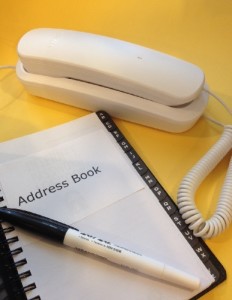
Corded phone for emergencyFive reasons to go out today and buy a corded phone.
 

1 – It works when other phones are knocked out or overwhelmed in an emergency.

How many times have we talked about what happens to regular phone communications in a widespread emergency? Power can disable cordless phones; cell phone towers can fall; systems can be overwhelmed. Ultimately, any device powered by a battery will stop working.

Landlines are the most reliable of all the options.

2 – Emergency Services will pinpoint where the call is coming from.

When you call 911 from a landline, emergency services know just where you are. When you call from a cell phone, they have to go through extra steps (using GPS) to find you. And if you’re on the tenth floor, and the only ID the emergency services get is the address of the building . . . When seconds count, a landline wins hands down.

3 – Your kids (visiting grandmother, babysitter) can operate a simple corded phone.

My granddaughters play with their parents’ cell phones all the time. That doesn’t mean they know how to actually turn a phone on, get past the password, find the phone app, and use the phone to make a call.

EVERY kid above the age of about 2 can be taught how to dial 911 from a simple phone.

Not every adult carries a phone, either. Consider elderly relatives. They, too, would easily be able to make an emergency call using a phone like the one in the photo.

4 – Yes, someone could tap the line – but not a random hacker.

Privacy is a concern whenever you’re using wireless communications. A landline is secure unless someone has actually installed wiretap equipment onto your line.

5 – You won’t misplace or lose it.

Your emergency phone is tethered to the wall. It will always be in that place so you will always be able to get to it immediately.

What will it cost?

A neighbor told me he’d bought a simple phone recently for “around $10.”

Frankly, I found that hard to believe. Still, when Joe went shopping for a phone yesterday, he came home from Walmart with the one in the photo. And it had cost him $5.95!

Naturally, you can get fancier ones, with a bigger price tag. (Check out our friends at Amazon. Use the search words: “corded phone.”) But we were looking for the simplest model possible.

Joe opened the box, pulled out the phone, and . . .

We plugged it into a wall jack — instant dial tone.

No registering, no passwords, no set-up, no waiting for a battery to charge, no software upgrades.

(What a relief after we had spent hours over the past week getting our over-the-air antenna to work with our TV and our Amazon Fire Stick. That’s another story, of course . . .)

Now, since the phone doesn’t store names or numbers, you’ll have to dig out an address book to go along with it. Or simply type up and print out a one-page sheet of emergency numbers as part of your family communications plan. (If you have children, you are likely to have this page already prepared for babysitters.)

Fasten this page to the phone itself, or tape it to the wall next to the phone, so it doesn’t get misplaced.

That’s it! It has taken me longer to write this Advisory than it did to get the phone set up.

Action Item: Do yourself a favor and get your own corded phone today.

You will definitely feel smarter and you and your family will definitely be safer!

Virginia
Your Emergency Plan Guide Team


Being prepared is more a state of mind than anything!  Keep your mind focused every week or so by subscribing to our Advisories. (Form below.) Free. Easy. Sensible.

Have friends who should be thinking about preparedness? Forward this email to them and suggest they subscribe, too!


Pedestrian Killed In Accident

Share

When you’re driving, how well do you see pedestrians or bikers?  How about at night?

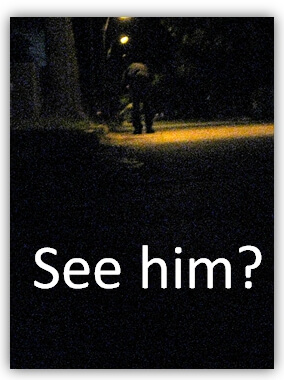
Man in darknessIt’s raining in California – at last! Yesterday our day was wet and gray and darkness came early. We stuck close to home and didn’t even take the car out.

Probably a good idea. According to Marc Green, legal expert in “Human Factors” (vision, perception, memory, etc.), “ [the] pedestrian fatality rate is three times higher at night.”

Darkness, smoke, fog, rain = all mean lower visibility and even greater danger for pedestrians.

Somewhere someone is experiencing these conditions right now.

In an emergency, conditions will be worse.

Imagine yourself on foot, either as a victim or as a responder. Street lights are out. The roadway has buckled and cracked so vehicle headlights are jerking and flashing in all directions. Blustery rain is coming down and water is pooling everywhere.

Drivers don’t know what to expect — so their reaction times are slower than ever.

What can you do to protect yourself? Wear high-visibility clothing.

We see safety vests every day, worn by people working in construction, landscaping, traffic control and clean-up. These workers’ vests are required by OSHA (Occupational Safety and Health Agency) and, in fact, they must “reflect from all sides for 1,000 feet” in the dark.

Smart joggers and cyclists have taken to wearing reflective clothing as a safety precaution when they are out in the dark. Typically they have wrist or ankle bands or reflective tape on a backpack or fender. High-fashion garb has stripes, sometimes even small LED lights built in.

(As a driver, I appreciate their efforts, and find myself yelling at those who DON’T make it easy for me to see them.)

The BEST gear is both fluorescent and reflective, or retroreflective.

Fluorescent materials actually emit light by converting invisible ultra-violet rays to visible light. They work best in low natural light, particularly dawn or dusk. Reflective materials bounce a beam of light off their surface – thus they only work as long as a light is shining on them. Retroreflective materials combine both fluorescent and reflective properties.

Get high visibility gear into your emergency kit.

Some popular high-visibility “vests” really look just like a pair of wide suspenders and belt. Convenient to carry and easy to slip on and fit. Here’s a popular one from Amazon: Rioa Best Reflective Safety Vest – Stay Safe Jogging, Cycling, Working, Motorcycle Riding, or Running – Elastic and Easily Adjustable Means the Best Running Gear Around


In my estimation these belts, even with wrist or ankle bands, may not provide enough coverage.  In fact, if you are moving in an emergency situation – crawling, running, bending, digging – the viewer may see movement but not be able to tell what it is he or she is actually seeing.

I prefer a full vest, like the one pictured below: High Visibility Gear Set of Reflective Safety Vest with Pocket + 2 Wristbands+Bag | Perfect for Running Walking Cycling Jogging Motorcycle | Fluorescent Yellow | Size L/XL This vest will make it clear that you’re a person. It has a pocket for your phone or keys, and comes with a small storage pouch.  The hourglass design leaves your sides less visible, so arm/wrist bands help fill in that gap.

Adding a high visibility vest to your emergency kit is easy, and you will find that you pull your vest out more often than you might have thought. For example, I’ve used mine just to walk from a distant parking lot to an event, and I’ve lent it to a friend who found herself drafted to direct traffic during a race. Of course, for CERT trainings I wear my CERT vest, but it is bulky and no where near so comfortable (!).

Virginia
Your Emergency Plan Guide Team

P.S. Be sure to consider what you might be wearing UNDER the vest to be sure you get the right size.