Author: Volunteer

Preparedness Survey for Your Group or Town?

Share
Emergency Preparedness Survey
“Check all that apply . . .”

One of my favorite sources for preparedness information is the online newsletter, Government Technology.  (It has various sections, including Emergency Management, Cyber Security, Emergency Tech, Cloud, and more.) Two weeks ago the magazine included a report from a local Oklahoma newspaper on the results from a preparedness survey.

The article really struck home and has pushed me to further action here in my own neighborhood! I hope you’ll find it as interesting as I did!

Background to the preparedness survey

OK, swivel your thinking from wherever you are right now to the middle of north-central Oklahoma. Plains, rolling hills. Flooding earlier this year. Consider, specifically, the town of Stillwater.  

(For those who like to know stuff like this, the area was settled in the 1880s and 90s during a series of famous “land rushes.”  Today, it is the 10th largest city in Oklahoma with about 47,000 inhabitants and is home to Oklahoma State University.)

It turns out that Stillwater put out a “flash-survey” on the topic of emergency preparedness. They sent the survey to citizens who had signed up to participate.

(Note that whenever you have people willing to “self-select” you tend to get more accurate responses.)

And here are some of the survey questions – and answers.

Please think about what YOUR answers would be!

Question: What disasters do you worry about?
Stillwater:
Tornados (93% named this as #1!), floods and then earthquakes. Other choices were wildfires, public health emergencies, heat, cold, and terrorist activity. Plus “other” – which was mostly power outages.
Your turn: What disasters to YOU worry about? (Are you being realistic?)

Question: What have you done to prepare? (I assume they provided a list of options to check.)
Stillwater:  Flashlight and extra batteries (81.5%), first aid kit (68%), portable radio (less than half), NOAA weather radio (37%), 3-day supply of food (less than 50%), 3-gallons of water per person (22%). “Have done nothing” (10%).
Your turn: What preparations have YOU made?

Question: Have you signed up for Stillwater’s emergency alert system?
Stillwater:
Yes, 45%. Never heard of it, 55%.
Your turn: Have YOU signed up for your local alert system?

Question
: What does our community need to do a better job of when it comes to emergency management?
Stillwater:
More public trainings or drills; need more public or community tornado shelters.
Your turn: What more should YOUR community be doing? Have you let them know?

So here’s the last question, and it comes not from the Stillwater newspaper, but from Emergency Plan Guide.

Question: What answers would your neighbors give to these survey questions?

What’s the next step?

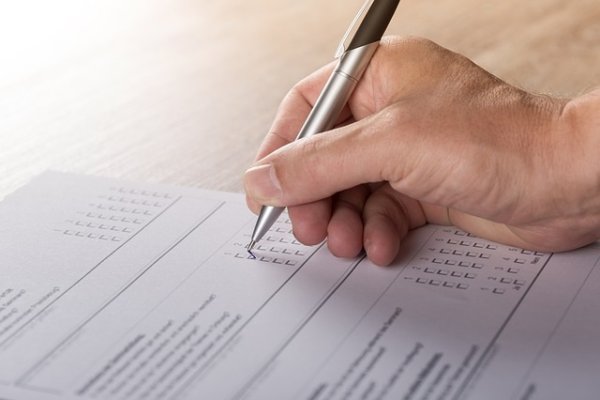
If you’re not sure what your neighbors’ answers would be, why not put out your own survey so you are working with facts, and not supposition? You can do an online survey, via SurveyMonkey (free if fewer than 10 questions and 100 responses), or on paper.

Some suggestions for designing your survey (based on my years in the marketing world!):

  • More than 10 questions will depress response.
  • If you make the survey anonymous you’ll get more responses.
  • To improve response and capture names and/or emails and build a list – add a deadline with offer of a drawing and prize to the winner. At the very minimum, promise to share results of the survey with participants.

Whether you make it formal or informal, the answers to your survey should serve to help as you plan for upcoming meetings or events for your community.

After all, September is preparedness month – so you could use the survey to get the ball rolling for your team! That’s what we’re planning to do! 

Virginia
Your Emergency Plan Guide Team

P.S. Need some suggestions for questions to include on your survey? SurveyMonkey has a sample survey on their site. I’m not necessarily recommending it but it may help you get started drafting your own. Here’s another sample series of questions from the State of Indiana:

If you need more details of what preparedness options to put on your survey (“Check all that apply.”), the government offers this basic list. We also have an even more complete list here at Emergency Plan Guide.

P.P.S. Thanks to reporter Michelle Charles, who wrote about the survey in the StillwaterNewsPress. Let me know what YOU decide to do with a survey and I’ll pass along to her the impact that her article had, across the country!

Use sunlight for emergency power

Share
She is charging her cell phone . . .

The power outages I wrote about last week never materialized. The weather has cooled down a few degrees, too, and that has taken the edge off the power discussion. Still, the whole episode took me back to capturing sunlight for emergency power – via a portable solar system.

A couple of years ago I bought a small fold-open solar panel, advertised as a source of emergency power for my cellphone. I put it together then, but it has sat on the shelf for a while now, unused.

Time to get back to being ready!

Since then, there have been improvements on this basic set-up. Panels have become more efficient. Power controllers connect the panels to more types of devices. Handy fasteners have been added on all sides.

The purpose remains the same, however. And I still really like it! Set it up in the sunshine, strap it to your backpack on a hike – let it charge your phone “for free!”

Over this same period, I’ve also become more aware of just what solar can do, and what it can’t. If you haven’t really had the chance to learn about solar (yet),

Here are some very basic solar basics.

  1. Solar panels capture photons of light and convert them to electric power.
  2. The power coming from a solar panel is Direct Current (DC). If a gadget uses battery power, it can use the current from a solar panel. (If a gadget needs to be plugged into an electric socket, it is using Alternating Current (AC). Solar panels can’t directly power your AC appliances.)
  3. When the sun stops shining on the panels, the electricity stops.

To summarize so far, if your emergency takes place during the day, your solar panels may be useful. If it continues into the night, the panels will be useless.

What do you do for power when the sun isn’t shining?

Since real emergencies are not conveniently scheduled, you may want to add a way to STORE some of the electricity that is created during the day. And that’s where solar batteries come in.

The manufacturer of my own mini solar-system also offers batteries to extend the usefulness of the system. I have a small battery pack that is charged with the solar panels. This small storage unit is called a “power bank.” (I have other power banks, too, made by other manufacturers. You can read more about power banks here.)

I charge the power bank using the panels, then, at night, I can use the stored power to charge my phone and its flashlight, etc.

If you’ve thought about how you would manage after days without power, when your phone and your computer’s batteries are dead, having the ability to recharge them using solar may sound attractive!  It certainly does to me.

Another short summary about this technology . . .

  1. Solar panels are one thing. Solar-powered storage batteries are a separate item. Each has its own capacity, requires its own connectors depending on what equipment you want to run, and each has its own cost.
  2. It takes a lot of solar power to drive big appliances.
  3. If you are considering solar for emergency communications needs, you need to start with only the essentials, and then buy sufficient panel and battery capacity to meet your needs.

Here’s the current kit at Amazon – the panels plus the power bank, exactly as I have it. As you can imagine, there are other larger versions – take a close look to be sure the portable solar kit will charge the devices YOU have.

Click on the image to get current pricing. (Remember, I am an affiliate at Amazon and may get a commission if you buy through this link. Thanks for supporting my work and helping spread the word about preparedness!)

This technology makes a great Christmas present, by the way. It’s never too early to start making your list!

Virginia
Your Emergency Plan Guide team


Day 31 of Summer Vacation. The last day of this special effort to provide you with some shorter and lighter Advisories as a change of pace. Hope you have enjoyed them — and welcome to some of my new Summer Vacation readers!


Summertime – Not the time to be lazy with security at work

Share
Man checking in at front desk

I’ve written in the past about good procedures to have in place for the front entrance of your place of business. Security at work suggestions include a controlled entrance, good visibility, good lighting, etc.

Because it’s summer, though, it’s so easy to relax your procedures. People arrive in casual clothing. Family members from out of town come to visit. Your business may host picnics or other summer activities attracting many different people.

Why can’t we relax our security at work during the summer?

Consider some of the underlying reasons for focusing on security all the time.

  • First, to avoid distraction or unnecessary accidents.
  • Second, to discourage theft, sabotage, or violence.
  • Third, to uphold legal requirements for security and confidentiality.

Let’s take a look at just one aspect of security at work: VISITORS.

Do you have an appropriate procedure to welcome, identify and track visitors? Are you following your procedure during these casual summer months? How would you answer these questions about visitors at your workplace?

  1. Are all your visitors required to sign in and get a visitor badge? Does this include employee family members, employees coming in during off hours, former employees, and temporary employees? What about contractors and suppliers? Do visitors sign out, too?
  2. Should visitors be accompanied in your building? By whom?
  3. Should certain areas of your workplace labeled as “off limits” for safety, confidentiality, etc.?
  4. What should employees do if they see un-badged or unaccompanied visitors? Strangers in the “off limits” areas?
  5. In an emergency, who is responsible for tracking the whereabouts of visitors. Can you be sure they all make it out safely?

Is this all we have to consider when it comes to visitors?

This isn’t everything you’d want to look at in building a true visitor management program. (Here’s an article that lists the top 5 visitor management programs for 2019. You may find them far too complicated for your needs — but they will open your eyes to the possibilities!)

Regardless, you can bring up the issue in the coffee room or at a staff meeting. Use these questions to get the conversation going. See what suggestions or push-back you get from co-workers.

Whatever the results, you will all become more aware – and some important changes might be made.

Summertime, and the livin’ is easy — and therefore it is the perfect time to revisit security at work!

Virginia
Your Emergency Plan Guide team


Day 30 of Summer Vacation: A time for some shorter and lighter Advisories as a welcome change-of-pace!


Do your kids know how to call 911?

Share
Sure, she can talk on the phone. But could she call 911?

Where you live has a lot to do with the threats you and your family members face. But there is one situation that we can all assume will happen. And one skill that we all need to master.

We all need to know how to call 911!

Right now, think of the kids in your life – neighbor kids, nieces and nephews, pupils, grandchildren. Can they all answer all these questions?

Turn this into a game and test children before school starts!

Set up an imaginary emergency.

With the help of your child, set up an imaginary emergency right in your living room. For example, a family member has fallen, broken an arm, there’s blood, etc. (Obviously, make the “emergency” something appropriate and not too complicated.)

Play act the 911 phone call.

The child calls 911 (pretend only). You take the part of the 911 Operator.

A real 911 Operator may have a slightly different set of questions, but they are likely to include ones similar to what you’re reading here.

Start by asking . . .

  1. What do we do if there is an emergency? (“Call for help.”)
  2. What telephone number do we call if we need help? (“911”)
  3. Who do you think answers that number? (“The 911 operator, the police”)

Now, conduct the call. As operator, you pose the questions and the child answers.

  • “What is your emergency?” (This is the exact question our operators ask. I’ve called more than once.)
  • “What has happened? What help do you need?” (Child describes the emergency you came up with.)
  • “What is your name?” (Be sure your child gives a FULL name – first and last.)
  • “What is your address?” ( Note: Cell phones aren’t necessarily accurate for pinpointing location. )
  • “What is your phone number?” (The connection could be lost, so the operator needs this info.)  
  • “What is the name of the person who needs help?” (First and last name)
  • “What does the person who needs help look like?” (Age, hair, clothing, etc.)

End the call this way.

  • “OK, help is on the way. Here’s what I need you to do. STAY ON THE LINE WITH ME. DO NOT HANG UP. I will tell you when to hang up.”

Now, I know you may think this is just too simple.  

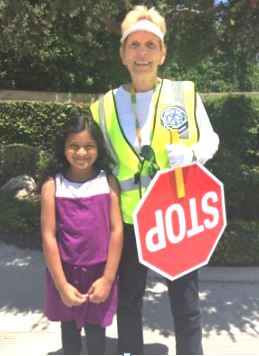
But what you don’t know is that I am a school crossing guard! I interact with hundreds of children throughout the year. And I learn every kid’s name.

At the beginning of the year many children do not know their full names. Most children do not know their home address. Hardly any children know a single phone number by heart! (Frankly, their parents don’t know numbers, either . . . but that’s a different Advisory.)

In an emergency, these children are at a big disadvantage.

There is no reason for YOUR children not to be able to Call 911, answer questions like those above, and get help.

Please give them this important skill as soon as you can.

Virginia
Your Emergency Plan Guide team

P.S. If you accidentally call 911, do not hang up. Stay on the line and explain there is no emergency. If you don’t do that, the dispatcher will call back to check, and even send a police car to check. You certainly don’t need for that to happen!


Day 29 of Summer Vacation: A time for some shorter and lighter Advisories as a welcome change-of-pace!


Emergency Planning Controversy

Share
Who will save me? Woman in emergency situation.
Who will save me?

There should be no controversy around emergency preparedness, right?

Wrong.

Even from my perspective as a “grass roots organizer,” I’m aware of several levels of controversy in the industry. For people who are serious about preparedness, it’s important to know about them. First of all, let’s look at . . .

Controversy at the individual family level

As you know, at Emergency Plan Guide we try to examine actions people can take that are mostly easily accomplished, not too expensive, and generally considered sensible. We count on most of our neighbors to be on the same wave length.

You can consider this approach as one side of the coin. If you spend any time online, you’ll be presented with the other side.

In contrast to the “neighborly” approach, this side is held by people who anticipate and make plans for significant societal upheavals, invest in self-defense including weapons and ammunition, and often don’t trust neighbors at all.

Where do you fit in this controversy?

Controversy at the First Responder level

We have always promoted the Community Emergency Response Team (CERT) training that is provided in many communities, at little or no cost. It gives citizens basic knowledge about how to protect themselves and their neighbors in the immediate aftermath of a disaster. Everyone who has taken CERT training has found it worthwhile and really appreciates the effort put into the training by the fire and police departments.

I hear from multiple sources, however (mostly online discussion groups, and some face-to-face conversations) that some trained First Responders wish the CERT people would just “get out of the way and leave us to do our job.” I have even heard recently of CERT budgets being raided by professional First Responders to meet their own departmental desires.

Controversy at the National level

Since the fiasco of Katrina under Mike Brown, FEMA has been headed up by people with actual emergency management background. But the agency hasn’t had a smooth ride over the past few years, with hundreds of declared emergencies. Brock Long, Administrator from June 2017 until February of this year, seemed to handle Hurricane Harvey pretty well, but FEMA’s response to Maria was widely criticized as slow and inadequate.

The latest development – two new Acting Administrators.

While FEMA leadership seems willing to deal with whatever hits the country next, we can’t count on it being effective, thanks to politics. President Trump delayed providing aid to victims of Hurricanes Irma and Maria in Puerto Rico for a number of different political (and apparently some personal) reasons. When fires burst out in California in 2018, Trump incorrectly blamed the fires on “poor forest management” and threatened to withhold disaster relief. (He conveniently overlooked the fact that over half the forests in California are under federal land management.)

Because national leadership has suggested more than once that some Americans are worthy of response and relief, but OTHERS ARE NOT WORTHY, the entire federal emergency management program becomes suspect.

What is the answer?

From my perspective, all we can do is take on the responsibility for our own safety. We can all make an effort to become better prepared and better trained, build stronger relationships, and be ready to protect ourselves and our neighbors in an emergency.

That’s the posture Joe and I take, and that so many of our Emergency Plan Guide readers seem to take, too.

Depending on someone else may be ill-advised.

Virginia
Your Emergency Plan Guide team

Day 28 of Summer Vacation: A time for some shorter and lighter Advisories as a welcome change-of-pace!

Smoke from under the hood

Share

It started with a hot smell and smoke from under the hood.

Over the past 2 weeks we’ve had serious trouble with our car. (That’s what kept me from writing yesterday’s Advisory.) It all started with a hot smell and suspicious puffs of smoke from under the hood, followed by a big leak SPLAT onto the driveway.

I don’t want to go into it all. But we had a huge repair bill following hours and days spent peering at hard-to-recognize engine parts, calling towing services, hanging around in repair shops, transferring stuff into rental cars, signing contracts for loaner vehicles, you get the picture.

As of today, the car seems to be working OK. I am not holding my breath because it’s too hot to hold your breath, but I am still alert to every hick-up, stray sound, new odor and any smoke from under the hood.

Which brings me to today’s Advisory.

Now, be alert!

Change of direction!

We are no longer talking about a breakdown.

We’re switching to a popular SCAM that involves white smoke from under the hood!

I think it’s worth taking 1o minutes to learn more from the video below. After all, this is a scam that could create an emergency and could actually turn into a financial disaster for the people who fall for it.

(This video takes about 10 minutes to watch. You may have to click to get past an ad or two. And don’t waste your time reading any of the comments, which are inane.)

The white envelope on the seat notwithstanding, it’s the white smoke that caught my eye in this video. . . Watch for it.

The more we all know about all the types of scams out there, the safer we all will be.

Virginia
Your Emergency Plan Guide team


Day 27 of Summer Vacation: A time for some shorter and lighter Advisories as a welcome change-of-pace!


What do people want to read?

Share
List - what people want to read

For a writer, that’s an important question! And for every writer, like it or not, there’s one answer that seems to come up every time.

People want to read lists!

If your list is short, you can write details about each item. If it’s long, you can break it into sections. You can use icons instead of numbering your list. As a direct marketer, I tend to use empty check boxes in front of the items on my list, so people will subconsciously feel they need to “check them off!”

Whatever format you choose, people love ’em!

Over the years I have written many, many lists. Here are three of them that statistics tell me people want to read:

  1. Emergency Supplies for your Pet
  2. School preparedness questions
  3. 5-Point safety checklist for time change

Today, it’s time to bring up another of my lists that is a favorite of my own. This is a very long list, the longest I’ve ever put together. It has no detail. It doesn’t even have checkboxes to help you decide which item to follow up on.

My favorite list — A list of threats

This is a list that’s perfect for people who are paranoid. It’s also good for anyone thinking about emergency preparedness! The directions? Pick out the 5  threats most likely to impact you!  Then, get started in preparing for them!

  • Active shooter
  • Arson
  • Bomb threat
  • Bomb blast
  • Brown out
  • Cable cut
  • Chemical spill
  • Communications failure
  • Construction
  • Crime investigation
  • Drought
  • Earthquake
  • Electrical outage
  • Emergency alert
  • Employee strike
  • Epidemic
  • Evacuation
  • Explosion
  • Extreme heat
  • Fire
  • Flood
  • Frozen pipes
  • Gas line leak
  • Hail storm
  • Hazardous materials
  • Home fire
  • Household chemical emergency
  • Hurricane
  • Ice storm
  • Insect infestation
  • Lightning
  • Landlord conflict
  • Landslide
  • Land subsidence
  • Nuclear explosion
  • Nuclear power plant leak
  • Place crash
  • Pandemic
  • Power failure
  • Power surge
  • Public disturbance
  • Raw sewage
  • Rodent infestation
  • Sabotage
  • Smoke damage
  • Snow storm
  • Terrorism
  • Theft
  • Thunderstorm and lightning
  • Tornado
  • Train derailment
  • Tsunami
  • Vandalism
  • Vehicle crash
  • Virus
  • Volcano
  • Water supply problem
  • Wildfire
  • Wind storm

Hope you got this far, and selected 5 threats to get started preparing for.  Which were they?

Virginia
Your Emergency Plan Guide Team


Day 25  of Summer Vacation: A time for some shorter and lighter Advisories as a welcome change-of-pace!


Muscle Memory and Emergency Preparedness Training

Share
raining and muscle memory

By now we’ve all heard the concept of “muscle memory.” That is, if you practice something enough, when called upon your body will remember what to do even if your brain is sidetracked.

Professionals train constantly. They develop all kinds of muscle memory, and every day we hear stories how that training has paid off.

Volunteers, on the other hand, are a different story. When it comes to preparedness training for volunteers within the neighborhood, we have a challenge.

Here is the training challenge as I see it.

  • Even in a Community Emergency Response Team (CERT) training session with the guidance of professional instructors we can TALK about what to do in an emergency medical situation. We can SHOW people how clear airways, check for breathing, and test circulation. We can PRACTICE once or twice with professional supervision.

    Then we go home! And we are lucky to get a refresher course on those particular procedures within the next month or even 6 months!
  • In our local neighborhood group meetings we don’t have professionally-trained leaders. We depend on our own volunteer members to come up with good ways to prepare and to respond. When we’re lucky, we attract a guest speaker with special credentials.

    Then we go home! And we may never hear from that speaker again!

A current LinkedIn discussion group sees the challenge, too.

I participate in a LinkedIn group for emergency managers. There’s a discussion taking place right now about providing enough on-going training for people at different levels of expertise.

In particular, the discussion is focusing on the very audience I mentioned above – the concerned and committed volunteer who may be part of a local community but not part of a formal program.

How can we give these people the chance to develop that all-important “muscle memory?”

Here’s some of what I’ve learned about meeting the training challenge.

Online resources. There are a number of online resources, courses and online videos. We have used many of them in our group. The challenge is having to first find and then sort through them all, site by site and video by video, to find one that fits your group’s level of interest, its budget and is of a quality you’re comfortable with. As we know, there is no easy way to “rate” the quality of ANYTHING online!

Local resources. In our community we occasionally have the opportunity to attend a face-to-face course offered by the Red Cross or a health care organization. Some of these are free; most charge a fee. Some communities are more fortunate in that they have regular such programs offered through a university. (Here are two examples, the first at Columbia and the second at the University of Kansas.  https://ncdp.columbia.edu/practice/training-education/online-face-to-face-training/ and http://rtcil.org/emergencypreparedness/onlinetrainings)

Books. By now, you realize I’ve tried to capture some training ideas in the books I’ve written.  The advantage of books is that they are inexpensive, available everywhere, and eminently portable. The disadvantage – reading about an idea in a book doesn’t train muscle memory! Some dedicated member of the group has to turn the idea into an actual training exercise. (That’s what I try to assist with in Emergency Preparedness Meeting Ideas.)

Training that can actually involve muscle memory is by far the most desirable. For volunteers, it’s still very tough to come by.

But when it comes to emergency preparedness, ANY training is better than none!

You can get started now with some of the resources mentioned above. One thing for sure: There will be no time for training once the disaster hits!


Day 24 of Summer Vacation: A time for some shorter and lighter Advisories as a welcome change-of-pace!


Reliable information

Share

I’ve had to do a lot of research for my Advisories and my books.

If you take a quick look at our Advisory archives you’ll see topics you may never have really thought about! I certainly hadn’t thought of them all when they came up . . .

Consider these issues, for example:

  • Best respirators for after a forest fire
  • How to know if your home is vulnerable to landslides
  • How are drones being used in disaster response?
  • Will this fire extinguisher work on this fire?
  • Insurance for volcanoes
  • Are you within the range of a nuclear reactor emergency?
  • Front office security – are you liable as owner?

When I first started, it’s probably safe to say I knew very little about any of these. (Well, I DID know something about security in the workplace.)

Now, however, after writing not once but in some cases several times on these topics, I feel that I am pretty knowledgeable. Maybe even better,

Now I know where to go to get reliable information!

Here are three of my favorite sources. I recommend them to you.

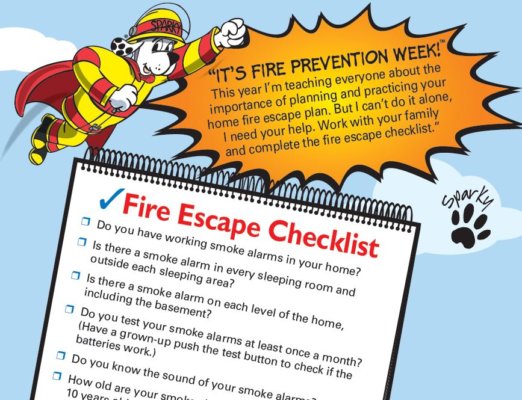
  1. NFPA. Anything to do with fire prevention, statistics, standards, careers, education for children – The National Fire Prevention Association has global reach and its site is an amazing treasure trove. I also subscribe to their newsletter. The illustration for this Advisory came from NFPA.
  2. Agility Recovery protects businesses against interruption and disaster. I’ve followed the company’s growth over the past half dozen years, and taken advantage of their excellent webinars, case histories and other free resources they make available on their site.
  3. Earthquakes. Because I live here in California, where there are typically over 200 noticeable (over 5.0) earthquakes a year, I have a permanent link on my desktop to the United States Geological Survey Earthquake map. I check it often and read all the fine print!  (When we had the earthquakes over the 4th of July, the site was temporarily down because so many people were trying to find out just what had happened!)

I urge you to go to these sites if you’re looking for info on fires, business continuity or earthquakes. And if you are looking for information on other preparedness topics, please drop me a line. There’s a lot of misinformation or half-information out there and perhaps I can steer you around some of it to more reliable sources.

Virginia
Your Emergency Plan Guide team


Day 23 of Summer Vacation: A time for some shorter and lighter Advisories as a welcome change-of-pace!


Moving people toward preparedness

Share

First step is a conversation . . .

Hardly anyone ever disagrees with the concept of emergency preparedness. When it comes up, the usual first comment goes like this:

“Yes, I know I should be doing more about being prepared. “

This comment is usually accompanied by a duck of the head and a slightly sickly smile.

If the conversation continues, the next comment is, inevitably:

“But I just don’t know where to start.”

I have been on the receiving end of this one/two sequence hundreds of times over the years. And I’ve tried many ways to get past it and get people moving on to the next step!

First, I try to engage people in a friendly dialog. But since I can’t talk to everyone, I started writing.

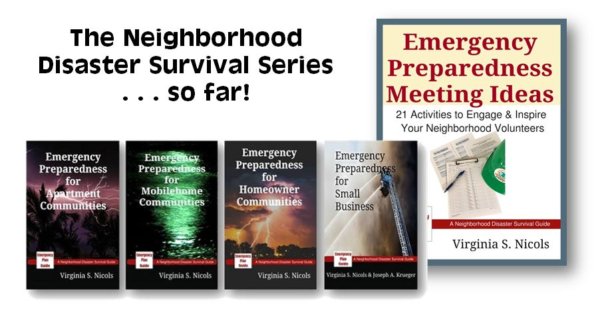
First, it was my blog posts (that I call Advisories). Then I felt more was necessary, so I started on a series of books. You see them in the image above!

Then, develop some tools to move the action forward.

Here are some of the tools I’ve developed. Some of them are featured on our EmergencyPlanGuide.org site. Others have more info at our companion website EmergencyPreparednessBooks.com, where we review books written by a variety of authors.

  1. For individuals — A simple list of “The Top Emergency Kit Starter Items.” This is list suggests 10 good GIFTS that you could purchase for family members – or for yourself! – to get things started!  Check it out!
  2. For individuals and their neighbors — A friendly 120 page book to get people working together for mutual benefit. Actually, I’ve written three of them, based on the type of neighborhood people live in. You can find out about that neighborhood series here.
  3. For employees and business owners – Obviously, when disaster hits a business, it hits the whole community. Every business ought to understand basic steps to take to stay alive long enough to get the whole organization back up and running. Joe and I are particularly proud of this book because we have worked with small businesses for years, and with very large businesses before that!
  4. For leaders – When I started building our neighborhood group, there were absolutely no resources available. There still aren’t — so I decided to create one! This book has suggestions for meetings on preparedness to attract and engage members of a community group. The meeting ideas could be used by a church group, a neighborhood emergency response group, the PTA, whatever.

Make the tools widely available.

All these books are for sale at Amazon. You can actually find all of them — plus others I’ve written — listed on my Author Page.

Now that I have figured out how the system works, I have two more titles in the works, hopefully to be finished within the next couple of months. (Amazon tells me that building a SERIES is good for sales!)

If you or loved ones are asking, “How do I get started with preparing for emergencies?” you will certainly find some answers here! If you know other people who are asking the question, you can help them get answers and get moving, too.

I welcome your interest, your support —  and your reviews on Amazon! 

Virginia
Your Emergency Plan Guide team


Day 22 of Summer Vacation: A time for some shorter and lighter Advisories as a welcome change-of-pace!


Questions on preparedness to ask a care facility

Share
iwoman in care facility

A dear friend announced today that he is going to have to put his wife into a long-term care facility.

If you were that man, do you know what questions you’d want to be asking as regards emergency safety and security in that facility?

I’m working on a more complete Advisory on this topic. (Actually, I’m working on a whole book on the topic of preparedness for seniors.) In the meanwhile, though, here’s a short list of questions on preparedness to help you assess potential health care providers.

The original list came from one of my Emergency Plan Guide subscribers, Nicholas Thorpe. He works with facilities to help them comply with the new emergency preparedness rules that were developed by the Centers for Medicare and Medicaid after Katrina. I’ve shortened his list to meet our needs today.

Nine questions to ask a health care facility about their preparations for disaster:

  1. Do you comply with current preparedness rules?
  2. When was your facility last surveyed?
  3. Following a disaster, how will you contact me about my loved one?
  4. How can I contact you?
  5. What arrangements do you have if an evacuation is called for?
  6. What sort of back-up power do you have in case of an outage?
  7. How many extra days of food and water do you store on site?
  8. Have staff members been trained in first aid and CPR? What about in dealing with an active shooter?
  9. How often do you practice for emergencies?

Obviously, these questions on preparedness aren’t all you’d want to consider in deciding on a facility for your loved one. But given some of the stories we’ve heard – following hurricanes, fires, and floods – you would certainly want to pose questions like these as part of your evaluation process.

Virginia
Your Emergency Plan Guide team

P.S. Can you add any questions based on your own experience?

P.P.S. If you would like to be on the list to hear when my book comes out, please let me know.  It’s tentatively entitled: Emergency Preparedness for Senior Citizens and will be number 6 in our Neighborhood Disaster Survival Series.


Day 20 of Summer Vacation: A time for some shorter and lighter Advisories as a welcome change-of-pace! (Only 11 more days to go!)

Continuing Saga of the Planned Power Outage

Share

This isn’t a picture of me but the photo by iamSherise on Unsplash gives you an idea of how I felt yesterday . . .

After all the furor yesterday, at the end of day I received this notice from the Public Works department at the city about the now infamous planned power outage. (The notice came after I had spoken to two different city offices, leaving messages but never actually talking to this person who ultimately responded.)

Read carefully. The key word is in the second line . . .

Hello Virginia,

I contacted the utility regarding the planned outage and they have informed me there was an error in the notifications. The duration of the outage will not be 24 hours. Instead there will be two 30 minute outages affecting residential customers and one 8 hour outage overnight that will impact only commercial customers. They will be sending corrective notifications to customers regarding the planned outage.

Please let me know if I can be of any further assistance.

Can you believe it?!

Perhaps you can. In our experience, utility companies do not always operate efficiently. (Joe and I have worked with utility companies a lot, on the East Coast and on the West Coast!)

In this case, I had contacted 3 different utility representatives earlier in the day and each of them had a different answer to my questions. I hung up totally dissatisfied. That’s when I switched gears and aimed my calls at the city to “raise the level of awareness” a bit more!

Later, the city Public Works person told me, “We have a direct connection with the utility because we work with them all the time on infrastructure projects. So I just called my contact there and she got it straightened out.”

Moral of story: “You gotta know who to call!”

Second moral: “If you don’t know who to call, keep calling until you get to the right person!”

Thank you for giving me the chance to unload about this power outage “error.” It truly created upset and even panic among some of our neighbors. Now we have the job of reassuring everyone while reminding them that an extended outage could still happen and they need to take steps now to be ready!

Please consider your own level of preparedness for an outage. According to my trusted sources, a power outage — local or extended, planned or unplanned — is the most common emergency that businesses face — and that means all of us.

Virginia
Your Emergency Plan Guide team


Day 19 of Summer Vacation: A time for some shorter and lighter Advisories as a welcome change-of-pace!


Power outage scheduled for next week

Share

Just a couple of days ago I wrote about an upcoming power outages and how we might expect more of them this summer.

This morning I became aware that our local utility has scheduled not one, not two, but three power outages in our community for next week!

All three of the outages have different outage numbers, and all three have different start and end times, but they overlap each other.  Huh???

Now the way I heard about it was through my Emergency Response Team friends, because apparently my house is not involved. As you can imagine, I got on the phone and went up through a couple layers of customer service to learn that  . . .

  • Yes, the longest power outage is scheduled to last 24 and ½ hours.
  • Yes, the maintenance work has to be done “to improve our service to you.”  (!)

Now, picture the situation and why it could be an emergency.

Facts about our community.

Our senior retirement community has 360 homes.  Some of our residents are VERY elderly, and in frail health. Many live alone, with no family nearby. Probably a third of them don’t drive – or shouldn’t drive. These folks are stuck here. For them to have to leave would be traumatic.

Facts about power outages in our community.

  • When the power is out, there’s no light. (We’re ready for that!)
  • CPAP machines, air conditioners, humidifiers and oxygen concentrators stop working. (Average high temperature around here in July is 81 degrees. Not too hot, but still . . .)
  • Electric chairs and electric beds stop working in whatever position they were in when the power went out. Doorbells stop working and so do elevators, if you have one.
  • In an unopened refrigerator it takes only about 4 hours before things start to spoil. If the refrigerator reaches 90 degrees, it could take only an hour for food to spoil.
  • A FULLY PACKED unopened freezer can safely store food for as long as 48 hours. If it’s only half full, food will last about half that long. (So I know you are thinking, well, “Just eat all those steaks and casseroles!” No power to cook them with, remember?)

So how am I telling my neighbors to prepare?

So far, I’m not able to give them much help, because we’re still working on the problem.

First, we’re trying to see if a little pressure from the City could cause the utility to break their work schedule into shorter chunks of time. (I head up our neighborhood emergency response team, remember? That gives me a direct line to the Office of Emergency Management.)

Second, we’ve made arrangements with a local store to order 10 lb. chunks of ice to extending the cooling life of our refrigerators and freezers. We’re also reminding people to freeze containers of water to fill up their refrigerators and freezers.

Finally, we’re checking to see if there would be any homeowner’s insurance coverage for food lost by spoilage. So far, I’ve found YES and NO answers — always the case with insurance, right?

I will, of course, let you know what happens. 

In the meanwhile, do you have any experience with power outages, scheduled or unexpected? Have you discovered any clever ways to prepare? Please share!

Virginia
Your Emergency Plan Guide team


Day 18 of Summer Vacation: A time for some shorter and lighter Advisories as a welcome change-of-pace!


Power Outage On Its Way

Share

“Have you heard? We’re expecting a power outage tomorrow night!”

That is, some of my neighbors have received notification. Some have heard nothing from the utility company — and that includes me.

Notifications are good. But the fact is, it pays to be ready at any time. With temperatures heating up for the summer, more people will be using air conditioning. Too much pressure on the system and it could shut down.

Like, what happened Saturday night in New York? Now THAT was massive. And dangerous.

Your local power outage doesn’t have to be dangerous as long as you are ready. Here are some quick DOs and DONTs as reminders.

Use as little electricity as you can when it’s hot. In fact, you can head to a cooling center and save on your own electricity. Just check with your local city office for locations.

If you have warning a power outage on its way . . .

  1. DON’T leave the house if you are using appliances like your washing machine. What if the power goes out mid-cycle? A wet mess!!!
  2. DON’T open the refrigerator if the power goes out. Dig out some snacks and make do.
  3. DON’T pick up the phone and call your family to let them know. The phone probably won’t work anyway – unless it’s a cell phone.
  4. DO have a pair of sturdy slip-on shoes next to the bed, with a flashlight right there too, so you can get up safely in the dark.
  5. DO store some extra water – for your pet, too.
  6. DO have some emergency lighting. I like the night lights we have that go on automatically when the power goes out.
  7. DO remain calm. A power outage is not a disaster. It’s probably not even an emergency.

If you’re ready for it, a power outage is nothing more than an inconvenience!

(P.S. Please tell your nervous neighbors this. You may want to run down the list of reminders with them.)

Talk to you soon — as long as the power stays on!

Virginia
Your Emergency Plan Guide team


Day 16 of Summer Vacation: A time for some shorter and lighter Advisories as a welcome change-of-pace!


Why do I write?

Share
Why do I write? To have an armful of my own books, of course!

Today I put final touches on a book I am writing with my partner, Joe. It’s about professional marketing for accountants.

(The challenge of writing as co-authors is certainly worth a blog post at some point. Actually, it’s probably worth a whole book. I wonder what category it would fall into. Humor? Horror? Action & Adventure? We’ve been together for more than 35 years, so maybe the category should be History & Criticism?  Whatever. . .!)

Anyway, I thought that today, in honor of having reached the half-way point of our summer writing challenge, I’d write in answer to the question,

“Why do you keep writing about Emergency Preparedness?”

  • I do it because I can. I have access to a computer, to the internet, and time. I love words. Not everyone has these luxuries.
  • I do it because I like feeling that I’m helping others. Nice people keep writing to thank me for helping . . . and, of course, that keeps me going!
  • I do it because I made the commitment a long time ago to write at least a weekly Advisory (post) about a new topic associated with emergency preparedness. (My daughter tells me I am indiscriminately curious.) After well over 400 Advisories I’ve learned a whole lot about a whole lot of stuff!
  • I like knowing I’m a “published author.” There’s still some cachet to that – in certain circles, at least!
  • I see other people writing and that reminds me, “I can do that, too!”

Perhaps one day I’ll branch out into yet another field. In the meanwhile,

I have five books on Emergency Preparedness on Amazon.

The first 3 books were for people wanting to get more of their neighbors involved in being prepared. (These books got finished at the same time. The picture shows me on the day samples arrived!) The 4th book extended that to helping small businesses be ready for emergencies. The 5th book was the collection of meeting ideas for all those groups being formed . . . and happily, that’s the book that’s sold the most copies!

You can see all of them at my Author Page at Amazon. Here’s the link: amazon.com/author/virginiasnicols I hope to have at least two more emergency preparedness titles appearing there this year!

Have you written a book? Several? Why do YOU write? Interested readers would like to know! We are, after all, a special category.

Virginia
Your Emergency Plan Guide team


Day 15 of Summer Vacation: A time for some shorter and lighter Advisories as a welcome change-of-pace!