Author: Volunteer

Building a Neighborhood Emergency Preparedness Team

Share

UPDATED SEPTEMBER 9, 2018.

Yes, it’s fun to pull together survival kits for yourself and family members. For some of us, getting more and better survival gear turns out to be a sort of addiction! (A healthy addiction, we believe.) And creating family plans is satisfying, even though they require constant updating.

But once your immediate household is organized, what then?

Building a neighborhood emergency preparedness group

When the emergency hits, are your neighbors going to be knocking on your door, looking for help?

They may. And you may not want or be able to help them.

The only way to solve this problem is to encourage neighbors and co-workers to be as prepared as you are!

We have devoted a lot of our time over the past 15 years to helping our neighbors get prepared, trained and organized.  If you’ve been reading our Advisories, you know about some of what we’ve done.

Now we’re adding one more piece to the puzzle.

Building a Neighborhood Emergency Preparedness Team — getting more attention.

About 3 years ago, we started a whole new section on building a neighborhood group. Here’s how we started that section:

  1. Step One was to pull together all our original material on team-building that we’ve created for Emergency Plan Guide readers. That list starts at the bottom of this post.
  2. Step Two was to reach out to other organizations around the U.S. for their best ideas. In fact, many of our blog posts already link to others’ stories and skills, and we’ve added more and more.
  3. Step Three was to solicit specific input for Emergency Plan Guide readers. We continue to do this, and you can help by referring us to people or sources you know, or by suggesting a topic you’d like to know more about. We’ll track down and share the best info we can find!

Let’s start with resources for those people who have already made the commitment to starting or building a neighborhood group.

We assume that as the leader, you will have found a way to get formal CERT training for yourself.  Not all members of your team may get training, but you need the framework and vocabulary of CERT so that your group can work effectively together and with local first responder teams.

So to start with Step One for building a neighborhood emergency preparedness team . . .

. . .here is a list of some original material from the Emergency Plan Guide collection. Most of this is ready for download as is, with the first couple of handbooks available for purchase.  We hope you’ll find what you need for YOUR group!

Comprehensive training manuals

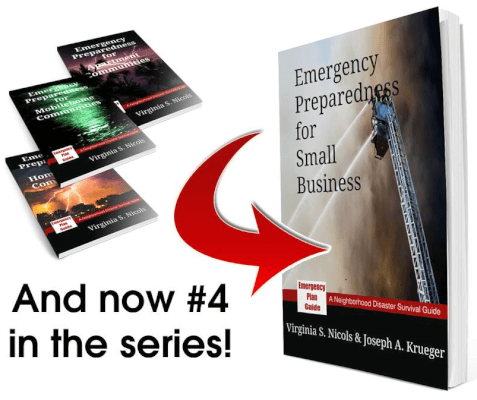
  • The Neighborhood Disaster Survival Series — our 4 books aimed at building groups in different kinds of neighborhoods. Each book is over 100 pages filled with specific steps and suggestions based on 15 years of growing our own group.  The books are at Amazon, in ebook (downloadable) or paperback.
  • Meeting Ideas — A collection of meeting ideas, with a list of what you’ll need, how best to schedule the activities, what to watch out for, etc. $10 at Amazon. Get more details by clicking the link.

Stand-alone subjects for training or discussion

  • UPDATED! How to Recruit Volunteers — We just updated this list. Download your copy now!
  • How to Hold a Great Meeting — Event-planning basics that you’re probably familiar with, but that can help others on your team get up to speed. Since we started our own group, we’ve been able to provide a great overhead projection and sound system for our guest speakers.  That helps, as long as you have some skilled audio-visual people on hand!
  • Finding Leaders — Every member of your team needs to be able to step up to lead. After all, when the emergency hits, you can’t be sure who will be on hand.
  • Active Shooter Event — Worth a discussion, particularly given recent developments here and abroad.
  • For more, just click on NEIGHBORHOOD in the category listing in the sidebar to the right.

Possible group investments

More to come! (Be sure to sign up to get our Advisories so you don’t miss anything!)

Virginia
Your Emergency Plan Guide Team

P.S. Step Two for Building a Neighborhood Emergency Preparedness Team is to reach out to other organizations. Just last week you saw the results of some of our outreach when we wrote about the Lamorinda California CERT team’s upcoming meeting. Please share what YOUR group is doing!

Emergency Planning for Seniors

Share


Lost Pet Flyer

Have a flyer ready before the emergency!

When it comes to emergency planning for seniors, the basics really aren’t that different. After all, I am a senior myself and I don’t consider myself so different!

But . . . there are some issues that we face in our community-of-a-certain-age. This week, when I received info about a program being sponsored by one of the Northern California CERT groups, it caught my “senior” eye.

Interested residents of Lafayette, Moraga and Orinda are invited to a special meeting sponsored by the Lamorinda CERT: “Bring Your Stuff Workshop”

The agenda is very comprehensive. CERT members will be checking on 25 different emergency planning items for workshop participants. You may want the whole list, but for today, here are . . .

Three important issues that apply particularly to emergency planning for seniors.

Could any or all of these could be the subject for YOUR next workshop?

  1. Getting an emergency alert in a timely fashion – including at night.
  2. Having copies of important documents in case you need to evacuate.
  3. Having a Lost Pet Flyer as part of your pet’s survival kit.

Let’s take a look.

1-Alerts are especially important for emergency planning for seniors.

Some of our neighbors are pretty anti-social. They actually have turned off the phone service here in our community that is aimed at promoting various social events, announcing utility turn-offs, etc.

Some of our neighbors are hard of hearing and when they take out their hearing aids at night, they are unable to wake for a phone call or even for police pounding on the door!

(There are special alert phones for people with hearing difficulties. These phones have loud alarms; some vibrate and blink. The best ones can be programmed to suit the kinds of weather disasters you could expect (tornado, for example), and to turn off those that don’t apply (flooding). And some of them allow for an extra strong strobe light to be attached. See research report at the end of the Advisory.)

Even when they hear the alert, seniors may need more time to get organized — so it’s important that we find out about danger right away!

Now, most people DO have cell phones. So the Lamorinda group is planning to individually help all their workshop participants:

  • Sign up for their local community warning system and/or any regional alert systems.
  • Add ICE (In Case of Emergency) contact information to their phones – including local non-emergency numbers.
  • Make sure the people know how to get to the ICE numbers in an emergency!

2-Emergency planning for seniors needs to include getting copies of important documents!

This is a tough one for elderly people. First, the older you are, the more saved documents you may have. Some are irreplaceable because they were generated before the era of computer data bases. Many of the documents are odd sizes, faded, etc. making a commercial copying job expensive. Second, very few of my senior neighbors have scanning capabilities at home. Third, there’s the issue of privacy.

(A year or so ago we considered putting out a call to neighbors offering to scan their documents, but then we withdrew the offer, not being able to guarantee security.)

The Lamorinda group, which is holding its meeting at the local library and putting it on in conjunction with the police department, will be doing the scanning “in a secure environment with law enforcement present to eliminate privacy fears.”

They will also have thumb drives for sale so people can carry their documents home with them with the matching thumb drive tucked right into a purse or pocket!

3-Seniors who are pet owners need to have the proper ID and protections for their pet.

At nearly every meeting of our neighborhood group we discuss emergency planning for pets. For example, at our recent “show and tell” meeting we were able to compare a couple of different pet carriers, we discussed the importance of the right pet food (and what happens when a pet eats strange food), and, of course, we talked about leashes, collars (including glow-in-the-dark collars), and identifying a lost pet via an embedded microchip.

(Please note: microchips do NOT have GPS and are not designed to track your lost pet. The microchip has a registration number and a phone number of the registry for that particular brand of chip. A person with a handheld scanner (the vet) can read the chip and find the owner.)

At the Lamorinda meeting, pet owners will be helped to create a custom Lost Pet Poster to help save time in an emergency. The images at the top of this Advisory are examples of free templates.

You could consider having the basic flyer already prepared, with photo, name, etc., and then, as necessary, fill in the appropriate emergency phone number.

In any case, if everyone has to evacuate, you cannot assume that your local copy shop or your friendly computer whiz neighbor will be available to design and run out copies  for you!

I’m always on the lookout for meeting ideas, and I think all three of these are excellent. I will be checking in with my friend at Lamorinda CERT to see how their meeting actually goes, and and I’ll let you all know.  In the meanwhile, perhaps you could start planning on a similar meeting for YOUR group. (And if you want the full agenda from Lamorinda please let me know.)

Virginia
Your Emergency Plan Guide Team

Extra: Research Report on Emergency Alert Equipment for People Who are Hard of Hearing

Special alarms for hard of hearing: Three years ago our community participated with the local fire department to have over 400 smoke alarms installed. During that event I became aware of the challenges that some neighbors had in being able to hear the alarms, particularly at night. Ultimately we were able to get a couple of special smoke alarms installed that activated blinking lights and made the whole bed vibrate.

This week, as I followed up on the Bring Your Stuff Workshop, I checked again for emergency alerts. What’s available is essentially the same sort of technology as we found with the smoke alarms: louder alarms, strobe lights and vibrators. When it comes to emergency alerts, however, these “extras” are connected to a special NOAA (National Oceanic and Atmospheric Administration) Weather Alert radio

NOAA radios at the center. Unlike a regular AM/FM radio, weather alert radios sound an alarm even if the radio is in standby mode. NOAA weather alert radios with S.A.M.E. (Specific Area Message Encoding) technology allow you to enter local county codes and eliminate alerts that are not within your programmed Specific Area.

Weather Alert radios are available costing anywhere from $30 to $100 dollars. We have reviewed several of them on our Best Emergency Radios page.

We have bought Midland. When it comes to radios with more options for readability and hearability, we have chosen Midland for closer examination. We use Midland handheld radios in our neighborhood emergency response group and have found that although the models are frequently upgraded, the quality is consistently reliable.

Below is the latest Weather Alert radio from Midland. (Model 400) Notice the three color-coded alert levels: advisory (yellow), watch (orange) and warning (red). And the written alert TORNADO WARNING is big enough to read easily. You can program the radio for up to 25 counties, and it will announce alerts for 80 different weather hazards and emergencies including Biological Hazard Warnings, Fire Warnings and even Child Abduction Emergencies (Amber Alerts). This model has a USB port that allows you to charge devices directly from the radio. Includes an AC power adapter but can use four AA alkaline batteries for emergency power back-up (not included).

Earlier versions of this radio have a white or gray case, and the warning messages are black on gray.  (Not so easy to read in my opinion.) They do have the same NOAA alerts (only 60 of them!). AM/FM radio with alarm buzzer and battery back-up in case power goes out.

Click on the image or the link for full details and to check the current price at Amazon.

Midland Consumer Radio Weather Radio All Hazard Radio Gray (WR400)

And here’s an attachable strobe light that would improve the value of the radio for people with hearing problems.

Strobe for Midland Public Alert Weather Radio

We have several NOAA Weather Alert radios in our house. I recommend you consider one, too, and not just for someone who doesn’t hear very well! We all deserve to get warnings of impending emergencies as soon as possible!


I have a favor to ask

Share

A favor for Emergency Plan Guide

Hello Valued Friend!

At Emergency Plan Guide, we’re kept up at night (literally, sometimes!) thinking about how to make everything we write better.

Not better in terms of grammar or vocab, but better at giving you what you are interested in and what you can use to solve your problems.

We’ve learned, though, that what we think you want may be off the mark!

And since we want our site to be as great as it can possibly be, can you do us a favor?

Can you take just two minutes right now to let us know . . .

  1. What kinds of info would you like more of?
  2. What preparedness problems do you face that just WON’T go away?
  3. Any experts you’d like to hear more from?

Or maybe you have a story of your own you’d like to share?

Whatever you can tell us will be a big help as we plan our next articles.

Just jump to our CONTACT US page and write away!  (We’ll keep your reply confidential, of course.)

Thanks so much! We look forward to hearing from you.

Virginia and Joe
Your Emergency Plan Guide team

P.S. Had a 4.4 earthquake here in southern California last night. Parts of the upper Midwest have been hit by torrential downpours and thunderstorms. Hawaii is mopping up after record rainfall from Hurricane Lane – with another storm forming. Stay alert out there!

Counting On Your Neighbors

Share

Preparedness Training in Mandarin

How confident are you about your neighbors’ level of preparedness?

The title of this Advisory is taken from our Neighborhood Disaster Survival Guides. If you’ve looked at one of the Guides, you’ll remember that Part One is titled “Your Personal Safety,” and Part Two is titled, “Counting On Your Neighbors.”

  • How confident are you about your neighbors?
  • Are they prepared for emergencies?
  • Would they be able to step up to help you, or others?
  • Would they be able to evacuate?

Heck, do you even KNOW your neighbors?

Every community is different, of course. And the make up of communities can change rather quickly. So while a couple of years ago you could answer the questions above, you may not be so sure today.

That’s why building a local Neighborhood Emergency Response Team that keeps going is so important!

Our neighborhood keeps changing.

Our local community here is pretty diverse, and as residents move out and in, we’re getting ever more new neighbors who . . .

  • don’t know what threats they should anticipate (earthquake, tsunami, flood?)
  • don’t know about our city and county emergency services
  • have never even heard of emergency preparedness.

Moreover, many of our new neighbors do not speak English as a first or even second language.

When someone asks me, “Are you counting on your neighbors?” it’s tough to answer affirmatively!

How to reach new neighbors?

I’ve written before about some of the activities we’ve sponsored in order to attract interest, educate neighbors, etc.

(One of the most popular was putting a bottle of water on each doorstep with a message saying, “Here’s a start for your own emergency supply kit. Don’t expect your neighbors to do anything more . . .!”  Well, it didn’t say that exactly, but that was the message!)

Today I wanted to report on yet another outreach event that happened just last week. It was a first for us.

Pick a specific target audience.

A growing number of our senior neighbors are coming directly from China and Taiwan. They haven’t lived in the U.S. before, so while they may know a few words of English, it’s not something they used in daily life or even studied in school. (Today, of course, all Chinese school children are learning English.)

Engaging these folks in our emergency response activities was pretty impossible until we tried several things:

  1. A few of our community leaders got together to teach a series of informal English classes. The classes were fun and funny – and students and teachers got to know one another.
  2. After the classes were over, some of the Chinese-speaking students kept meeting. One of their standing “agenda items” is to go over the community calendar with a group leader who translates everything.
  3. Finally, after our city’s CERT group came to give a presentation to our entire resident community, the Chinese-speaking group leader and I decided to put on a repeat performance – just for the Chinese speakers.

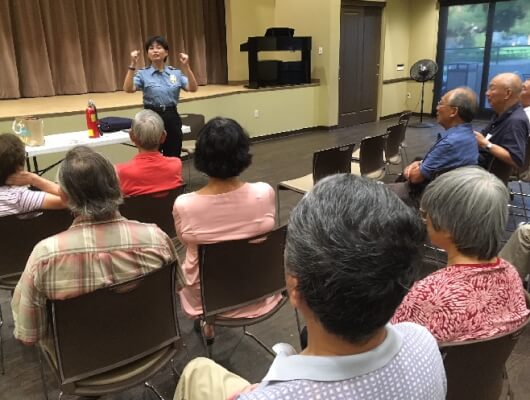
That’s the picture you see above. Our evening started with a pot luck dinner, then continued for a full 90 minutes while our Mandarin-speaking police officer went through the basics of emergency planning, earthquake preparedness etc. She was talented and the audience was totally engaged!

I even sneaked in another English lesson. And I passed along the discount coupons made available by our local hardware store.

Follow up!

As a result of this meeting, my own circle of friends has expanded. (My Chinese vocabulary remains stuck at 3 words.) I’m working with the leader and her core group to make sure these folks get more good training on a regular basis. First on the agenda, a great handout – in Chinese – from the Earthquake Country Alliance.

The group members are all looking forward to the training, and actually to a repeat visit from the policewoman. I’m looking forward to counting on these neighbors when the disaster hits!

Expect some push-back.

A couple of days after the dinner meeting, I mentioned it in a different setting. A long-time neighbor commented: “Well, as long as we keep doing things for them in their own language they will never learn English.”

Hm. I agree with that statement. I think everyone in the U.S. should learn English. (That’s why I was part of the teaching team! For that matter, I’ve taught ESL in a variety of settings over the years.)

But when it comes to an emergency, I am not willing to watch people get into trouble – or get ME into trouble – when some basic information would make all the difference!

And at Emergency Plan Guide the concept of “us” vs. “them” isn’t too popular! We don’t think anyone is unworthy of assistance or training. Our goal is all-inclusive — to help individuals and their communities become stronger and more resilient.

Where do you go from here to have a better chance of counting on your neighbors?

What challenges do you have in organizing YOUR community? What successes have you had in attracting people to emergency preparedness activities? What hasn’t worked? Who have you called on as resources?

Please send a message and share a story about your best meeting, of just drop your story into the comment box below to share with everyone!!

Virginia
Your Emergency Plan Guide team

P.S. I’ve mentioned a few resources in this Advisory. Here are some direct links if you want to track them down:

  • The Neighborhood Disaster Survival Series —  Each of the three books in the Community series has hundreds of ideas for building a neighborhood group and a “durable” emergency preparedness plan.
  • Message in a Bottle This is an inexpensive, one-time activity designed to remind everyone in the community about building up a supply of emergency food and water.
  • Partnership with the Local Hardware Store  You may be familiar with multi-tools or gas-shut-off wrenches or fire starters, but that doesn’t mean everyone is. Here’s how we partnered with our local hardware store for a great show-and-tell meeting.

Where to put Mom? Emergency Preparedness in Care Facilities

Share

What are the chances of you or Mom ending up in a nursing home?

Man with disability in wheelchair

Updated statistics will be coming out after the next census, but right now it looks as though the chances of a senior citizen spending time in a nursing home or skilled care facility are about 1 in 4.

This should immediately bring to mind the 14 people who died last year in Florida when their nursing home air conditioning failed. You may even remember tragic images from Katrina.

Reassure yourself about emergency preparedness in care facilities you are considering!

I’ve been searching for professional advice on this topic, and I found it on one of my LinkedIn groups.  After a series of back and forth messages, Nicholas Thorpe kindly agreed to provide Emergency Plan Guide readers with questions to ask.

You’ll see that his questions fit right in with the way we try to learn more about being better prepared.  Please check out his expert article below, and share with other family members and friends. 

Long-Term Care and Emergency Preparedness — Knowing the Right Questions to Ask

By Nicholas Thorpe,  8/2/2018

When considering long-term care facilities, we all look to ratings, accreditations and high standards.  One of the most overlooked considerations, however, is emergency and disaster preparedness.  Does the facility you are considering have plans in place for adverse conditions, be it man-made or natural disaster?

New rules for emergency preparedness in care facilities are now in effect.

Following Hurricane Katrina, the Center for Medicare/Medicaid Services (CMS) began to work on new rules to govern how emergency preparedness should be handled at various medical facilities. In the fall of 2017, the new rules for emergency preparedness went into effect for seventeen (17) health care provider types (to include long-term care facilities). These rules are meant to correct the lack of preparedness that was seen following Hurricane Katrina and other major disasters.

These seventeen (17) provider types are now required to be in compliance with the emergency preparedness rule as part of their eligibility to receive reimbursement for services and care through Medicare and Medicaid. These rules can be found on the CMS website at New Rules .

My role now in a health care preparedness coalition in central North Carolina is to work with health care facilities so they are better prepared for emergencies and disasters and to help them comply with the new CMS emergency preparedness rule.

Ten questions to ask as you evaluate emergency preparedness in care facilities.

The following questions will help you evaluate the level of emergency preparedness as you consider care facilities for your family member:

  1. Are you regulated by CMS and do you comply with the new Emergency Preparedness Rule?
    1. Have you been surveyed recently?
  2. What methods will you use to contact me should something happen to my family member or following an emergency or disaster?
    1. Do you have any additional methods you can utilize to contact me?
    2. Who/how can I contact the facility to learn the status of my family member during/following an emergency or disaster?
  3. Does your facility have a way to transport residents that is not reliant on local emergency services agencies in the event an evacuation is necessary?
  4. Does your facility have any agreements in place with other sites to relocate residents in the event of an evacuation?
  5. Does your facility have a generator that powers the HVAC system (heating and air conditioning) and refrigeration for the entire facility?
  6. How many extra days of food do you have on site should your supply chain be disrupted?
  7. How is security maintained in the facility?
  8. Has your staff had active shooter response training?
  9. Is your staff trained in providing first aid, CPR, and applying tourniquets?
  10. How often do you practice emergency procedures that aren’t fire drills?

Choosing a facility should not be solely based on how prepared it is for an emergency. How it is prepared, however, should be high on your list of criteria when deciding who should take care of the people who mean the most to you.

Nicholas Thorpe works for the CapRAC Healthcare Preparedness Coalition in Raleigh, North Carolina.  He has completed more than 1,000 hours of emergency preparedness training, trained over 200 first responders and over 1,000 volunteers in emergency management procedures. Nicholas holds a Graduate Certificate in Homeland Security from the George H.W. Bush School of Public Service at Texas A&M University, and a Bachelor of Arts in history with a minor in political science from The American University in Washington, DC.

Please share this important information widely. There are other questions you can add to this list, but these will get the conversation started.

Thanks again to Nicholas!

Virginia
Your Emergency Plan Guide team

A couple of years ago we wrote an article that’s a good companion to this one: Leave the disabled behind? 
This is a topic we’ll be addressing more in the future.


School Preparedness Questions for Kids

Share

Kid at school

How well will your kid do in answering these school preparedness questions?

Last time we listed some school preparedness questions to take with you to a Back to School meeting.

(I trust you realize that some of them will make your teachers or administrators uncomfortable.)

Today we’re turning the spotlight around, and shining it right on your kids – and thus on you as a parent.

Some of these school preparedness questions for kids are bound to make YOU uncomfortable!

The reason?

You will not be there when something happens at school! If you haven’t worked through these questions, you may not be able to count on  your kids when it really matters.

These school preparedness questions are meant to instill confidence, not fear.

If you live in the country or spend time camping or even scouting, your kids may “score” well on the following questions. If your kids don’t have access to those experiences, you’ll want to start building some of them into your everyday lifestyle. Over-protective parents don’t do their kids any favors.

Obviously, the “correct” answer to any of these school preparedness questions for kids depends on the age of the child, where you live, etc.

On the way to school – preparedness questions for kids 

  • Does your child know his or her full name? In an emergency, just a first name alone won’t do! Get your kids in the habit of always answering “What’s your name?” with their full name, so it will become automatic.
  • Has your child memorized key phone numbers and addresses – at least one or two? (Have you?) Yes, all names may be in your phone’s database, or your kid’s phone’s database, but you have to assume that in an emergency (earthquake, flood, tornado) phones will be lost. Even if emergency personnel are there, trying to help, if your child can’t give them key information . . .!
  • What are realistic threats that your child could face on the way to (or from) school? Depending on the age of your child and where you live, going-to-school threats might include:
    • Dangerous traffic
    • A car or bus accident
    • Being approached by a stranger
    • Having to ride with an unfamiliar person (neighbor, etc.)
    • Falling ill or getting a scrape or cut
    • Witnessing a fight or other violence
    • Being harassed or bullied by other children
    • Being threatened by a dog or other animal
    • An unexpected weather event
    • Fill in the blank, here, with a threat that might appear in YOUR neighborhood.
  • Is your child aware of these threats? Does he or she know how to respond?You’ll probably want to discuss likely threats one at a time and be ready with some good suggestions for your child on how to handle them. (Reading books or watching TV together may give you a way to start a conversation.)

Caution: If your child walks to school, or you are eager for him to begin, be sure he’s old enough! There’s no set age when that makes sense, but most experts seem to agree that kids aren’t really able to make judgments about moving traffic until they are 9 or 10.

Why, just last year I watched a newly-9-year-old come dashing down the hill from school and tear right across two lanes of traffic without even looking. His mother and I, standing together across the street, were horrified. She shook him, and I asked, “What were you thinking?!” His simple answer shows clearly what he was thinking, and ALL he was thinking: “I saw my mom!”

Selected resources for kids walking to school

Some of our Emergency Plan Guide Advisories may be perfectly good “training courses” for kids. And here are a couple of other resources specifically for children.

Blood is always upsetting, but it needn’t create an emergency. Make sure your kids know some of the basics: https://www.rd.com/health/wellness/teaching-first-aid-kids/

And if your kids walk or bike, check out this article. It has tips for different ages. https://www.healthyfamiliesbc.ca/home/blog/pedestrian-safety-tips-teach-kids

Preparedness questions for kids facing an emergency at school

  • Have you confirmed that your child understands the what and why of school safety drills? Have you shown you think these drills are important by practicing some responses together at home?
  • Does your child understand that in an emergency kids might have to stay at school for a long time? Or leave the school and go somewhere else? If they know this could happen, it won’t be such an upset.
  • How well would your child take emergency direction from someone else? (Teacher, crossing guard, police officer, etc.)
  • Would your child be willing to come home with a neighbor if you were not available? (You may have to adjust your teaching about “Don’t ever get into the car of a stranger.”)
  • In an emergency, could your child walk home alone from school? Does she know when that would be allowed?
  • Does your child know more than one route home?
  • Can your child get home by taking the bus?

Emergency supplies for children at school

  • Does your child have an emergency kit for school, one that he carries in his backpack all the time?
  • Does your child understand that the kit is ONLY for emergencies? (How often do you replace and replenish the kit?)
  • In addition to a list of contact numbers, snacks and water, does the school kit contain items like wipes, first aid supplies, a blanket for warmth, a flashlight, and a good whistle? What about an emergency phone?
  • Are all the items in the school kit allowed by the school?

Emergencies at home

If preparedness is important to you, then your children will pick up on that and just naturally become more aware and more able to take care of themselves. You may already have trained them in important survival skills. Many EmergencyPlanGuide.org Advisories are written for the whole family, and we assume you share them as appropriate.

But don’t overlook this one important skill that every young child needs to know:

How to call 911.

It seems simple for grown-ups, but isn’t.

First, the kid has to have a phone. A landline is easiest to find and more reliable; a cellphone has to have battery power and the child has to be able to unlock it to get to the keypad.

(On my iPhone 6, for example, I have to press the round Home button to get to the Lock screen. Then, without unlocking, I look for the word “emergency” at the bottom of the page. When I press it, another key pad comes up so I can dial 911 and then press SEND and then I have to wait to be connected.  Lots of steps.)

This article has good hints about dialing 911 and practicing the dialog.

We’ve all heard the stories of toddlers dialing 911 and saving a parent. Those parents weren’t lucky – their kids were trained!

One final note. Older children may be more effective and training younger children than you are, so give them the chance!

Until next time*,

Virginia
Your Emergency Plan Guide Team

*Next time I’ll be addressing some of the best student emergency items I’ve found. Don’t miss that Advisory because the new school year is just around the corner!

And once again, if you didn’t get the questions to ask school administrators, get them now.


“Wholistic” Approach to Emergency Preparedness

Share

Emergency Planning requires wholistic approach

At any given moment, take a look to your left. Then to your right. If disaster hits right now, one of those people is going to be your “first responder!”

Given what you see, what are your chances???

“We are all in this together.”

Here at Emergency Plan Guide you’ll see our wholistic approach again and again: “We are all it this together.” That’s why we extend our concern beyond individuals to the groups they find themselves in.

In our new book, Emergency Preparedness for Small Business , we point out the many groups connected to a business. Here’s an abbreviated look at some of them, and how they fit into the “wholistic” approach.

Every business community plays a role in YOUR business’s ability to survive a disaster, . . . and needs to be included in your “wholistic” emergency preparedness plan.

Your relationship with each of these groups can impact your brand and your reputation. Your community relationships impact your employees’ skill levels and quality of life. And your communities play a role in your ability to respond to emergencies.

If you’re a business owner or an employee, are you including these communities in your wholistic planning? 

What follows are excerpts from Chapter 3 in the book. (More communities are identified there.)

-The physical location

If you are in a business or industrial location your primary official contacts are likely the city government and local fire department. They will be concerned about providing immediate response to the threat of toxic chemicals, fire, flood, etc.

Other nearby businesses will have the same concerns – and will compete for the same official resources.

If your business is located near (or in) a residential area, nearby residents may have additional concerns about safety and security, including the company being prone to looting or other potential lawless activity.

-Employees and their family members

Communications with staff and family members are absolutely critical.

You probably already have an Emergency Contact form for employees. Does it have contact info for ALL family members plus an out-of-area contact? Do you know about special skills employees may bring to the emergency response table?

-First Responders, hospitals and other health care resources

How close are you to fire and rescue installations, hospitals, emergency care facilities? Under normal conditions, how long does it take them to respond to an alarm in your neighborhood?

Within your organization, what medically trained people are available, and what first aid and medical supplies do you have on hand for them to use?

-Utilities

Have you met with representatives of your different utility companies? What is their ability to respond to disruptions? Who in your organization should be trained on utility protocols?

-Telecommunications Companies

What level and type of services do you receive for voice, data, internet, video and restoration services in an emergency?

-Local, State and National Governments

What kind of resources can be mobilized at the local city level to deal with a crisis? The county or state level? How/when could you receive assistance from a National Guard deployment? FEMA?

-Stakeholders

Keeping the various stakeholders (board of directors, financial advisors, etc.) apprised of business conditions is an important management commitment. All stakeholder groups will have questions and will likely demand updates as to the company’s status in an emergency.

-Suppliers and business partners

What contingency plans do your suppliers have in case they run into problems?

-Customers

How will you support customers – local, long-distance, international – if the business is interrupted? How will customers be contacted in an emergency?

-Social Media

We have seen repeatedly how “news” of emergencies spreads dramatically via smartphones. Keeping the company’s messaging consistent to prevent rumors and speculation is a primary requirement in an emergency. Do you have protocols set up?

OK. These aren’t all the “communities” associated with a business. One of the reasons they all need to be considered?

Neighboring business communities may have conflicting interests in a disaster.

Bear in mind that the interests of these different groups can vary greatly.

Most will likely be sympathetic to your emergency situation and even helpful in the recovery process. Others may jump at the opportunity to take advantage of your problems. Still others might feel you were negligent in not taking reasonable or sufficient precautions to protect them from your problem – not to mention protecting your own employees, visitors, etc.

As always, thinking your situation through before an emergency hits will help you anticipate everything that could go wrong – and help you start setting priorities for building the processes and the relationships within the community that will make your response easier and more effective.

You might want to take another, closer look at Emergency Preparedness for Small Business. You can see the entire Table of Contents at Amazon.  

Virginia and Joe
Your Emergency Plan Guide team

P.S. We’re not lawyers but we have had enough business experience to be able to warn our readers of some of the legal dangers of not having a business emergency plan. We include those warnings in Chapter 8 in the Book.


Disaster Survival Series adds 4th title for Small Business

Share

Now available:

Emergency Preparedness for Small Business

The book that closes the gap in disaster survival between a business and its family communities.

4th book in series

The series expands: Emergency Preparedness for Small Business

No longer do small businesses have to put their business, their lives and their employees’ lives — and livelihood — at high risk in a catastrophic event. Emergency Preparedness for Small Business makes writing a simple Business Continuity Plan manageable and even easy. And we know that having that up-to-date, workable Plan improves the odds of business survival by an order of magnitude.

The foundation already exists.

This fourth book in the Neighborhood Disaster Survival Guide series has one unique purpose — to get business owners and leaders of their workforce community to adopt the widely acclaimed FEMA Community Emergency Response Team (CERT) process as an already-existing foundation for their Plan. CERT is provided free by over 2,500 cities and counties across the U.S. as well as on the FEMA website.

Authors Nicols and Krueger are themselves CERT graduates, and in the book have combined their years of working with business with their years of developing and leading a neighborhood emergency response team.

The first three books in the series were devoted to fulfilling the promise of CERT, giving individual members a way to leverage their training by reaching out and connecting neighbors and even whole neighborhoods.

This book extends CERT basics to the business community.

There’s no longer any excuse.

Joe Krueger says, “Whether you’re at home or at work, there’s no excuse for simply rolling the dice in an emergency. In fact, at work that attitude could be grounds for a lawsuit!”

Now businesses as well as neighborhoods have a simple roadmap for preparing for the natural disasters that threaten, as well as the even-more-frequent man-made ones. Each book presents options and real-life examples, offers step-by-step guidelines and adds references to dozens of other resources. There’s an occasional legal warning, too.

The message to all:

Disasters have surged 400% over the past 20 years – and they are bigger, often overwhelming official First Responders. It’s up to citizens to know what to expect and how to react, because they become the real “first responders!”

All 4 books are available as ebook or paperback at Amazon. Here are direct links:

  1. Emergency Preparedness for Apartment Communities
  2. Emergency Preparedness for Mobilehome Communities
  3. Emergency Preparedness for Homeowner Communities
  4. Emergency Preparedness for Small Business

When the disaster hits, it’s too late for preparing or for training.  Take the first step now.

Can you trust your fire extinguisher?

Share

Comparing fire extinguishers

Comparing fire extinguishers. How long will they last? Are they rechargeable?

Your CERT investment

How are you using your CERT training? (Check all that apply.)

  • I’m adding more and better gear to my green CERT bag.
  • I’m working on immediate family members to develop better “situational awareness.” Not always with much success.
  • When the subject comes up, I encourage neighbors and co-workers to take the training.
  • I have joined a neighborhood emergency response group.
  • I have decided to START a neighborhood emergency response group.

As you may have gathered by now, Joe and I don’t think getting CERT training is enough. Oh, yes, it’s valuable.

But “saving” it just for yourself or your family is like getting a double barreled shotgun and only ever using one barrel. Or getting bunk beds and only ever sleeping in one. Or getting . . . well, you can come up with another example of letting half of a really good thing go to waste!

In this case, it’s wasting all the good information that will help OTHER PEOPLE save themselves in a disaster.

Because that’s our philosophy, we’re always thrilled when we hear from people that they have made a successful effort to share good information.

A Better Return on Investment

Two weeks ago I heard from an Emergency Plan Guide Advisory reader that her mobilehome park was having a big Disaster Team meeting with several speakers. She reported that over 70 people had already signed up! Why? . . . free pizza, salad and beverages provided by Park Management!

Naturally that news made me want to share the meeting that we held last week in our community. We didn’t get 70, but almost that many people. And what made it different was the sponsorship of our local hardware store.

Plan a successful emergency response team meeting

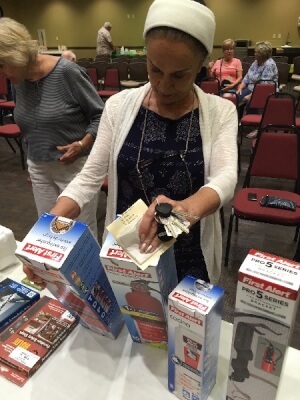
Over the years I’ve written up “lesson plans” for neighborhood meetings and events. So here’s another one that perhaps you can use to “spread the word” in your own community. If the woman in the picture actually buys a fire extinguisher, we may have saved a home — or even a neighboring home!

All the meeting ideas presented in the Meeting Idea Books follow the same format:

  • Title
  • Objective
  • Procedure
  • Materials Needed
  • Comment

Title: We can call this one: “Building a Stronger Community.”

Objective: To encourage people to pick up a few everyday tools and equipment appropriate for day-to-day repairs AND emergencies.

Procedure: Joe and I approached the manager of our local Orchard Supply Hardware (OSH) about putting on a special “pilot” program for our community. We wanted to get people to the store to buy some important emergency preparedness items.

After a tour of the store, and a number of discussions with OSH and our team leaders, we agreed on the following format:

  • We would promote a “show and tell” meeting at our clubhouse.
  • The store would send a sales person to our meeting along with a number of examples of emergency equipment – fire extinguishers, multi-tools, lanterns and flashlights, smoke alarms, pre-built emergency kits, etc.
  • Members of our neighborhood team would also bring and demonstrate emergency items they own – pet container and pet survival kit, headlamps, various bottled water supplies, etc.
  • Nothing would be for sale. Rather, all attendees would receive a one-time DISCOUNT COUPON. All they had to do is take it to the store, shop from their list, and get the discount at the counter.
  • We’d have a door prize and refreshments.

Materials needed: The store selected (with our input) all the items they wanted to show, and brought them complete with price tags. Our team members brought their own things, some of which were not available at OSH. All we needed to create from scratch were the various promotional items for the meeting – flyers, newsletter article, email announcement – and the discount coupon. For the meeting itself we needed several tables for display, cups and napkins for the refreshments, plus two microphones (one for the M/C, one for the person doing the demonstration).

Comment: Our goal was to host a “community meeting” and not a commercial for the store. We made sure all advertising emphasized our Emergency Response Group. And having a mix of OSH and team speakers and show and tell items kept everything well balanced.

As much as I thought this meeting might be “ho hum,” (How many times can you talk about fire extinguishers?!) we got more than the usual number of thank you notes! We kept the speakers on track. And afterwards people crowded around the tables to pick up and examine ALL the articles, including those fire extinguishers and packets of water!

We haven’t heard yet about sales success, but I did send the store some ideas for follow-up meetings plus bullet points for a press release.

All in all, the meeting did what I hoped it would do – reach out to some new neighbors, introduce some new emergency preparedness ideas, and above all, demonstrate that we are a community and as a community – the more we all know, the safer we all will be!

If you are trying to come up with an idea for a meeting in your neighborhood or perhaps at work, try a variation on this one.

Virginia
Your Emergency Plan Guide team

P.S. We have held similar events in the past. At one meeting some years ago, The Home Depot and Costco both came and took orders that they delivered a week later.

P.P.S. Fire extinguishers were the hot item at that earlier meeting, too!

Summer water dangers

Share

White water rafting

Joe almost drowned.

It was summer in West Virginia and we were eagerly looking forward to our fourth river rafting trip. We had previously gone rafting in California so this would be a different sort of adventure.

Oh, it turned out to be different all right!

The rafting company was operated by the usual mix of tanned young outdoor types, who got us suited up with some smelly half-damp life vests and loaded us into a clumpy bus for the 20 minute ride to where we would put in.

I seem to recall that the trip included some Class III and just one set of Class IV rapids.  That’s where the raft simply rose up on one side and flipped Joe right out. We all laughed a bit and watched as he was swept ahead of us downriver. We couldn’t catch up right away so he rode the rapids the whole way, feet up in front to keep them from getting snagged, just as he was supposed to.

What we didn’t realize was that his life jacket wasn’t supporting him. Because it was already partly water-logged, and probably too small, every time he got his feet up his face went under. At the bottom of the rapids we finally pulled the raft up beside Joe. He stared up at us blankly, his chin under water, unable to speak or even reach out. Thank goodness the guide saw what was happening, reached over the side, grabbed the front of the vest with both hands and hauled Joe headfirst right over herself into the boat.

For the next 15 minutes Joe lay face down, gasping and coughing and hardly moving while the guide scrambled and got us a place to land. He didn’t say anything at all for the next couple of hours either, as we finished the run. (No more rapids.)

OK, you know he is now recovered. After all, that was a good 20 years ago. But we have never again gone rafting; the memory is just too painful for him.

What’s the point of the story? There are actually 2 of them.

  • First, someone could be drowning and you might not even know it.
  • Second, even a strong swimmer can be let down by bad equipment.

Here’s more . . .

Drowning doesn’t look like drowning.

I was reminded of our rafting story when I came across a super article last week published in one of my LinkedIn groups. It was written in 2010 by a Coast Guard rescue swimmer named Mario Vittone, published in the Coast Guard magazine, then republished and read 574,000 times since then! Here’s the link: http://mariovittone.com/2010/05/154/

If you don’t have time to read it right now, some highlights:

  • Drowning is NOT what we see on T.V. – screaming, wild splashing, arms waving. In fact, drowning is deceptively quiet. That’s why we read so often of children drowning just a few yards from their parents or other adults. In fact, the CDC said 10 percent of parents watch their children drown because they don’t know it’s happening!
  • Drowning people cannot call out. They are desperate for just one breath in before going under again.
  • Drowning people cannot reach for a float or pole. They instinctively press down with their arms on the surface of the water to try to raise themselves.

Other signs: mouth at water level; head tilted back with mouth open; hair over eyes or face; eyes unable to focus; not using legs.

Joe fit all the symptoms. He was drowning.

Please become number 574,001 on the list of people who have read the WHOLE STORY  and know what to do in the 30 seconds or less you have to save someone.

Bad equipment is like no equipment.

If you’re using rental life vests – known as Personal Flotation Devices or PFDs — check them out thoroughly for fit and floatability. And, of course, the same with any life vests you intend to buy for your family.

Fit: My granddaughters are very young. They love their water wings and are fearless around deep water. However, like all kids they GROW. That means their parents are replacing not only swimsuits at least once a season, but also life vests/water wings and all other water paraphernalia.

It turns out that life vests may be measured by weight or by chest size or both. The vest that Joe was wearing on the river trip was measured by his chest size only – not by his total weight! A mistake!

For children, the most common mistake is a vest that is TOO BIG. It it’s too big, it can slide off or be so uncomfortable the kid takes it off.

For adults, particularly big ones with a belly measurement bigger than your chest measurement, using only chest size may suggest a vest that is TOO SMALL for you.

Take the time to be sure you have the right size!

Function: Different life vests are available for different water sports. For example, you can find vests specifically for learning to swim, for boating, paddle boarding, fishing, kayaking, etc. Then there’s a whole other series (tighter!) designed for more active water sports like waterskiing, wakeboarding or wake surfing. And there are newer waist vests that only inflate when you want to inflate them.

As always, one size or style doesn’t fit all. And people, being people, won’t wear a vest that is too uncomfortable. Shop to pick the best style for your body and your water plans – and always start with a vest that is U.S. Coast Guard approved.

Floatability: Joe’s vest may have been the right size, but it had not been properly taken care of. The nylon was ripped and inside foam was already water-logged, which meant the jacket could not keep his nose and mouth above water.

Now, not all vests are designed to do this even when they are new – so once again, take the time to figure out where you’ll be in the water (close to shore? raging river? out in the middle of Lake Superior?), what you’ll be doing (sailing? snorkeling? jumping off the rocks?) and who is likely to be nearby to help.

Here are some examples of life vests to get you started on your shopping. I picked these because they got good reviews from other buyers and because they offer features I’d want. I’ve given an idea of cost at Amazon — where we are associates — but be sure to click on the image or link to get the accurate price and delivery details. Different colors may cost different prices, and sometimes the best price doesn’t include shipping. Again, these are all-round, everyday vests. The cost of specialty vests for a particular sport can quickly reach $100 or more.

1-Infant/toddler swim vest that won’t accidentally come off.

For an infant or toddler weighing less than 30 pounds, this jacket has features you’d want to look for: a strap that goes between the legs so the vest can’t ride up or slip off; a grab handle at the top so you can easily scoop the baby out of the water. The most popular and cheapest model is blue. I’d choose red because it would be more visible in the water. On the day I searched for this, the cost was right around $20. US Coast Guard-approved, of course.

Classic Vest Infant/Red

2-Vest for child learning to swim.

The Body Glove vest below, with chest vest and arm bands, is designed to help a kid learn to swim. It is NOT a classic life vest like the red one above. Rather, it’s meant to be used where watchers are close by to give an immediate hand in case of trouble. What I think would be important is the fact that the child can’t take this off by him or herself! (Fastens in back.) For a child weighing 30-50 pounds. And naturally there are other “motifs” including mermaid and pirate. Great presents!  Prices range from $20-30.

Body Glove 13226H  Kids 13226M Paddle Pals Motion Swim Life Jacket, Race Car

3-Life jacket for active kids.

The kids I know would not be happy wearing a stiff or bulky life jacket and would surely find a way to get it off. This one they might leave on because it is slim and smooth and has 5 “built in” hinges for flexibility and comfort. (The flex-back jackets seem particularly popular for adults, too.) This fits kids from 50-90 lbs, comes in a different color scheme, too. (There are a number of vendors selling this jacket; only some are eligible for Amazon’s Prime. Check carefully.) Price on this one was $40-$50 the day I shopped.

Full Throttle Youth Hinged Rapid-Dry Flex-Back Vest, Blue/Green, Size Youth

4-Classic life vests for adults.

There are lots of choices for adults. The first one here seems to be a good all-round life vest. It features light-weight flotation foam covered with a smooth nylon shell. You can adjust buckles for comfort, and the vest has open sides for even more comfort. Cost is around $30.

Now, it says the vest is designed for adults weighing 90 pounds or more, but if I were BIG, I’d probably be looking at the second vest below, the red one, also made by Stearns.

Stearns Adult Watersport Classic Series Life Vest, Yellow

Compared to the Watersport Classic, the Classic vest from Stearns comes in larger sizes: “Oversized” and “Universal.” Read the instructions and dimensions to be sure to get the right one. This costs a few dollars less than the Watersport model above (three sets of buckles instead of 4?).

Stearns Adult Classic Series Vest, 3000001412, Red, Universal

In the U.S. there are about 10 deaths a day from drowning, and another 1 of drowning as a result of a boating-related incident.

You and family members will ALWAYS be around water, one way or another. Learn to swim. Learn more about water safety so you don’t become a statistic – and learn how to save someone who’s in trouble so they don’t become a statistic, either. There’s a simple “How to save someone from drowning” lesson here.

Oh, and don’t let our story about river rafting deter you. It is REALLY EXCITING and GREAT FUN! Just be sure your equipment is sound!

Virginia
Your Emergency Plan Guide team

Your Survival Kit – Just “a Preparedness Placebo?”

Share

Fortune Cookie

I first saw this “placebo” expression a week ago in an article on LinkedIn. I liked the article (about the failings of FEMA) and liked the expression, in particular. It inspired me to write again about survival kits!

Just as a reminder, a “placebo” is defined as “a harmless procedure prescribed more for a psychological benefit than for any physiological effect.” (Other words that appear in other definitions for placebo are “fake” and “inert.” I love words!)

Do you have a survival kit?

As you know, we recommend kits for everyone, and often more than one per person. One of our most widely read articles offers a handy chart  to help you figure out how many you need.

Could your current kit be considered a “placebo?”

  • A harmless survival kit would probably be a kit that contains just a few miscellaneous items and hasn’t been updated or replenished in a long while. Actually, this kit might actually be harmful if you are counting on it to meet your needs in a real emergency.
  • What psychological benefit do you get from your survival kit? Do you feel you’ve done your part? Taken all the steps that could logically be expected of you? Does your kit give you actual peace of mind?

How do you answer? Unfortunately, in answering this question, many people who own pre-built survival kits will have to agree that their kits ARE placebos.

What makes a “real” disaster kit?

It’s going to be one you built yourself!

Whether you call them disaster kits, preparedness kits, survival kits, 72-hour kits – doesn’t matter. Putting them together yourself offers important benefits.

  • Figuring out where you need kits – at home, in the car, at work, at school, on vacation – starts you thinking about all the potential threats you and different family members face.
  • Building a kit for yourself and another one for your 8-year-old makes you realize that one size does not fit all. Why, your identical twin would need different stuff than you need!
  • Packing for self-sufficiency for 72 hours – and getting it all into a kit you can carry — makes you realize what is really essential and what is a convenience you can do without.
  • Sorting through a first aid kit, a set of hand tools or a box of snacks forces you to evaluate benefits, uses, and quality of each item. You’ll discover you want the best, not the cheapest.

What goes into every “real” disaster survival kit?

I am assuming that since you’re reading this at Emergency Plan Guide, you already have an idea of the basic list.If you need a review, here’s a link to our lists. (The first list is the basic 72-hour list – pick what you can use.)

How should I customize my kits?

Here’s where your disaster kits stop being “placebos” and start being really meaningful to your successful survival!

We’ve pulled five interview questions from our Survival Kit Workbook, so they may be familiar to you. They’re worth answering again.

Question #1. What emergencies could actually arise?

Your answers will depend largely on where you live. For example:

  • Sun. Say you live in the moderate climate of Southern California, and have everything organized for that. But, you decide to drive from LA to Las Vegas! Now that takes you into real desert! If your car broke down you would need MORE water, sunscreen, hats, dark glasses, maybe even reflectors (mylar space blankets) to stay alive! Add these items to your car kits as necessary. (Also, don’t start walking . . .)
  • Damp. Whether you live in the jungle, or take a trip there, you don’t want to forget to pack a poncho and rain hat, mosquito repellent, snake bite kit, etc. Once again, your pre-built kit may have a poncho, but is VERY unlikely to have any of these other items. Don’t forget a plastic bag to pack INSIDE your kit to keep things dry, and another one to put OVER your kit to keep things dry!
  • Cold. Most life-saving items for extreme cold won’t fit in a regular back-pack, so if you live or travel in these conditions, pack a second bag with gloves, boots, warm hat, a cold-weather sleeping bag, hand warmers, fire igniter.
  • Coastal area. It’s probably going to be cold even in the best weather, so consider warm clothing. If there’s the possibility of flooding, have an escape tool that will get you out of a seatbelt and out of a car being threatened by deep water.
  • Hurricane or tornado zone. You want to know when the storm is arriving! So have an emergency alert radio or mobile phone app for warnings. Have storm or rain gear. Consider tools to help you escape from a damaged building, and a signal device to warn rescuers if you can’t escape.
  • Earthquake. Add to your escape tools and signaling devices some extra items to help with digging out – like gloves and a dust mask.

We’ve mentioned natural disasters. Don’t overlook man-made disasters that could require special equipment, too! The list is long: bomb blast, gas line leak, power failure, water supply problem, etc. We’ll take a look at the whole list another day. Back to the interview questions.

Question #2. Where am I likely to be when disaster strikes?

If you are a commuter or driver (soccer mom), you could be in your car. Your car survival kit should include the basics, plus specialty items like decent walking shoes, maps (GPS may be out.) and car safety gear in its own pack (flares, tools, etc.).

As a student away from home, your dorm room or apartment is where you’ll want to store your kit. Be sure it has the basics, plus a copy of the family emergency contact list!

If you are retired, spending most of your time at home in familiar surroundings, your kits can be handy in the closet or near the door. Don’t forget to include medicines enough for 3 days. (If you had to leave home, it might take that long to get hold of replacements.) How about glasses, hearing aids and batteries?

Do you have pets? They’ll need kits, too! Start with a container, and put into it leash, food, dish, pee pee mats and/or dog poop bags. Don’t forget medical needs and a photo ID of you and the pet together. (Don’t want a lost pet sent off with the wrong person.)

Question #3. How capable and strong am I?

There are some pre-built kits on the market that are very complete – and they weigh so much you probably can’t lift them! So, can the person the kit is meant for actually carry it? Unzip and unpack it? It makes no sense to have a full kit for someone who can only manage a half dozen items in an old purse.

Your general level of competence will also have something to do with whether you pack these items: cash, keys, copies of important documents (on flash drive, I hope).

Question #4. What skills do I have and what tools could I realistically use?

One of the most popular items for a kit is a multi-purpose tool, with knife blade, scissors, can opener, pliers, etc. However, not everyone can use one of these. Some people wouldn’t even be able to open it! Maybe a simple knife or pair of scissors would be better suited. Don’t include items – tools, medicines, rope, matches, weapons, etc. – that waste space or worse, become dangerous in the wrong hands.

Question #5. Where will I store my kit?

We already talked about this. The idea is to have the kit handy, so you can grab it and go.

It doesn’t make sense, by the way, to broadcast that this is a survival kit. Avoid bright red cases with the words “Emergency Supplies” on them! We prefer non-descript or even used backpacks or duffle bags.

Whew. We jumped right into this, didn’t we! But I am confident that if you answered all the interview questions, and made appropriate adjustments to your survival kits, not one of them could be considered a placebo.

Here at Emergency Plan Guide, our kits are “the real thing!”

Virginia
Your Emergency Plan Guide Team

P.S. What have you included in your survival kits that wasn’t mentioned here? Let us know so we can add it!


More hurricanes, and Harvey isn’t even over yet

Share

Flooding from rain

New hurricane season started June 1.

Recent headlines announce the start of a new hurricane season, with between 10 and 16 named hurricanes to look forward to. There’s apparently a new threat, too – “superstorms” that fall outside the regular categories!

So, have you moved recently? Or are you planning some travel?

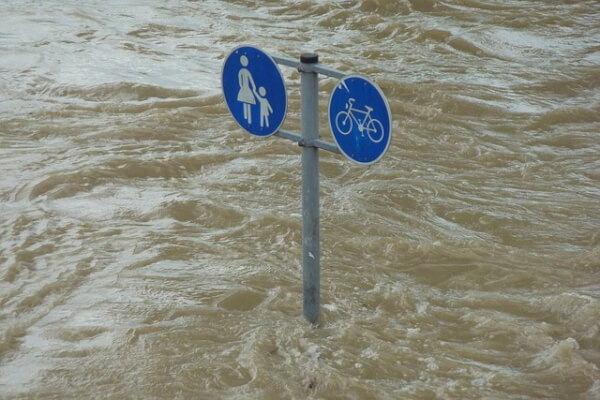
Or maybe right now you are sitting in an area that could be threatened by the winds, storm surge or flooding from a hurricane? (Hurricanes don’t just hit coastal areas. They can create flooding for hundreds of miles inland.)

At Emergency Plan Guide we’ve written about hurricanes before, of course. (Remember the “Hurricane Headscratcher” that we put out last year?) But even if you think you’re an “expert,” it can’t hurt to refresh your understanding of some smart things to do to prepare.

Here are two excellent references, new to this Advisory:

  1. For families: . https://www.ready.gov/hurricanes  Note particularly the comments about signing up for local alerts and getting familiar with local evacuation zones and routes.
  2. For business: http://www.agilityrecovery.com/assets/hurprep.pdf This 4-page checklist was written in 2013 so the statistics may not be up to date, but the recommendations are worth considering, particularly those that have to do with shutting your business down before the storm hits.

And to get back to Harvey, where there are still lessons to be learned . . .

Hurricane season reminds me of Harvey, so I went back to see what has happened in Texas since the storm hit there last year. (August-September, 2017)

The following list is about Texas, but it could apply to most every community affected or threatened by a natural disaster. (In fact, there are some striking similarities between what people in Houston experienced and what is going on right now in Hawaii.)

As you read, think about the threats your community could face and how it might fare . .

1- Insurance. Most homes in Harvey’s path didn’t have flood insurance. Since the storm, applications for flood insurance have increased, as you might expect. What you might not have expected is that the vast majority of new policies (quoted as 70% by one agent) are for homes outside the mapped flood hazard area. People are recognizing that planning around the concept of the “100 year flood” isn’t adequate.

2- Name. Harvey was so destructive (51 inches of rain in certain parts of Texas) that its name has been retired from the list of potential names for future storms.

3- Help from the Government. Texas has requested and received millions in aid for rebuilding. At the same time, the state requested “flexibility” in deciding how the funds should be used. This has alarmed advocates for housing and for disadvantaged communities because the list of projects submitted along with the requests was heavily weighted toward large-scale infrastructure.

4- Homeless. The problems haven’t ended for people displaced by the storm. Of course, some homeowners have started rebuilding. But other people whose homes were damaged have been notified they need to elevate the homes before they can move back in. Naturally, many can’t afford what can be considered major renovation. And the FEMA vouchers that were allowing homeowners to stay in hotels have now run out.

5- More homeless. People who were renting when the flood hit have suffered even more. If they had no insurance, they may have lost most of their personal property. Those who hadn’t found new apartments and had been staying in hotels found their vouchers ended even sooner than homeowners.

6- Still more homeless. I don’t even want to mention the FEMA trailers sitting empty months after the storm . . .

More results you may never have even considered.

7- Jails. Flooded courthouses slowed the wheels of justice, causing jails to become overcrowded. According to one jail insider, “The situation is so dire that the county lock-up may soon have to begin turning away arrestees.” (I was unable to find out if that actually happened.)

8- Animals. The water that inundated the area also caused displacement of animals. Alligators from the wild and also from parks floated free and appeared in flooded neighborhoods. Fire ants, driven from their underground homes, clustered into “floating islands” to protect their queens until waters receded and they were able to build new nests in new locations.

9- Disease. Medical professionals continue to monitor the impacts of the air pollution, contaminated water and mold caused by the flooding, mostly from the superfund sites in the region. Researchers predict long-term health and emotional health problems.

Yes, 2017’s hurricane season was “the most costly and disruptive on record” in the U.S. So maybe this year won’t be so bad?!

You can hope.

In the meanwhile, this one storm alone reminds us how Americans have become so dependent on modern conveniences – power, hospitals and medical services, transportation, communications – that when these get interrupted or destroyed, the results can be disastrous.

Time to take another look at how well YOU are prepared for an emergency.

Virginia
Your Emergency Plan Guide team

P.S. Many of our Advisories are meant to be shared. This is one. In particular, share the links to the two sets of checklists for families and for business. Just one good idea could save both money and anguish — not to mention lives.

“More than we want to know”

Share

In The Rabbit HOle

A blog post on emergency preparedness every single week?

Six years ago when I started writing the Advisories for Emergency Plan Guide, my daughter assured me that I’d have no problem coming up with an article every week.

“After all, Mom, you’ve always been indiscriminately curious.”

I’m not sure that was a compliment. But it IS the truth, so every week I am inspired to learn more and write about some aspect of preparedness. Sometimes they are pretty unconventional – like volcano insurance, or museum putty, or the difference between threat and risk.

But there’s one topic I don’t write about: guns.

You will have noticed that Joe and I pretty much stay away from writing about guns.

We take this editorial posture for several reasons:

  • Our focus at Emergency Plan Guide is mostly on people working together to improve their chances in a disaster. When people use a gun in a civilian setting, it’s not usually an indication of “togetherness.”
  • Most of our recommendations are for things that ordinary people can see the value of and can be put to use with minimal training. Guns take a whole lot of practice and STILL may not turn out to be effective. On the contrary . . .
  • Our readers come from around the country and increasingly from around the world. (Recent subscribers have come from The Philippines and Spain.) Rules and regulations regarding firearms vary tremendously; I don’t want to get any reader into trouble because I misled him or her or overlooked something critical.

All that said, I know that . . .

Many of our readers ARE interested in guns — just like I am!

Somewhere along the line I’ve written about my teenage days hunting quail and pheasant with my Dad. (I carried a double barrel 20 gauge – and was quick off the mark!)

I could certainly write about my eye-opening experience at the gun range in Las Vegas a couple of years ago – the first time I had fired a handgun.

And I could include info from other prepper blogs I subscribe to, and the endless stream of offers I get for free Glocks, free laser sights, free ankle holsters, plastic guns you can make yourself, bulk ammo, cheap ammo, bulk cheap ammo – you name it!

What prompted me to write today’s Advisory about guns?

With all that activity and interest, sometimes it doesn’t feel right just ignoring the subject. So when I came across the resource I’m recommending today, I was delighted!

One of the survivor blogs I get and read regularly comes from Aaron at In The Rabbit Hole. His focus in on “urban survival” and he offers blogs and videos to his fans: “How to Stop Worrying And Actually Be More Prepared.”

Sounds familiar, doesn’t it?!

Anyway, over the past couple of weeks he’s been running a training series made up of short videos. I started watching because they are short, and discovered a certain engaging quirkiness and a perspective I appreciate.

The third episode inspired me to action.

When I got to the third episode of the current training series, I knew I wanted you to see it too!

Whether you are a gun lover, a gun hater or scared of the whole issue, you need to see this short video, hear the story, and consider the advice. I haven’t seen anything as good for a long time.

I contacted Aaron and he kindly sent a link where you can sign up for the free series. It will be delivered one day at a time.  I suppose you can wait for the 3rd day to get the episode on guns, but you’ll want to watch day 1 and day 2, too. Same quirkiness and same refreshing perspective!

 https://www.intherabbithole.com/7-day-course/

Let me know what you think!

Virginia
Your Emergency Plan Guide Team

I just got episode 6 today, and am going  to go watch it now.

No Valid Excuse for Negligence

Share

Lawsuit for negligence

If you are prepared for emergencies at home, and have a survival kit at work and at least one in the car – Congratulations!

(I don’t think you’d be reading this if you didn’t have at least some of those kits!)

Now, if you are a business owner, manager, or business board member, I don’t make the same preparedness assumptions. In fact, my assumption based on national statistics is that you are NOT prepared for a workplace emergency!

Today, having no plan might be considered negligence!

The word for the unprepared business owner is — Watch out!

Joe and I just finished putting finishing touches on the fourth book of our Disaster Survival Guide Series. This book is aimed at owners and employees in small businesses (or larger ones, for that matter).

One thing that pops out of is that the list of threats for family preparedness is nowhere near as long as the list of threats for business. Our list of threats for families has something like 59 items on it. Our current list of threats for businesses has reached 83!

And as I added a couple more items to the business list, I knew I wanted to get some information out to you today. It can’t wait until the book is published!

This Advisory isn’t the whole story, of course, but I hope it will at least start you thinking about the . . .

You run the risk of being sued for not having a plan.

One thing we have found out about small business owners — they know their businesses better than anyone. They also are often short on money and time and suspicious of “experts” telling them what to do.

These may be some of the reasons that many new businesses delay getting valuable accounting and legal advice. And they postpone planning for emergencies, too. For new businesses, perhaps that’s understandable. But what we know is that the majority of even mature small businesses postpone planning for emergencies!

If an emergency DOES hit, even a new or an established company that survives the disaster could be destroyed by a lawsuit brought after the fact.

Some examples of legal risks associated with preparedness.

You’ll recognize these examples of not-so-rare situations where owners could be sued. Picture yourself . . .

  • You know that an ex-employee has threatened retaliation, but you don’t warn current employees or make any changes to the way people can get into your building. The ex-employee shows up and shoots 3 people before killing himself.
  • It’s common knowledge that the back-up generators for your business are essential – but unreliable. When disaster hits, all equipment shuts down, and a number of employees and customers are injured.
  • Your emergency plan recognizes the risk of flooding at your location, but doesn’t include plans for how to keep dangerous chemicals from contaminating the neighborhood. Hurricane Harvey hits with historic levels of rain and the neighborhood is inundated with contamination from your plant.

All three of these “examples” are taken from actual news reports. I found others describing similar circumstances. (See the P.S. for the outcomes.)

Here’s the negligence argument that applies in all these cases.

“Employers can be considered negligent if they do not take reasonable steps to eliminate or diminish known or reasonably foreseeable risks that could cause harm.”

From our standpoint, this definition has three key concepts:

  1. The employer is liable. As the owner of the business, you are that employer. Senior managers and Board Members could be caught up in this, too.
  2. To protect the company, you need to be aware of known or reasonably foreseeable risks. And,
  3. You must have taken reasonable steps to eliminate or diminish those risks.

Ask yourself: Does your company have an emergency plan? Even with a plan, how well are you positioned right now to protect your business from lawsuits that involve preparedness?

Our book is designed to give you sources to help you determine your potential vulnerabilities and thereby help you avoid them. You can wait to get a copy as soon as it come out (maybe next month?) but I couldn’t wait until then to share some of this vital information with you.

And you shouldn’t wait, either, to make a commitment to emergency preparedness for your business. You can start right now by reviewing a couple of our earlier Advisories.

As always, seek qualified legal advice for your particular questions. We are NOT licensed legal professionals.

Virginia
Your Emergency Plan Guide Team

P.S. In the three legal “examples” above, each business lost the lawsuit brought against it.

UPDATE as of JULY, 2018 — the book is now available at Amazon. Here’s the direct link: Emergency Preparedness for Small Business.


Survival Kit Supplies

Share

Survival Kit SuppliesBy now you know that at Emergency Plan Guide, when it comes to survival kits, there’s no such thing as “one size fits all.

By now you know that having “the one perfect kit” doesn’t work, either!

No matter how well stocked your survival kit, if it is at home when the emergency strikes, and you are 43 miles away in the car, that kit will do you absolutely no good!

Different Survival Kits for Different Situations

The chart shows the four different sets of supplies that we think everyone needs:

1-A Go-Bag or Survival Kit (also known as a 3-day or 72-hour kit)

This is the kit you grab as you head out the door in an emergency. This kit needs to provide basics for the top  nine categories: water; food (stuff you like and can eat cold); shelter/warmth (clothing, blanket, sleeping bag, fire igniter); health/safety (first aid kit, medicines, sanitation supplies); communications (radio, whistle); light (flashlight, headlamp, lantern); clothing (shoes, gloves); cash (for vending machines and/or for buying supplies); personal items (toothbrush, prescription drugs, extra eyeglasses, paper and pen/pencil, and if it suits, a weapon for self-defense).

By and large, an off-the-shelf kit will be missing more than one of these main categories, so while it may serve as a start, you really can’t count on it.

2-A kit for the car

We all travel. And any of us could be trapped overnight in a car for something as mundane as road construction, a fallen tree – or a full-blown blizzard or hurricane. Your car kit will keep you comfortable and safe until you can find your way around the damage.

Your car kit contains the same basics as listed above for the Go-Bag, but it also may have some transportation-related items including tools for car repairs, jumper cables, a work light, maps, and flares. In snow country? Consider a folding shovel and non-slip mats. (You can see that you may actually have to pack two kits – one with personal stuff, and the other with car stuff. Tools and jumper cables are heavy and get dirty.)

One final note about your car. Remember it has a battery that can be used to charge your phone and power other items (like flood lights) as long as you have the right connections.

3-A kit for at work

Once again, this kit starts with the basics. Then, depending on where you work – how far it is from your home, what sort of building it is, what actually happens at the workplace – you may need some specialty items.

If you have to set out on foot to get home, you’ll need, above all, comfortable shoes. (Break in new shoes/boots for your office or car kit by wearing them on the treadmill at the gym!)

Your work kit might contain any of these specialty items: the comfortable shoes mentioned above, personal safety equipment including gloves, dust mask, and safety glasses; tool for shutting off equipment; list of business and family contacts; a good whistle.

If people have already left the workplace, and aren’t planning to come back, you might check out your colleagues’ desk drawers for extra snacks, band aids, etc. Most office workers have that “personal drawer” that could be a small treasure trove in a big emergency!

4-Shelter-in-place

Here in California, we have been asked by our local fire department to be prepared to shelter in place for 10 days to 2 weeks after “the big one” hits. If you live in a different area, with different threats, you may want to pull together supplies that will keep you going for months, not weeks.

Shelter-in-place supplies start with the basics, just as in the smaller kits. But you’ll need more of everything. Think of it as an extended camping trip, and build a plan . . .

Plan for buying and rotating canned food, stocking up on toilet paper and other sanitary supplies and buying and storing extra batteries. You may need more substantial shelter – like a big tent, or plastic to seal windows, with the ever popular duct tape, of course. A variety of more substantial tools. Like the concept of dried meals? Be sure you have something to heat water in so you can reconstitute it – for example, a camp stove and pot.

For each kit, your complete list will be longer that what we’ve just gone over.

But today, we’re not seeking perfection. We’re getting a handle on general readiness!

Rate yourself on the state of your own survival supplies.

So as you have read these reviews of the different emergency supply kits, how would you rate yourself? One easy way is to estimate the percentage completed for each of the following statements.

  • I have assembled supplies for all four needs — Go Bag, Car, Work, Shelter-in-Place. My percentage completed _____
  • I have considered all nine major categories — water, food, shelter/warmth, health/safety, communications, lighting, clothing, cash, personal items. My percentage completed _____
  • I have added specialty items that I personally need or want for each kit. My percentage completed ___

If your score isn’t where you’d like it to be, consider the following.

Over the years we’ve asked many, many people why they haven’t put together their preparedness supplies. Here are the most popular “reasons:”

  • I don’t know how to get started.
  • It will take too long.
  • People will think I am strange or weird.
  • Why bother?  If it is the end of the world, it will not matter.
  • Nothing has happened so far, so why should I start to worry now?

Any of these sound familiar? I’m sure you’ve thought or heard them all at one time or another!

However, here at Emergency Plan Guide we figure these are all pretty weak reasons. In fact, we call them “excuses!”

Why so weak?

Because we’ve seen so many people start with one or two items and just keep working at it over time until they have built up a perfectly respectable stash!

When they do, they feel pleased and satisfied and a lot more confident that they’ll be able to handle that emergency, whenever it DOES come!

And that’s what we’re all working toward!

Virginia
Your Emergency Plan Guide Team

P.S. Here are more lists of emergency supplies that you may be interested in: