Category: Family Survival

IEDs — Improvised Explosive Devices — In Your Neighborhood


Share

IED soda cansAs I pulled out into the street today, I noticed a cardboard box on the curb, with trash spilling out of it. It hadn’t been there yesterday.

Suddenly a thought flashed into my head – could this be a bomb?

I drove off and forgot about it until later, when two news reports practically jumped off my computer screen at me.

IEDs in the today’s news.

  • Fox News reported that two brothers in Pennsylvania were arrested for building and detonating multiple IEDs in their own community over winter break from college. (Nobody was injured.)
  • A completely different article mentioned that Eric Harris and Dylan Klebold, the two boys responsible for the Columbine High School attack in 1999, had built and placed 99 IEDs as part of their plan. (15 students were killed and more than 20 injured.)

Of course, we’re familiar with IEDs in wartime settings. For a few years that seemed to be the biggest part of the news coming from Afghanistan.

But that was elsewhere. This article is about IEDs here in the U.S. and about the importance of “situational awareness.”

If IEDs are so easy to build that kids can do it, we can only assume that more explosions will take place, just like the ones reported on today.

How can we protect ourselves?

We need to know more.

This advisory is meant only as the briefest introduction. We are not explosives experts and, unlike most of the equipment we write about here, we have not personally tested any of the items we may talk about.

The questions we asked today . . .

What is an IED?

The name says it all. An improvised explosive device is not a traditional military weapon. It can be made out of a combination of “found” and conventional materials. An IED has five components: a switch to set it off, an initiator (fuse or blasting cap), the charge or explosive, some sort of power source, typically a battery, and a container to hold it all.

The image at the top of this article includes a couple of regular coke cans and two IEDs – the soda can upper left whose bottom has been punctured and “resealed,”  and the yellow Fanta can with the battery power source and fuse stranding beside it, ready to be inserted (yellow can image thanks to Renful Premier Technologies).

The bomb can be set to go off using a timer, or when it is jostled, driven over or stepped on, remotely by radio frequency, or by a suicide bomber him or herself.

What does the IED do?

It explodes. Depending on the size of the bomb, its blast (with smoke, shrapnel and heat) can spread for 100’s of yards. A bomb aimed at bringing down people can be filled with nails, pellets, rocks, etc. to create more injuries.

Of course, an IED could as easily be filled with “dirty” radioactive material.

How can we recognize an IED?

Not easily. Of course, bomb detection technologies continue to be developed. They include machines – and dogs – that can detect traces of explosives in the air.

But everything I read, including several reports from Homeland Security, says that even security personnel can only look for:

  1. People exhibiting unusual or suspicious behavior (the guys in the airport each wearing just one glove!)
  2. Items where they don’t belong (an abandoned backpack – or that box of trash on the street by my house)

“Soft targets” of course will likely be the most attractive to bombers. These include landmarks, special events (like the Boston Marathon, or sporting events), infrastructure including transportation systems, and malls and parks.

All these are easy to get into, and often people are unfamiliar with the venue and thus will not notice things or people that are out of place.

What can we do?

In 2013 President Obama signed a special report: Countering Improvised Explosive Devices. The only paragraph in it that appeared useful to me was:

“[We must] Improve public awareness of IED threats and corresponding reporting of suspicious activity to local authorities through enhanced information sharing resources;”

So, the number one thing we can do is be alert to our surroundings, and report anything suspicious.

  • If we see something that feels or looks doubtful, has a weird smell, is leaking or dripping — report it immediately to authorities.
  • If we notice someone buying large quantities of what could be bomb-making supplies — chemicals, fertilizers, fuses, tape, peroxide — take note and report. (The Pennsylvania brothers purchased multiple cans of lighter fluid.)

Obviously, if you’re familiar with a given environment, you will be the best person to sense that something is out of the ordinary.

It’s the simple rule that our local police repeat often:

“See something? Say something!”

So, start paying more attention to your environment. Train your kids to get their noses out of their cell phones. This is a case where YOU have the biggest role to play for the safety of all.

Virginia
Your Emergency Plan Guide Team

P.S. I feel there is a lot more to this topic. If you are interested in more details, check out this recent article from Jan Glarum, counter-terrorism consultant and instructor:

http://www.abetteremergency.com/blog/2016/04/ieds-training-impact/

And the report from the Department of Homeland Security, quoted from above:

https://tripwire.dhs.gov/IED/resources/docs/Countering%20Improvised%20Explosive%20Devices.pdf


Emergency Radio Update

Share
Panasonic Emergency Radio

How old do you think this radio is?

Radios — The Most Popular Piece of Emergency Gear

More of our readers “invest” in emergency radios than in any other one piece of emergency equipment. (Makes sense, of course. Without a reliable emergency radio, when disaster hits you could be completely cut off. Without a good emergency radio, you may not even know that a disaster is COMING!)

Because of this interest, we continually comment on what to look for when you’re shopping for a radio. And we regularly update our Best Emergency Radios review page to be sure the radios listed there are still available.

So it’s time for yet another radio update.

Status of our long-time favorite emergency radio

The Ambient Weather Adventurer, original cost around $30, has been our favorite for a while. We own more than one, and many of our readers have them, too. It’s a great radio to tuck into your pack or simply have on the kitchen counter.

Bad news! This model seems to have been discontinued. Here and there online you can find one for sale, but their prices make no sense! I saw one yesterday at $281!

So we aren’t recommending this model anymore. (Maybe you want to try to sell yours for a profit???)

New favorite, the Eton FRX5

Eton makes several different radios, and the brand carries a number of labels including one from the American Red Cross.

The FRX3 costs about $10 more than the original Ambient Weather, and has most of the very same features.

The one we’re recommending today, though, is the Model FRX5.  It costs nearly twice as much, but for that you get double the power, more lighting options, the ability to charge a smart phone, capture localized emergency alerts, etc.

Here’s a link to the radio: Eton FRX5 Hand Crank Emergency Weather Radio with SAME Alerts

And here’s what it looks like:

This is a very compact radio, just over 7 inches tall and a couple of inches wide. It operates on battery, AC, solar and crank. In fact, this radio earned the best score in a recent test measuring how much listen time was created by 2 minutes of cranking. (In this case, something like 10-12 minutes.)

What I like is the SAME Alert feature — stands for Specific Area Message Encoding. You enter in your county and the radio will automatically send alerts for that area.  (Seems to me this would be essential in Tornado Alley of the U.S.!)

When you click the link above, you’ll go directly to Amazon. Scroll down to the bottom of the Amazon page for a full description of this radio, with several more photos.

First time radio purchaser? Get answers to 7 important questions.

If you haven’t yet added a radio to your survival supplies, check out the Eton model above. Just click on the blue link to get started.

If you have NEVER shopped for an emergency radio before, go first to our Best Emergency Radio Reviews page because you’ll find there the 7 questions you need to consider before adding a radio to your pack, or to the survival kit of any of your family members. And you’ll see a number of other radios that we have reviewed and recommend.

The radio we would upgrade to if we were flush

I’ve mentioned before that we have an old Panasonic shortwave radio. (Joe’s had it ever since we’ve been together, and that’s over 33 years now, so its age is something older than that!) That’s the radio in the picture at the top of this page. Joe was changing the batteries, which explains the red ribbons at the bottom.

We have hauled this radio from coast to coast and back again, and Joe loves it.

Yesterday Joe handed me a spec sheet for the radio he would LIKE to have. It’s also available at Amazon, and also made by Eton. As far as I am concerned, it certainly looks a lot like the old Panasonic (!), but . . .Joe assures me that it’s “the ultimate” in radio receivers. It gets AM, FM, Aircraft, Longwave and Shortwave bands, has a rotating antenna plus you can tune-in stations by keying them in or searching for them. You can actually store 1000 stations!

If you’re really serious about emergency radios, check this one out.

Alert – Prices for the SAME RADIO vary considerably. Shop carefully to get the best deal!

Eton Grundig Satellit 750 Ultimate AM/FM Stereo also Receives Shortwave, Longwave and Aircraft Bands – Black (NGSAT750B)

And doesn’t it look a LOT like the Panasonic collector item above?


You need at least one emergency radio, and probably several. The good thing about radios is you can select the features you need (for each use or each person) and not have to buy features you don’t want, and you’ll save by choosing carefully.

Do you already have an emergency radio? Would you recommend it?  Let us know in the comments!

Virginia
Your Emergency Plan Guide Team

Don’t miss any of our equipment updates. Sign up below to get our Advisories directly into your email each week.


Plastic Bags – Use or Reuse for Emergencies

Share

PlasticBagsToday I stuffed 20 or so plastic bags into one, so I can take them back to the store to be recycled. It’s amazing how many accumulate in just a couple of weeks – and we carry reusable shopping bags!
Be that as it may, I always keep some bags handy for emergency use! Here are 20 ways they can come in handy or even save the day!

And the best part? You can collect these bags and add them to your kit for free. (Or at least you MAY get them for free. A new law was just passed in California to ban free plastic bags . . .)

Keep out moisture

  1. Use a plastic bag to line your Bug Out Bag, to help keep it water proof.
  2. Use zip-lock bags for storing food, small items, cosmetics, etc. in your bag.
  3. Put a plastic bag OVER a backpack to keep out the rain.
  4. Turn a large plastic bag – like a trash can liner – into a rain poncho. Just make a slit along the seams for your head and arms.
  5. Use bags inside your boots to keep your feet dry.
  6. “Wear” underneath your clothes for extra insulation.

Protect from dirt

  1. Pull a plastic bag over your hand before picking up something dirty. Then just turn the bag inside out and dispose of it.
  2. Tie a bag over your face to keep out blowing dirt or sand. (Of course, don’t use thin plastic that clings for this!)
  3. A plastic bag can work as a diaper. (Why, I remember the earliest plastic diapers that I used on my daughter really weren’t much different!)
  4. Water out of order? Use plastic compactor bags in the toilet to capture waste. (These won’t likely be bags that are reused. But having a supply is essential for your emergency stash.)

Aid for First Aid

  1. Use zip-lock bags to store different first-aid supplies, keeping them clean and dry. You can pack full small bags into a larger bag for easier and more efficient access. (For example, pack gauze in one bag, band aids in another, tape and scissors in a third; put them all in one larger bag.)
  2. Fill a bag with ice and apply over an injury to keep swelling down.
  3. Turn a plastic bag into a sling.
  4. Tie a bag over a bandaged wound to help keep it dry.
  5. Somebody sick? Use a bag to catch vomit or diarrhea. Yukky, but better than having it spread all over the car or your living area.

Other smart uses

  1. A bag with no holes can be a temporary carrier for water, snow, berries, etc.
  2. Twist a bag or two together and use them as a belt or a carrying strap.
  3. Fasten a number of bags together end to end to use as rope. Braid several strands for more strength.
  4. Use a white bag as a signal or strips of bag to mark the trail.
  5. If an emergency keeps you trapped in the house, use trash bags – for trash! You can always dispose of it later.

As you’re packing your Survival Kit, use a few extra bags as padding, to cushion the sharp corners on tools, keep shoes separate, etc. That way you’ll always have some at the ready.

And one last note about the “secret ingredient”

Many of the ideas above would work a lot better if, in addition to the right sized bag, you have DUCT TAPE. (That’s an old roll in the image, above. Recognize it now?)

Use duct tape to close gaps, make sure the bags stay put, and even to seal them up when they’re full of waste.

These two essentials – plastic bags and duct tape — should be in every one of your kits. And the good news? They’re practically free!

Virginia
Your Emergency Plan Guide Team


Readers and friends send me ideas all the time. Don’t hesitate if you have one. And don’t miss ANY of them. Sign up below to get all our Advisories.


Has the Zika Virus reached your neighborhood?

Share

Like the Killer Bees, the Aedes mosquitoes carrying the Zika Virus have spread across the southern part of the U.S. and are steadily expanding northward.

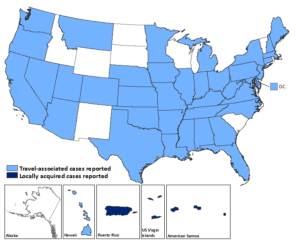
But people travel much faster than mosquitoes, and so the disease has outpaced the mosquitoes. Zika Virus MapHere’s a Center for Disease Control map (from April, 2016) showing where cases of the disease occur. UPDATE from December, 2016. Every state in the U.S. now has reported infections — a total of 4,756 in all!

So far, most of these illnesses are travel-associated.

But it is only a matter of time before the mosquitoes get here. In fact, because symptoms of the disease are typically mild and like those of a lot of other diseases, the mosquitoes may already be here and we just don’t know it because infections haven’t been reported.

Symptoms: fever, rash, joint pain and red eyes (conjunctivitis). People don’t get sick enough to go to a hospital, and rarely die. The concern, as we know, is for pregnant women, whose unborn babies may be affected.

So how to avoid bites from disease-carrying mosquitoes?

No matter where you live, or how old you are, here are three important steps to take to protect yourself and your family.

1 – Get rid of standing water!

It’s simple. Mosquitoes lay eggs in water, the eggs hatch, and you have bugs. So take a tour around your home and office and clean up or get rid of any standing water. In particular, look for . . .

  • Water barrels and recycle bins
  • Flower pots, saucers, toys
  • Areas around drains
  • Old tires
  • Pet or animal water bowls
  • Bird bath


2 – Wear long-sleeved shirts and long pants.

Mosquitoes are particularly active for an hour before and after dawn and dusk. Cover up and, if necessary, go inside to avoid getting bit.

3 – Use insect repellents.

We’ve probably all experienced that slippery smelly stuff that we slathered on as kids. It worked, but wasn’t very comfortable.

From what I can tell, things have improved somewhat. Here are some of the decisions you’ll want to make before buying any insect repellent.

  • What insects do you want to repel? We’re talking here at Emergency Plan Guide about mosquitoes, but some repellents are good for ticks, chiggers, etc. as well. Read the labels.
  • Do you want to use DEET? DEET (N,N-Diethyl-meta-toluamide, or diethyltoluamide), developed in the 1940s for use by the army, is the (yellow) chemical ingredient that is the standard for repellents. Tests show that the higher the concentration, the longer the protection. (For example, 100% DEET was found to offer up to 12 hours of protection while several lower concentration DEET formulations (20%-34%) offered 3–6 hours of protection.) Most of what I read suggests that non-DEET repellents shouldn’t be relied on for prolonged protection where mosquito-borne diseases are a substantial threat.
  • How long do you need protection? Note the concentration and buy and re-apply accordingly. Labels are very clear as to the percentage concentration, and will give you an idea of how long to expect the repellent to last.
  • Three chemical alternatives to DEET are Picaridin, Permethrin and IR3535. They don’t seem to affect plastic or vinyl the way DEET does, and have similar protective capabilities. Again, check percentage concentrations.
  • Looking for a natural repellent? Consider Oil of Lemon Eucalyptus. It seems to provide good protection with a pleasant odor (!) but protection may not be as long lasting as the chemical repellents.

All these repellents come in lotion, cream or pump, and some as wipes.

Note for children: Some repellents come as the ingredient in a “repellent bracelet,” but reviews suggest these bracelets may not be as effective as advertised. In any case, if you have children, be sure to note age restrictions that appear on some of these products.

What do repellents cost?

With all that info behind us, let’s move on to the good news.

Repellents are easy to get and quite inexpensive — less than $10.

There is no reason not to have a bottle or two handy in the car and in the house as part of your personal program to prevent the spread of disease.

Some recommendations for repellents.

These can be readily found at drugstores; clicking the link will take you to Amazon, where you’ll find a lot of detail and reviews from users, which I find particularly useful.

A DEET product at 98.1% concentration: Repel 100 Insect Repellent, 4 oz. Pump Spray, Single Bottle

Up to 10 hours of protection. Comes in a pump bottle small enough to carry easily.

From the same company, a natural ingredient formula: Repel Lemon Eucalyptus Natural Insect Repellent, 4-Ounce Pump Spray

This product is advertised as having a “cool, refreshing scent”. Up to 6 hours of protection.

Another version of repellent designed to be sprayed on outdoor clothing: Sawyer Products Premium Permethrin Clothing Insect Repellent Trigger Spray, 12-Ounce

This is advertised as being “as effective as 100% DEET.” Spray it on clothing, it won’t stain or damage, and will last through multiple washings.

My recommendation — Don’t wait until you read that the virus has hit YOUR town. Clean up your yard, then get and start using insect repellent. Pretty simple precautions.

Virginia
Your Emergency Plan Guide Team


A note: We’ve talked about mosquitoes carrying the virus. Be aware that it can also be transmitted through sex. If someone is infected, abstinence is the best protection.

Solar Security Lights — Do they work?

Share

Worried about someone lurking in the shadows?

Security for backyardWe’re known as the “Survival People” on our block, so it’s not uncommon for people to stop and ask for our opinions about anything connected to survival, which seems to include security.

Last week we got asked TWICE:

“What outdoor lighting do you recommend for security?”

We’ve written about this topic before, but the questions pushed us to do more research and ask our own questions, so before we give any answer, here’s more of what we’ve learned.

Question 1. Do bad guys prefer to operate in the dark?

According to all the stories we’ve read, and we’ve read a lot of them, the simple answer is, “No.”

In fact, there are many reports of cities or neighborhoods in both the U.S. and other countries where street lighting was turned off – to save money, usually – and street crime went DOWN.  Why?  Apparently bad guys don’t like tripping over things in the dark any more than you do.

And when they use a flashlight, it’s immediately noticeable.

Question 2. So does outdoor lighting actually encourage bad guys?

That depends. Lights that are on all the time give bad guys the ability to see what they are doing and get it done more easily.

However, if someone is watching the premises, and sees suspicious activity and acts quickly to stop it, then the lighting is useful. The key is to have that alert human presence.

At your house or business, who is keeping watch at night? Are they watching all night?

Question 3. What about motion activated lights?

Now we are getting somewhere.  A light on all the time is predictable and becomes unremarkable. When a light goes on suddenly, it is startling – and noticeable. Anyone within sight of the light is going to look to see what set it off.

So from a security standpoint, motion activated lights are the obvious choice.

Here’s what we have at home.

Now at our house, we actually DO have a light that burns all night. It’s on the porch and is designed to light the steps for us and for visitors. It’s a hardwired fixture with energy-efficient LED bulb, and we have checked to be sure our neighbors aren’t bothered by it. The bulb has lasted for years.

We have hardwired motion sensor lights where we park the car. They make it easy for us to get to and from the backdoor and into and out of the car.

Finally, behind the house, we have solar powered motion-activated lights. When they come on at night, we are awakened instantly and are able to look out to see what may have set them off. (Usually we can’t tell! Perhaps it’s a bird flying by. Occasionally we suspect an animal like a possum or raccoon. We haven’t seen any people crossing the backyard, yet.)

One of these lights actually has an audible alarm that can be turned on or off, too.

If you’re shopping for lights, here are some recommendations and suggestions about what to look for.

Recommendations for Solar Powered Lights

We started years ago with simple battery-operated lights. While they were easy to install, they seemed always to be dim and dying. So, we quickly turned to hard-wired lights. They work great but you need a ladder, patience and some handy-man smarts to install them.

When solar powered lights came on the scene, we were thrilled.  Particularly since we live in Southern California!

Solar lights are either one self-contained unit (solar panel + storage battery + light itself) or have separate components: solar panel (that must be mounted where it gets sun) connected via a thin wire to the actual battery + lighting fixture.

Whether you select the self-contained unit or the component unit depends on where you’re installing the light and where the sun is.

Over the years we have tried small, inexpensive solar-powered lights and moderately priced ones and have concluded that you pretty much get what you pay for. You can get great deals at Amazon, where, as you know, we are affiliates.

Here are two lights that we really like. Click on the images to get all details.

This Litom Bright 60 LED Solar Powered Security Light seems to be top of the line in its price range (around $40). We have found it to be as bright as we need, and some of the reviewers at Amazon say that it is brighter than any others they have tried! This light is also waterproof, essential for an outdoor fixture.

The best part is how adjustable the light is. You can set it for dim or strong, set it for always-on or motion-activated, and you can adjust the “activation” area as well as the “lighting” area. Really, it ought to work for whatever you need!

Read the reviews at Amazon, and they will give you more ideas about installing and using the light. (If you want a white finish, take a look at the Sunforce 82080 80-LED Solar Motion Light model. It costs within a dollar of the Litom model.)

The second recommendation is for a light made by the same company. The Litom 20 Big LED Solar Sensor Powered Wall Light is smaller, more compact, and even brighter! (And less expensive — around $25.) Many of the Amazon reviewers say that they got several in order to cover different areas of their property. Last time I looked, you could purchase packs of 4 for a discounted price.

As I wrote this, Litom was offering some special deals on Amazon. (Scroll down on the page below the photos.) And different sellers were charging quite different prices!  So take the time to shop!

To get details and current prices, click on the images.

To summarize.

Lighting alone will not deter a determined bad guy. But good lighting can make it safer for you and visitors, and motion-activated lighting can cause an unwanted visitor to change plans.

Let us know your experiences with lighting!

Virginia
Your Emergency Plan Guide Team

We have full reviews of several popular emergency items. See all our product reviews and recommendations here.


5 Ways to Create Your Own Home-Grown Disaster

Share
Danger, Not a Step.

Look familiar? See #4 below.

Not knowing is one thing. Just not thinking is another.

Here are five really dumb things that people do that lead to emergencies and even disaster.

Don’t do any of them, please.

 Dumb Act #1: Mix household cleaners.

The classic mistake is to mix household ammonia (like window cleaner spray) with liquid bleach — “because two cleaners ought to work better than just one.”

The result: a gas that can cause nausea, eye irritation, sore throat, headache, cough, and difficulty breathing.

In fact, the chloramine gas that’s released could even send you to the hospital for an emergency tracheostomy — surgery to create a hole through the neck into the trachea (windpipe) to allow you to breathe.

OK, so you know about not mixing.

Did you know that you can create the same noxious gas by simply using two cleaning agents one after another on the same surface?

Every cleaning agent should be suspect:

  • liquid cleaners for the toilet bowl
  • gel for unclogging drains
  • powdered cleansers for counter tops and grout
  • spray foams for the shower.

Check the label for ingredients (look for sodium hypochlorite) and warnings.

If you smell or feel ANY strange or strong fumes, get out of there immediately and allow the space to air out thoroughly before allowing anyone into the area. Rinse everything completely with water and let it dry out some more before you attempt to finish your cleaning job.

Dumb Act #2: Work alone.

Most of us are happy to work alone for some time during the day!

But most of us are not engaged in high risk activities like using dangerous tools, working around machinery, electrical wires, scaffolding, trenches, high pressure materials, hazardous substances, at height or in closed spaces like grain elevators or tanks, etc.

For the 15% of people who do find themselves in these situations it’s important to have some sort of check-in procedure.

This isn’t just for construction or agricultural or other special industries. Office workers like receptionists or parking attendants who work alone may face potential violence from the public. They need a check-in procedure, too.

If your workplace doesn’t have a policy about working alone, get one.

Dumb Act #3: Underestimate a portable generator.

We’ve talked a lot lately about how a portable generator can be a great emergency preparedness tool if the power goes out. We’ve even made some recommendations about which kind to consider, how much to expect to pay, etc. (See footnotes for links.)

We have certainly talked about the risk of carbon monoxide poisoning from setting up a generator indoors. That extends to having it in the garage or even locating it too close to an open window.

There are other dangers associated with generators that you would know if you thought about it – but sometimes, people just don’t think.

Consider these possibilities:

  • Fire. Like any motor, your generator can get overheated. Don’t spill gas on or around it!
  • Electrocution.  A generator produces – electricity! If your power cords are too light, frayed or kinked, or not properly grounded, you could get the shock of your life. Electricity can kill.
  • Electrocuting someone else. The fifth leading cause of occupational deaths is what is termed “back-feeding.” This occurs when a power company worker touches a wire that should be inert but isn’t because it is carrying power from an unanticipated source – like YOUR generator.

This is why you don’t plug your generator into a wall outlet in your house. The power goes into the house and right through the house into the power grid where the unsuspecting worker is busy trying to fix the outage!

Yes, there is a way to power your house with your generator, but it requires a special “power transfer switch” installed in advance by a qualified electrician.  (A solar array with battery backup requires the very same type of switch.)

Dumb Act #4: Disrespect a ladder.

We are all pretty familiar with ladders, and have probably used at least a couple of different types — step ladder, extension ladder, etc.  (There are many types. Wikipedia lists 21 different ones!)

But for all its familiarity, a ladder can be very dangerous.

If its feet aren’t solidly placed, the ladder can tip over backwards or slide down frontwards. You come down right with it, flat on your back or your face or tangled between the rungs.

Second, a ladder can break. Like any other piece of equipment, ladders simply wear out.  Got an old one in your truck or garage? Before you use it the next time, check out the rungs, the rails, the spreader bars and locks and the feet to be sure they all function as designed.

Finally, can you read? I’ll bet your ladder has a sign somewhere that reads, “Not a step.” (I took the photo above of my own well-used step ladder.)

In simple English, that means “Do not stand on this.” Get up too high on a ladder and you will overbalance the whole thing. Stand on a paint can shelf instead of a step, and the shelf will break.

Every year, more than 90,000 people end up being treated in the emergency room from ladder-related injuries!

Dumb Act #5: Disconnect smoke alarms.

This is simple. Once again, the statistics tell you everything you need to know.

Half of U.S. fire deaths occur in houses where a smoke detector is installed but has been disabled because it beeps.

Of course, nuisance chirping from a smoke alarm is awful. And yes, it always seems to happen in the middle of the night.

Just take the time to fix it. Either put in a new battery or replace the whole thing, preferably with a photoelectric alarm (instead of the cheaper ionization model). If you’re not sure how to do it, go online to YouTube and search for “How to change the battery in a smoke alarm” or “How to install a smoke alarm.” Some videos are boring and some are better; any of them will guide you in making the fix!

As you read this, I hope you are saying to yourself, “Heck, I knew that!”

The key thing is, not everyone does know it! When you have the chance, share this information with children, co-workers, members of your club or church — anyone, in fact, who might have missed it. These are NOT emergencies you want people to learn about from experience.

Virginia
Your Emergency Plan Guide Team


Looking for more info on some of these topics? Here are other Advisories we’ve written over the past year or so.

The Best Generator for Emergencies

Portable Generator for Power Outage — Safety Update

Carbon Monoxide Alarms and Detectors

What you didn’t know about Smoke Alarms


Don’t miss the NEXT safety Advisory. Sign up below to get them all.


Here’s a Gift for You or a Friend

Share

On a daily basis we’re caught up in the excitement of whatever storm or heat wave is going on, or in the latest political maneuverings. Or maybe news from the sports world.

Here in California, though, there’s a background noise like the far-off rumble of a train. It is  . . .

The steady threat of an earthquake.

It’s tough to get people to think about and prepare for something they may never have experienced, no matter how dramatic you try to make it. Our neighborhood emergency planning group comes back to the subject of “the big one,” and earthquakes in general, again and again!

Here’s one of our best neighborhood emergency response group flyers.

How to protect yourself during an earthquake and afterwards

Share this flyer!

How to use the flyer.

  • Make copies and go over it at a neighborhood meeting. You will be surprised at the number of questions that will come up and the number of comments people will make about the supplies they have stored. Discuss the status of gas lines in your neighborhood and how to tell if there is a leak. Take a look around the room you are in and ask people what furniture they would get under if the earthquake happened right this minute! If your meeting takes place at night, find out how many people in the audience even have a flashlight with them! (Action item: Come prepared with a flashlight to give away as a door prize.)
  • Make a few changes to the text and and use the flyer at work.
  • Send to family members and out-of-town friends, too.

Emphasize the warning about NOT STARTING YOUR CAR if you suspect a gas leak. Cars backed up in traffic jams have started devastating fires in earlier quakes.

So you can make any changes, and fill in the box at the bottom of the flyer,

Click here to download the Microsoft Word document.

Let us know how your meeting goes. What questions came up that you weren’t expecting?

Virginia
Your Emergency Plan Guide Team


If you need more background for likely questions, here are some earlier Advisories that may be useful:

Severe Weather Means Danger for Your Pet

Share

Headlines here today read:

“California still in the grip of a record-setting heat wave.”

I checked the weather map for my friend Russell in Vermont.  Headlines there read:

“East Coast Braces For Life Threatening Cold Temperatures”

In these conditions, pets are in danger!  Grab these checklists and make sure YOUR pets are prepared and protected.Heatstroke kills pets

Cold kills pets


I think it goes without saying that your pet needs to have proper ID tags (even a microchip) at ALL times.  And you may have other great suggestions for pet safety and security during extreme weather. Add them in the comments if you will.

In the meanwhile, I’ll get this right out. It may save a pet today or tomorrow.

Virginia
Your Emergency Plan Guide Team

If you haven’t seen it yet, get our complete Pet Emergency Supplies Kit here.


Smartest Emergency Purchase I’ve Made Lately

Share

When it comes right down to it, having a simple phone plugged into a traditional landline simply makes sense. And when it costs so little . . .!

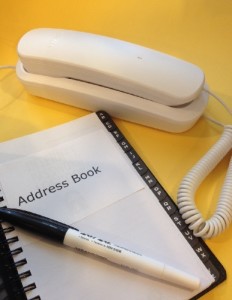
Corded phone for emergencyFive reasons to go out today and buy a corded phone.

 

1 – It works when other phones are knocked out or overwhelmed in an emergency.

How many times have we talked about what happens to regular phone communications in a widespread emergency? Power can disable cordless phones; cell phone towers can fall; systems can be overwhelmed. Ultimately, any device powered by a battery will stop working.

Landlines are the most reliable of all the options.

2 – Emergency Services will pinpoint where the call is coming from.

When you call 911 from a landline, emergency services know just where you are. When you call from a cell phone, they have to go through extra steps (using GPS) to find you. And if you’re on the tenth floor, and the only ID the emergency services get is the address of the building . . . When seconds count, a landline wins hands down.

3 – Your kids (visiting grandmother, babysitter) can operate a simple corded phone.

My granddaughters play with their parents’ cell phones all the time. That doesn’t mean they know how to actually turn a phone on, get past the password, find the phone app, and use the phone to make a call.

EVERY kid above the age of about 2 can be taught how to dial 911 from a simple phone.

Not every adult carries a phone, either. Consider elderly relatives. They, too, would easily be able to make an emergency call using a phone like the one in the photo.

4 – Yes, someone could tap the line – but not a random hacker.

Privacy is a concern whenever you’re using wireless communications. A landline is secure unless someone has actually installed wiretap equipment onto your line.

5 – You won’t misplace or lose it.

Your emergency phone is tethered to the wall. It will always be in that place so you will always be able to get to it immediately.

What will it cost?

A neighbor told me he’d bought a simple phone recently for “around $10.”

Frankly, I found that hard to believe. Still, when Joe went shopping for a phone yesterday, he came home from Walmart with the one in the photo. And it had cost him $5.95!

Naturally, you can get fancier ones, with a bigger price tag. (Check out our friends at Amazon. Use the search words: “corded phone.”) But we were looking for the simplest model possible.

Joe opened the box, pulled out the phone, and . . .

We plugged it into a wall jack — instant dial tone.

No registering, no passwords, no set-up, no waiting for a battery to charge, no software upgrades.

(What a relief after we had spent hours over the past week getting our over-the-air antenna to work with our TV and our Amazon Fire Stick. That’s another story, of course . . .)

Now, since the phone doesn’t store names or numbers, you’ll have to dig out an address book to go along with it. Or simply type up and print out a one-page sheet of emergency numbers as part of your family communications plan. (If you have children, you are likely to have this page already prepared for babysitters.)

Fasten this page to the phone itself, or tape it to the wall next to the phone, so it doesn’t get misplaced.

That’s it! It has taken me longer to write this Advisory than it did to get the phone set up.

Action Item: Do yourself a favor and get your own corded phone today.

You will definitely feel smarter and you and your family will definitely be safer!

Virginia
Your Emergency Plan Guide Team


Being prepared is more a state of mind than anything!  Keep your mind focused every week or so by subscribing to our Advisories. (Form below.) Free. Easy. Sensible.

Have friends who should be thinking about preparedness? Forward this email to them and suggest they subscribe, too!


Pedestrian Killed In Accident

Share

When you’re driving, how well do you see pedestrians or bikers?  How about at night?

Man in darknessIt’s raining in California – at last! Yesterday our day was wet and gray and darkness came early. We stuck close to home and didn’t even take the car out.

Probably a good idea. According to Marc Green, legal expert in “Human Factors” (vision, perception, memory, etc.), “ [the] pedestrian fatality rate is three times higher at night.”

Darkness, smoke, fog, rain = all mean lower visibility and even greater danger for pedestrians.

Somewhere someone is experiencing these conditions right now.

In an emergency, conditions will be worse.

Imagine yourself on foot, either as a victim or as a responder. Street lights are out. The roadway has buckled and cracked so vehicle headlights are jerking and flashing in all directions. Blustery rain is coming down and water is pooling everywhere.

Drivers don’t know what to expect — so their reaction times are slower than ever.

What can you do to protect yourself? Wear high-visibility clothing.

We see safety vests every day, worn by people working in construction, landscaping, traffic control and clean-up. These workers’ vests are required by OSHA (Occupational Safety and Health Agency) and, in fact, they must “reflect from all sides for 1,000 feet” in the dark.

Smart joggers and cyclists have taken to wearing reflective clothing as a safety precaution when they are out in the dark. Typically they have wrist or ankle bands or reflective tape on a backpack or fender. High-fashion garb has stripes, sometimes even small LED lights built in.

(As a driver, I appreciate their efforts, and find myself yelling at those who DON’T make it easy for me to see them.)

The BEST gear is both fluorescent and reflective, or retroreflective.

Fluorescent materials actually emit light by converting invisible ultra-violet rays to visible light. They work best in low natural light, particularly dawn or dusk. Reflective materials bounce a beam of light off their surface – thus they only work as long as a light is shining on them. Retroreflective materials combine both fluorescent and reflective properties.

Get high visibility gear into your emergency kit.

Some popular high-visibility “vests” really look just like a pair of wide suspenders and belt. Convenient to carry and easy to slip on and fit. Here’s a popular one from Amazon: Rioa Best Reflective Safety Vest – Stay Safe Jogging, Cycling, Working, Motorcycle Riding, or Running – Elastic and Easily Adjustable Means the Best Running Gear Around


In my estimation these belts, even with wrist or ankle bands, may not provide enough coverage.  In fact, if you are moving in an emergency situation – crawling, running, bending, digging – the viewer may see movement but not be able to tell what it is he or she is actually seeing.

I prefer a full vest, like the one pictured below: High Visibility Gear Set of Reflective Safety Vest with Pocket + 2 Wristbands+Bag | Perfect for Running Walking Cycling Jogging Motorcycle | Fluorescent Yellow | Size L/XL This vest will make it clear that you’re a person. It has a pocket for your phone or keys, and comes with a small storage pouch.  The hourglass design leaves your sides less visible, so arm/wrist bands help fill in that gap.
Adding a high visibility vest to your emergency kit is easy, and you will find that you pull your vest out more often than you might have thought. For example, I’ve used mine just to walk from a distant parking lot to an event, and I’ve lent it to a friend who found herself drafted to direct traffic during a race. Of course, for CERT trainings I wear my CERT vest, but it is bulky and no where near so comfortable (!).

Virginia
Your Emergency Plan Guide Team

P.S. Be sure to consider what you might be wearing UNDER the vest to be sure you get the right size.


Hang On To That Swiss Army Knife

Share

A Gift for a Lifetime

I got my first Swiss Army knife when I was about 8 years old, a gift from a friend of my mother’s. (A boyfriend? We’ll never know!) I don’t think I’ve been without one in my pocket since.

When I say without “one” I should really be saying “without several” since there are so many different models, each with some special feature, that you want to own one of each! (Well, maybe not every one. Read on . . .)

Real Swiss Army knives, brand name Victorinox, last nearly forever if you don’t lose them.

If a part breaks or goes missing, you can fix it!

Replace scissors spring on Swiss Army Knife

Replace scissors spring on Swiss Army knife

Here’s what got me started on this Advisory. I had to . . .

Replace the broken scissors spring

in one of my favorite small knives.

I use these scissors a LOT, for cutting everything from paper to fingernails to packaging tape.

(Once I even used the scissors to give myself a quick haircut when a posh restaurant thought my hair was too long to let me in.)

Where to find the spring

In years past I have found the scissors spring at hardware or sporting goods stores, but for the last three years I’ve had no luck. (Maybe people prefer to sell a whole new knife rather than a $2 set of springs!) I( knew I could get them from Victorinox, but that involved more shipping that I wanted to fool with.)

This time, I went to Amazon to get what I needed. Here’s the link to the purchase, for a grand total of $2.95. Victorinox Scissor Spring, Small

How to replace the spring

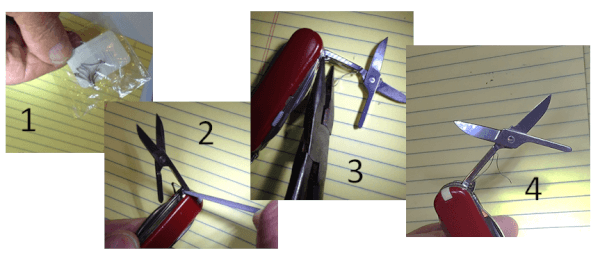
Replacing the spring takes four things: a new spring (image 1 shows the package), some sort of round file or punch (image 2) , a pair of needle-nose pliers (3) and a little dexterity.

And here are the steps to replacement.

  • Open the knife so that the scissors extend at a 90% angle.
  • See the round hole near the base of the scissors? One side of the hole has sharp edges; on the other side, the edges have been rounded.
  • Use the pliers or a punch to push/pull the old spring out so it comes out the rounded side of the hole. I found that the tip of a small round file worked perfectly for me.
  • Use the pliers to press the new spring into place from the rounded side of the hole.
  • Be patient and persistent. You may need to flex the spring slightly to get it into the hole.

Knife like new, back in my pocket for another day!

What about other models of the Swiss Army knife?

Victorinox (and competitor, now partner Wenger) has produced many different models since the company started in the late 1800s. All have a main blade plus various auxiliary tools – as many as 30 in various combinations! Most also have the familiar red handle with white cross logo.

Most practical multi-tool

While it’s great to have different tools all in one, the largest Swiss Army Knife that I find practical is the Swiss Champ. It costs $73.49, and its holster adds another $8.34.  (Yes, I own both.)
Victorinox Swiss Army Swiss Champ Pocket Knife (Red)

If you want more tools, of course, you can get more. In 2006 Guinness World Records recognized a knife (made by Wenger) that had 87 tools and 141 different functions and that cost upwards of $1,000!

Best for everyday use

And for everyday use, I carry the “Midnight MiniChamp” version with built-in ball point pen and flashlight . . .

Victorinox Swiss Army Midnite Minichamp, Sapphire

(This picture shows the knife in blue, but of course, it comes in red, too.)

If you’re shopping for yourself or for a gift, take the time to review all the different models to get the exact knife you need. Again, a small convenient pocket knife is one thing, and a versatile multi-tool for your survival kit and/or emergency kit for the car serves a completely different purpose.

Either way you can rest assured that this will be something to treasure.

And one final note, just for fun. It turns out that the name “Victorinox” is a combination of the original owner’s mother’s name – Victoria – and the French word for stainless steel, “inoxydable“, shortened to Inox. (Stainless steel was invented by an Englishman in 1913.) Oh, and the clever family that named the company still owns it, four generations later.

Joe Krueger
Your Emergency Plan Guide Team

P.S. I’ll bet you have a favorite Swiss Army knife. Which one and why? Your comments may help others decide which one(s) to get!


Countdown to Survival

Share

Top Ten Items For Your Emergency Plan

Help them SurviveIf you think you are already prepared, use this list as a quick check. If you suspect you’re missing a few things, use the list to fill in the gaps.

Food the Means to Prepare It and Eat It . . .

Water, Food and Medicines – Enough for the entire household including pets, to last for a minimum of 3 days . . . up to one or two weeks if possible. Best to stock up on the canned soups, staples and packaged foods you normally eat, and then rotate to keep supplies fresh. (We have enough sardines and packages of instant latte coffee to survive for a month!) Don’t overlook a 14-day supply of important medications (think customized first aid kit) for you, your children and your pet.

Prescriptions, Medical Devices, etc. – In a serious event, electricity, running water and plumbing facilities may not be available for hours or days. Without power, ATMs, computer systems and electronic cash registers will be inoperative, making the renewal of prescriptions challenging if not impossible. Likewise, life-sustaining devices such as oxygen machines that require power may have to be run on “inverters” (alternative power devices that convert the direct current of a car battery to alternating current). Inverters or small solar panels can also power small appliances, laptop computers, etc. and serve as a recharging source for smart phones, iPods and other electronics. In all these, wattage requirements will determine if the system works for you. Test everything in advance! Note: Power generators are both expensive and unwieldy and are not practical in most residential settings.

Camping Stove, Hand-Held Can Opener & Eating Utensils – Disposable plates & eating utensils may prove satisfactory but keep in mind that if the emergency continues, leaving you without power, water or garbage disposal or pickup, you will need to think outside of the box to survive. We recommend a propane-powered camping stove even if you have an outside barbecue.

Communications Are Your Link to Friends, Family and the Reality of the World Around You.

Emergency Radios that Receive NOAA and Local Government Broadcasts – With TV and internet out, the only sure way you will know what’s happening is via emergency radio transmissions. Have at least one full service radio for the home (two or more for larger, multi-story homes or community residences) and one smaller hand-held model for each family vehicle.

Walkie-Talkies – These hand-held multi-channel, battery-powered communicators will work regardless of a power outage. They are the best way for your CERT Teams to communicate with volunteers and for you to keep in touch with your neighbors following an emergency. We have extra units strategically placed throughout our house and a pair in each car.

Emergency Contact Numbers – When local telephone circuits are down or overloaded, you may be able to use out of state relatives or contacts as a way to relay messages to family members, employees or associates. But this works only if all parties are in on the scheme before a disaster strikes.

You Will Need Light and Heat When There is No Power.

Flashlights and Battery-Powered Lighting – With the widespread availability of LED (light emitting diode) devices, we use far fewer batteries than we used to with incandescent bulbs. Flashlights are cheap; have more than one. Keeping a small 250+ Lumen flashlight in a handy location in each room in the house ensures you can safely navigate in the dark. But you will also want a couple larger, more powerful (500+ Lumens) flashlights and possibly even a headlamp or two that leaves both hands free. And you’ll appreciate some LED table lamps or lanterns for general lighting needs.

Energizer Batteries

Winner in past tests

More on Batteries From Our Experience – We need batteries for everything from radios to flashlights to smart phones and other devices, typically AAA, AA, C & D sizes. Most batteries manufactured under the Duracell and Energizer brands are guaranteed to have a 10-year shelf life. In our experience, this is misleading. Ten years may be possible under ideal conditions . . . whatever those are.

With few exceptions, we have found the batteries to lose some of their power midway through this period, and many start to corrode. The basic “copper top” Duracell batteries seem to deteriorate more rapidly than the standard Energizers – 3 to 1 in our experience – but the new (and more expensive) “red-top” Duracell batteries seem to perform better. We only have a few months experience with them.

The bottom line: Whatever brand batteries you use, don’t leave radios or electronic devices sitting for long periods of non-use with batteries installed. Take the batteries out and look at them carefully before reinstalling. If you have devices with corroded terminals, they can sometimes be rejuvenated by using a cotton swab to apply a water & baking soda paste (which will absorb the corrosion) and removing the resulting dry crust with a wooden toothpick or a single prong of a broken plastic fork. This works about half the time, seemingly depending on how bad the buildup or corrosion was.

Clothing You Can Count On to Keep You Warm – Even in moderate climates nights get cold. Your emergency kit needs to contain at the very least a warm coat and sturdy shoes. It’s easy to add a space blanket and rain slicker. (A large plastic garbage bag is better than nothing.) Blankets in the car will be welcome when you’re stuck trying to get home.

Take Care of Personal Needs. 

Hygiene and Sanitation Items – From brushing your teeth to disposing of trash, garbage and body waste, a world without electricity or running water presents several significant challenges. The bigger the household (including pets), the greater the problem. In addition to trash bags, toilet tissue, cleaning and disinfectant supplies, you’ll want heavy-duty “compactor bags” to insert in toilets for collecting solid human waste. If you’re part of a community that includes elderly or frail residents, you may be faced with managing deceased humans. As distasteful as all this may be, pre-event planning will yield big dividends in comfort.

Who Will Be Turning To You?

Most Important Preparation of All is Your Neighborhood &/or Workplace – Take a moment and think about what a major calamity will mean to your immediate environment. If you are the only one who is prepared, your circumstances will be little better than your neighbors or co-workers. In the Tsunami that caused widespread devastation in Japan, it was neighbors helping each other that saved lives and made community survival possible.

While hard-core, serial “survivalists” devote considerable (often inordinate) resources to building “bug out bags” and even acquiring arsenals of weapons to protect themselves, the reality for most of us is not likely to be something out of Mad Max. Major roadways and potential escape routes will probably be congested, unnavigable or even impassable. Where would you go and how would you carry what you need to survive? For most of us, “survival in place” is the most realistic option. What can you do to help your co-workers and neighbors focus their energies on emergency preparation . . . for their sake and yours as well?

Virginia 
Your Emergency Plan Guide Team

Virginia Nicols, CERT graduate living in Southern California, has helped lead her local neighborhood emergency team for over a decade. Her website, http://EmergencyPlanGuide.org, reflects much of what that award-winning volunteer group has struggled with and accomplished over the years. This month, El Niño tops the preparedness agenda.


Get a weekly reminder about emergency preparedness for family or workplace. Subscribe below to our Advisories. They are free.


Pet Emergency Kit — Don’t Put It Off

Share

lost and injured dogAs a pet owner, are you offended at this question:

Do you consider your pet a part of the family?

What about this question:

“Are you one of the 28% of pet owners who plan to buy their pet a gift at Christmas?”

I thought so!

With a gift for your pet in mind (!), don’t overlook the same thoughtful step you have taken for your family members – a survival kit.

There’s only one way to protect your pet.

In an emergency, you will surely want your pet near, safe and comfortable. The only way to manage that is to have a complete kit, ready to put into play at a moment’s notice if you must evacuate.

Even if you are sheltering in place at home, your pet’s routine will be interrupted. So having what you need on hand for your pet will allow you to focus on safety and security for the whole family.

Seven basics for your pet’s emergency kit.

Just like a personal survival kit for your 8-year-old daughter or your 81-year-old mother, your pet’s kit needs to be customized.  Still, there are basics that you can start assembling now if you haven’t already.

In fact, any or all of these items make great Christmas presents!

1.The container or kit itself.

Crates and hard-sided carriers work well if you have plenty of space, but a soft-sided carrier that folds flat may be the most practical for an emergency kit. Get the right size for your pet and the right weight for you, since you will have to carry the container with pet and with the other supplies that are part of it.

Look for sturdy handles and a shoulder strap or backpack straps. You may even want a container with wheels or that’s attached to a rolling cart. Here’s one from Amazon:
Snoozer Roll Around 4-in-1 Pet Carrier, Red & Black, Medium

(I saw it at more than one price, so be sure to shop. As always, if you buy through our link, we may receive a commission from Amazon. The price you pay is the same, no matter what.)

2.Food and water supplies.

Water is the most important, and the heaviest item to manage. As you plan for your family’s needs of 1 gallon a day/person, add extra for your pet. You may be able to store a couple of quarts in the carrier itself, along with a collapsible water dish.

As for food, canned wet food is convenient and doesn’t attract any bugs. BUT, be sure you have a can opener and be sure your pet likes the brand! You don’t want an animal with digestive problems on your hands. You could use the same collapsible dish mentioned above for food, or add a second dish.

3.First aid kit.

Every pet should have a first aid kit, again, customized for that pet (medicines, clippers, veterinary instructions) and for your part of the country (ticks, burrs, heat). Get the smallest kit that works, then add personal items. If you don’t already have what you need packed up in a bag, here are a couple of simple pre-built kits to start with.  Reviews of the second kit were particularly positive.

Essential Pet First Aid Kit

Pet First Aid Kit, Large – 50 Pieces

4.Safety items.

In an emergency, your pet needs a collar or harness and SHORT leash so you can protect it. Your dog may need a muzzle. Store these items in the carrier, too.

If you have to walk your pet, it would make sense to have a hands-free leash, since you are likely to be carrying a flashlight, a tool, or a child or holding hand somebody’s hand. You can get a simple hands-free leash for as little as $5. Here’s a more sophisticated and useful one you could use every day:

Outward Hound Kyjen 23003 Hands Free Hipster Dog Leash Storage Accessory 5ft Leash Included, Blue

5.Sanitary items.

IF YOU HAVE TRAINED YOUR PET IN ADVANCE to wear diapers, or to use pee pads, having a supply in your container makes sense. Obviously you’ll also want some of your usual poop bags.

6.Comfort items.

A familiar blanket and/or towel is probably one of the most valuable items to have in your container. You can wrap your pet for carrying, your pet can use it to lie on, or you can throw it over the container for privacy.

Having a source of light might make you both feel more comfortable; consider a couple of light sticks or LED Glow Stick like this one that has several “light modes” (steady, blink) as well as a whistle:

Life Gear Multimode 4N1 Glow Stick, Flashlight, Safety Flasher, Emergency Whistle, RED

A favorite toy also makes sense – but don’t get a fetch toy, or a tugging toy, or a toy that squeaks!  Here’s one that you might try out – according to the manufacturer it has a “protein taste and vanilla smell” and is likely to keep your pet engaged for a long time.

Petmate Dogzilla Rubber Dumbbell Shaped Dog Toy, Small

7.Pet ID

As you probably know, not every shelter allows pets, so you may be separated. Attach a waterproof envelope to the container that clearly identifies its occupant – with photo, name of owner, emergency contact information, history of shots, etc.  Keep copies of all this information for yourself, too.

Disclaimer: Joe and I don’t currently have a pet, though we’ve each owned several. We interviewed many enthusiastic pet owners for items in this blog post and have shopped in local pet stores for ideas and current brands.

We have also discovered in our community that more than half of our senior neighbors have pets. And nationally, while families with children are the most likely to have pets, more younger couples are getting pets, too, as they postpone having children. Who do you know with a pet? Be sure they have this information.

In an emergency, out of control lost animals will create heartbreak and danger for all.

Protect your pets now by putting together emergency kits for each of them.

Virginia
Your Emergency Plan Guide Team


Last-Minute El Niño Checklist

Share

28 Sensible Things To Do To In and Around Your House.

We’re expecting more balmy 80-degree days in Southern California.

A couple of years ago we braced for an El Nino event, and it didn’t happen. Since then, however, the forecast is back.  According to the NOAA’s Climate Prediction Center, a weak El Nino is likely to continue through the Northern Hemisphere summer 2019 (65% chance) and possibly fall (50-55%).  they have officially declared an Advisory.

El Nino Rainstorm

An El Nino will have a big impact – at the very least resulting in gutters rushing with water, small urban streams and canals overrunning their banks, and even larger scale flooding.

We normally make no “winter” preparations in Southern California.

But after the rains this past winter, we’re going to be on the lookout. Here’s a checklist for Southern California residents, assembled from a number of sources.

Before the rains and winds come, check out your home.

Outside and around the house:

  1. Clean out drains; keep ditches and other water ways clear of leaves and debris.
  2. Check your landscaping for areas where water may pool. Can you re-grade, or at least add mulch or other absorbent material?
  3. Turn off your automatic sprinklers if rain is threatened.
  4. Be sure your vegetables are planted above ground in raised planters.
  5. If you have fences, lights, fountains, etc., store or tie them down. Fasten outdoor furniture so it can’t blow away.
  6. Move potted plants to a secure spot.
  7. Check with your neighbors if you think water may drain from their property onto yours. They are responsible for making sure water from their property flows into the gutter or other drain.

The house itself:

  1. Check for leaks or weak spots in your roof. Make sure no debris is caught in flashing.
  2. Clean out gutters BEFORE it rains and be prepared to clean them again after the first downfall.
  3. Seal holes in the walls/roof made by cables or wires.
  4. Check around window glass and on trim; fill in any gaps with sealant or paint.
  5. Check porch and porch roof slope; make sure water flows away from the walls.
  6. If your property is low-lying or likely to be impacted by run-off, know where to find sandbags, how to fill them, and how to position them.
  7. Store plastic sheeting and heavy clips for emergency covering.

Put together emergency provisions to get you through short or extended power outages.

  1. Store water, non-perishable food and batteries to power flashlight or other lanterns. NO CANDLES; they cause fires.
  2. Have warm clothing and blankets for when the temperature falls and you have no heat.
  3. Be sure to have a back-up battery or other back-up for electrical medical equipment.
  4. Emergency items will disappear off store shelves before or immediately after the storm, and afterwards you may not even be able to travel due to downed trees, power lines, etc. Do your shopping early.

Communications may be interrupted.

  1. Your phones may not work if cables are cut, towers topple as the result of landslides, etc. An “old-fashioned” hard-wired phone is a good back-up.
  2. Prepare a list of emergency numbers. (Your computer or cell phone may be out of battery.)
  3. Know where to tune for emergency broadcasts and official information.
  4. Know the non-emergency number for your local police and/or fire. Use it, not 911, unless it is a matter of life and death.

Prepare your car, too.

  1. Do you need new tires? Bald tires are even more dangerous on wet roads.
  2. Check whether your tires are properly inflated; lessen the risk of hydroplaning.
  3. Do you need new wipers? Don’t wait until you’re caught in a downpour to realize you can’t see clearly.
  4. Need a new battery? Don’t get stranded because the car won’t start.
  5. Put together a survival kit for the car: water, food, flashlight, blanket, emergency radio.

Consider flood insurance.

As with all insurance coverages, the devil is in the details. However, here are some general observations that may help you to decide if you need flood coverage.

  • Flood insurance is not generally covered by regular homeowner policies.
  • A separate flood policy covers damage from flood waters to property and/or contents. (Check on the definition of “water.”)
  • Prices depend on the assessment of risk based on where you live. Premiums may range from $150 to over $1,500/year.
  • “Twenty percent of people who file claims come from non-high-risk areas,” says Mary Simms, spokeswoman for the Federal Emergency Management Agency’s Region IX, which includes California.
  • Federal policies have limits that would easily be overtaken in California, where property values are high. Separate “extra value” policies would be necessary to cover the full value of an expensive home.
  • A policy doesn’t cover living expenses if you have to leave your home while it is being renovated.
  • FEMA makes flood insurance available through a number of partners. The entire federal government flood insurance program is being revisited. Check out its website at floodsmart.gov.
  • It takes 30 days for any flood policy to become effective.

This is specialty insurance. Do your homework, starting with your regular agent. Then find and speak to someone who specializes in flood insurance, and finally get a third opinion.

One last thing to protect against the rain.

Oh, and don’t forget. Have a good umbrella handy! How could you go wrong with an umbrella with the name “RainStoppers?”?!

RainStoppers Auto Open Windbuster Sport Umbrella, Black, 48-Inch

There are bigger “Rainstoppers” too – 54, 50, 62, up to 68 inches! Just click the link or the image above to get to the right place to start your search!

Virginia
Your Emergency Plan Guide Team

Don’t miss a single one of our Advisories. Sign up below to get them every week.

Should you include a Geiger Counter in your Survival Kit?

Share

Three reasons for yes.

If you’ve been watching the news lately you no doubt know that our counterterrorism officials’ greatest fear is that terrorists will get their hands on enough nuclear materials to construct “dirty bombs” – bombs that could turn large areas of cities or communities into radioactive cesspools.

1. The dirty bomb threat

Admittedly, the odds are long on any one community becoming a target for this kind of attack. If you happen to live or work in or near a target area, however, having a reliable Geiger counter could be a real asset

2. Nuclear waste storage

While we don’t own one currently, we are considering purchasing a Geiger counter. For us, the decision is prompted by the fact that we are relatively close to a decommissioned nuclear power plant. It was closed a couple of years ago because of numerous equipment failures as well as design and construction flaws.

At first, its closure made us breathe a sigh of relief. Now however, our concern has risen again because levels of security and emergency planning for the decommissioned plant have been allowed to be reduced. And, finally, nuclear waste materials are being stored on the closed site – which is right on the Pacific Ocean and thus an obvious candidate for becoming the victim of storms and tsunamis.

(Why nuclear material is being allowed to be stored in this location is a question to be raised in another post. If you recognize this story as relating to San Onofre, in southern California, and it interests you, read more at: http://www.ocregister.com/articles/nuclear-658213-edison-waste.html)

3. Landfill threatened by fire

You may not have a nuclear power plant nearby, but consider this horror story that came out just last week.

According to St. Louis County (MO) officials, an underground fire at a landfill – a fire that has been burning for 5 years – is now within 1,000 feet of a nuclear waste dump.

Clouds of smoke have already polluted the region. Now it looks as though the fire will reach the decades-old dump filled with nuclear waste from government projects (like the Manhattan Project!) and weapons manufacturing — creating a radioactive smoke plume.

This entire situation became headline news in October when the school district sent out a letter to parents advising them that the school had “an evacuation plan for students” for when the fire reaches the landfill. Apparently, no plans for stopping the fire.

(Again, get more on this story at:  http://thefreethoughtproject.com/st-louis-preparing-nuclear-disaster-landfill-fire-nears-radioactive-waste-site/)

Could you use a Geiger Counter?

If you find yourself in any of these situations, or in similar ones, understanding your exposure to radioactive material may be prudent. If you travel to Japan, or if you are concerned about radiation levels in the food you eat, a Geiger counter could provide you with peace of mind.

In any case, here are two pieces of equipment to consider:

SOEKS 01M Plus Generation 2 Geiger Counter Radiation Detector Dosimeter (NEW Model replaces SOEKS 01M)

GCA-07W Professional Geiger Counter Nuclear Radiation Detection Monitor with Digital Meter and External Wand Probe – NRC Certification Ready- 0.001 mR/hr Resolution — 1000 mR/hr Range

There are less expensive options, including . . .

Smart Geiger Counter Nuclear Radiation Dosimeter “X-Ray” and “Gamma” Detector Smartphone Android iOS with App

The cost for the Smart Lab app (less than $35 when we wrote this) is a no-brainer for people who live and/or work in areas of moderate risk, or for people who just want a backup unit to carry on the road.

We are considering purchasing one of these for testing in our CERT program and, if they work as well as advertised we’ll probably purchase a half dozen for our Special Teams. As for the more expensive instruments, we recommend that you review all of the listed makes and make your decision based on your perceived level of risk and your own personal comfort zone.

UPDATE as of 10/25/2015: When we inquired regarding battery life, we received this email from John at Images Scientific Instruments, Inc., the distributor of the GCA-07W model shown above:

The 9V battery is not rechargeable. You can expect 10-12 hours of Geiger Counter usage per battery. Your battery lifetime time may vary. To extend battery life keep the LCD backlight off. 

The Geiger counter has an external wall transformer power supply for extended monitoring.

Final Note:  If you plan to volunteer as an Investigator with MUFON (Mutual UFO Network) to check out UFO sightings and test for radiation at reported landing sites, you will be required to provide your own Geiger counter. In this case, you will probably want the most sensitive unit  that fits your budget. (!)

Joe Krueger
Your Emergency Plan Guide Team

An earlier Advisory describes other safety concerns and radiation-related items for your survival kit.  Read it here.