Author: Volunteer

Drowning Incident – True Story from Yesterday

Share
Child drowning

As a preparedness fan, I subscribe to the twitter feed of our local police force’s PIO (Public Information Officer).  One of yesterday’s notices was simple. It said that emergency personnel had responded to a drowning incident.

EMTs arrived to find the father attempting to resuscitate his 11-year-old son. The EMTs took over and revived the boy, who was taken to the hospital, expected to fully recover.

As you read that paragraph, did you create a picture in your mind? Can you imagine the desperation of the father? What if that had been YOUR child drowning? Would you know what to do in that situation?

After I read the report, I felt obliged to review how to handle drowning. Turns out that it’s NOT THE SAME as CPR for someone who has suffered a heart attack! Drowning is a problem with getting enough air, it’s not just a problem with the heart stopping. So you need to do the breathing AND the compression associated with traditional CPR.

Here’s a quick review of the steps to resuscitate a drowning child:

  1. Call 911 or appoint someone else to call. (“You, guy in the red shirt, call 911!”)
  2. Take the child out of the water.
  3. Lay child on back, check for breathing and responsiveness. (Clap. Call the kid by name.)
  4. If no breathing, START RESCUE BREATHING.  Close nose, cover child’s whole mouth, breath twice into the child and watch for chest to rise.
  5. Begin chest compression. Lean on both hands, on line between nipples. Press hard and fast. 30 presses, 2 breaths. Keep it up until professional help arrives or child begins to breath on his own.

Now this is just a quick overview. If you have any questions, or if you have small babies, please do more research. I got basic info from WEB MD – here’s the link to the full article: https://www.webmd.com/first-aid/drowning-in-children#2

And if you plan a summer outing near a big pool or the ocean, please review this blog post I wrote last year. It makes it clear that people  who are drowning don’t LOOK like they are drowning, and you might overlook the danger until it’s too late!

Every year over a dozen people drown right here in our town. I don’t know the statistics for your community, but there shouldn’t be any! Drowning is preventable.

Please be careful out there!

Virginia
Your Emergency Plan Guide team


Day 14 of Summer Vacation: A time for some shorter and lighter Advisories as a welcome change-of-pace!


Keep Safe at Summer Events

Share

Fourth of July activities may be over, but there are plenty more fun summer events coming up. Do you have plans to go to an evening concert? The county fair? A big sporting event? How about a major family get-together?

Attending any large public gathering these days isn’t without some risk. Here’s a quick checklist to review before you head out:

  1. Know the venue. Where is parking? Where are entrances and exits, and not just the ones you plan to use. Take a look at the map before you arrive, and check conditions once you are inside. Point out exits to your kids.
  2. Where is help if you need it? Take a moment to identify the location of security personnel, lifeguards or first aid stations.
  3. Be smart about what you wear and carry at public summer events. Don’t carry a lot of stuff! Discourage pickpockets or thieves by wearing a zippered cross-body purse. Keep your wallet in your front pocket. And real shoes are a whole lot safer than flip-flops in an emergency.
  4. Stay in contact with family members. (You may want to all wear the same brightly-colored T-shirts!) This may be a perfect opportunity for you to try out the walkie-talkies you just bought. And be sure to have a place to meet if you get separated.
  5. Keep your phone charged and on. Program your phone to vibrate as well as ring. Check for social media alerts about the event.

Finally, if you feel that something “just isn’t right” – like crowds are screaming and shoving, you see people running where you wouldn’t expect it, you hear noises you can’t identify – trust your gut instinct. Get out by the nearest exit.

You can always get back in when things calm down.

Summer is meant for fun. Be safe and the fun will take care of itself!

Virginia
Your Emergency Plan Guide team


Day 13 of Summer Vacation: A time for some shorter and lighter Advisories as a welcome change-of-pace!


Do you see threats everywhere?

Share
woman covers face, sees threats everywhere
Threats everywhere?

I find myself muttering this question under my breath when I hear neighbors complaining about how long it’s taking for the power to come back on even after a scheduled, temporary blackout!

I ask the question of myself from time to time, mostly when I don’t want to try something physical I would have been perfectly willing to try a few years back. (I asked it about 5 times before I agreed to go skydiving with my daughter in 2018!)

Then, when I saw the quote below, it really struck home. It comes from a report from the American Association for the Advancement of Science. Like many things scientific, you have to read it twice to get the full import.

 “. . .when we run out of legitimate threats to face, we begin to call things that we judged to be harmless in the past as now a threat.”

So yes, the quote itself feels a bit complicated. I tried summing it up this way:

“Are you becoming a wimp?

If either of these quotes strikes a chord, you are going to really appreciate a recent post written by LaRae Quy: How to be resilient when times get tough.

It’s long, it’s inspiring – and it has some very specific recommendations. . . all designed to KEEP YOU — and perhaps your neighbors — FROM SEEING THREATS EVERYWHERE.

Enjoy! And let us know what you came away with!

Virginia
Your Emergency Plan Guide team


Day 11 of Summer Vacation: A time for some shorter and lighter Advisories as a welcome change-of-pace!


Earthquakes have positive result in our neighborhood!

Share
Volunteer activity is positive result of earthquakes in California

The recent California earthquakes have had several positive results here where we live, in Southern California.

I already mentioned how our neighborhood emergency response group volunteers jumped into action after the 7.1 quake on July 6. There they were, out in the dark with their walkie-talkies, talking to people, passing along info to our mobile radio command post.

What happened the next day, though, was actually more exciting. Everywhere you could hear the second positive result from the earthquake: ordinary citizens talking and talking about the quakes and how to be more prepared next time!

  • “How should I be storing water? Do you have a water barrel? What about plastic bottles?”
  • “What’s the chance of a broken gas line? Should we turn off the gas?”
  • “What if I am trapped in my house?”

And hooray! Positive result #3 — Two more neighbors decided to join the team!

I am busy assembling the “recruiting” kits – some basic info and instructions, plus the two most important items for team members: a fluorescent vest and a battery-operated walkie-talkie.

If you are figuring out what your next move ought to be for summer – consider getting a couple of walkie-talkies!

They are fun for families camping, hiking or heading to a county fair. Small kids and teens like them. They are essential if you have wandering children or lagging-behind grandparents! And if you are interested in building a neighborhood emergency response team, you’ll want to practice with those walkie-talkies before you decide which ones to buy.

I’ve written reviews of the top 5 or 6 models every year. If you are really interested in more detail, please check out that page. There’s a whole lot of info there to absorb before you make a big buying decision.

Here’s a recommendation for you.

In the meanwhile, here’s information about my favorite model – and the one we use for our local neighborhood group. Simple, straightforward, flexible.   These use AAA batteries or rechargeables; you can also recharge by plugging into the wall. A pair costs less that a dinner out – and will make your summer a whole lot more memorable! (Click on the image to get details and prices at Amazon.)

If you manage to get a pair of walkie-talkies as a result of the earthquakes and of reading this Advisory, that would be the best positive result of all!

Virginia
Your Emergency Plan Guide team


Day 10 of Summer Vacation: A time for some shorter and lighter Advisories as a welcome change-of-pace!


Can you read a map?

Share

In the old days everyone could read a map.

When I was a kid, we used to pile into the car for a long Sunday drive. (Gas was cheap!) Part of the fun was discovering roads we’d never traveled before.

We used folded paper maps to figure out where we were headed. There was always a box full of them – road maps, topographical maps, occasionally forestry or fire road maps. Most showed the effect of having been folded wrong at least once in the past!

The job of reading the map fell to one of the kids.

Today, of course, nobody reads a map.

Oh yes, we pull up maps on our phone – and then we listen to directions!

In an emergency, when phones are down and batteries are dead, you and your children may find yourselves having to take a road you’ve never traveled before. And to do that safely, you are going to want to be able to read a map.

There are a few basics to reading any map:

  • orienting your map to the points of the compass
  • understanding the scale of the map, and
  • figuring out what the various symbols mean.

Of course, you have to figure out where you are on the map in order to get started!

Give your child the chance to learn this skill!

ow much help you or your child will need to understand a map will depend on a whole host of things. Here’s a great teaching video that nearly everyone will find useful. (It includes drawing your own map you can use for your Family Evacuation Plan.)

Plan to stop the video from time to time to discuss!

And if you want to get more deeply into the whole thing – and your kids are old enough – you may want to add one or more compasses to the exercise, to make it even more fun.

This is an official “Boy Scout” model with lanyard that would make a great, inexpensive gift to go with the map reading. (Click on the image to see details on Amazon.)

This could be a fun activity for your whole family, and give the older members a chance to show off . . .!

Virginia
Your Emergency Plan Guide team

Day 8 of Summer Vacation: A time for some shorter and lighter Advisories as a welcome change-of-pace!

What exactly is CERT?

Share

CERT is in all 50 states and in over 3,000 cities. Why, there may be a chapter in YOUR town that you didn’t know about!

So what exactly is CERT?

Community Emergency Response Team training is what started Joe and me off and what continues to provide structure and support to our local neighborhood group, even though many of our volunteers have NOT completed the training. Every one of my books builds on CERT principles!

Official CERT training takes about 24 hours, stretched over several days or weeks. This 6-minute video will give you a good idea of what CERT training means to ordinary people who are looking for a way to be better prepared and to have a stronger connection to their community.

What potential dangers are YOU concerned about? What did you see in the video that you would you like to know more about? Find out about CERT in your neighborhood. Just type into your browser the name of your city or town, followed by “CERT.”

Let us know what you discover! (And if you’ve already had some experience with CERT, please give us an idea of how it went in the comments, below.)

Virginia
Your Emergency Plan Guide team

Day 8 of Summer Vacation: A time for some shorter and lighter Advisories as a welcome change-of-pace!

Paranoid or trusting in an emergency?

Share
Photo by Caleb Woods on Unsplash

Have you ever googled “emergency preparedness?” 

After a row of stuff for sale — survival kits, freeze dried food, first aid kits — you’ll hit the first of page after page of agencies ready to give you comprehensive and usually trustworthy advice.

Now go back and google “emergency preparedness forums.”

This is where people, not agencies, hang out!  The words associated with preparedness change immediately. You’ll see references to urban survivalists, bush craft, self-protection, weapons, primitive technology – passionate entries from writers getting ready for when the SHTF or we reach TEOTWAWKI. (See below if you need a reminder about what these stand for!)

s a writer about the topic, I get deep into just about everything: self-defense, camping skills, CERT, emergency communications, dealing with authorities, preventing fires, etc.

One of my favorite topics, though, is how to build stronger neighborhood groups. (Not too common a theme in other sites, actually!) I’ve been part of my own neighborhood group for over 17 years. What I hear from members of my neighborhood group is not that they are paranoid. They are not even particularly afraid.

Rather, they actively “want to help others.” Normally, you won’t read too much about that, either!

How people responded to the earthquakes in Ridgecrest has been an inspiration.

Watching TV coverage about the California earthquakes over the past few days certainly reinforced that message. In Ridgecrest,

  • Did you see how often people mentioned neighbors coming by to see if they needed help?
  • How neighbors were offering to do repairs for free?
  • How neighbors pitched in to help clean up?

The actions of these neighbors, victims all, encourages me to keep organizing, keep learning, and keep writing.

Oh, and here’s the quote from George R.R.Martin, author of A Game of Thrones, that got me started on this whole post, and inspired the image at the top of this page:

 “When the snows fall and the white winds blow, the lone wolf dies but the pack survives.” 

Virginia
Your Emergency Plan Guide team

  • SHTF = (when the) sh*t hits the fan
  • TEOTWAWKI = the end of the world as we know it

Day 7 of Summer Vacation: A time for some shorter Advisories as a welcome change-of-pace!


Earthquakes in California

Share
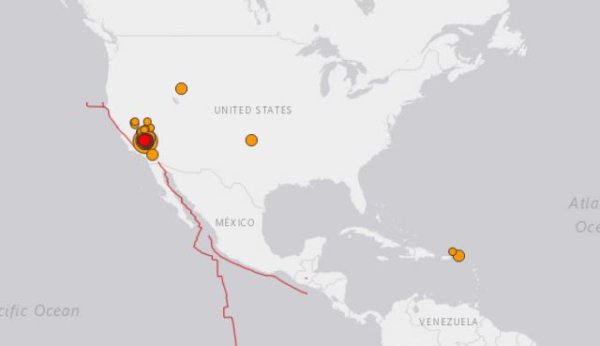
Map of Active earthquakes in Southern California
Best source for earthquake news – USGS

A “robust sequence” of earthquakes.

That quote above is from the eminent seismologist Dr. Lucy Jones. If you’ve watched the news about the earthquakes in California, you’ve seen her.

Here’s a quick report from our community in Southern California.

We’re in Orange County, along the coast in Southern California, about 160 miles from the earthquake epicenter at Ridgecrest, which is more in the center part of the state.

But even here, we felt both of the largest quakes – the 6.4 on July 4th, and the 7.1 yesterday on July 5th. No comparison – that second quake was MUCH bigger! 

When it started, I was seated right here at my computer. The chair seemed to be moving left and right. Then it was definitely moving left and right! That died down, and then things started shaking. The whole house started bumping, rattling, creaking, clunking, blinds banging and banging against the windows! Happily, our lights stayed on. I moved away from the computer and monitor and my bookshelves, but nothing fell.

In the end, things gradually returned to normal. Today, the only damage I could find in my house were three new hairline cracks, perfectly aligned about 4 feet apart, from one side to the other of the tile kitchen floor.

Our neighborhood emergency response team got into action.

We are always preparing for earthquakes in California. Here in our community, several people quickly made phone calls, and we were also able to connect via email, but our main communications took place via walkie-talkies. Within about 5 minutes, neighbors were checking on neighbors and reporting in. Two of our team members monitored the news (using ham radio, too) and shared what they were learning. That info was passed along via the walkie-talkies. Within about 20 minutes, everyone had reported in to our “Command” channel: “People in the streets, no damage.”

What happened in Ridgecrest was far worse, and is a reminder about being prepared.

We should be prepared for any emergency with basic supplies:

  1. Sturdy shoes
  2. Flashlights and lanterns!
  3. First Aid kit
  4. Water
  5. Non-perishable food (in non-breakable containers)
  6. Blankets

In earthquake country, you want to stash these items throughout your house.

An earthquake isn’t like a storm, where you probably have some warning to grab your survival kit and head to shelter. In a quake you will still be at home afterwards, and so you want to be able to get to your supplies even if parts of the home are damaged.

And talk over a plan for contacting family members after an emergency. Be sure to include an out-of-area contact number.

Now, in my case, our out-of-state contact person, my brother – was somewhere on a boat headed to Alaska! So we need to set up a secondary contact right away.

What comes next?

We’ll be operating for a while based on what we learned last night about earthquakes in California. For us, the good news is our neighborhood volunteers were prepared and DID WHAT THEY HAD TRAINED TO DO.  

If you are interested in building a neighborhood emergency response group, or strengthening the one you have, we have resources that can help! Check out our website: https://EmergencyPlanGuide.org! and if you have specific questions, please be in touch directly. We have some real experience — even more today than before — and we’d love to share.

Virginia
Your Emergency Plan Guide team


Day 6 of Summer Vacation: A time for some shorter and lighter Advisories as a welcome change-of-pace! (Or at least, that was the plan!)


Water this summer — too much or too little?

Share

Just a couple of weeks ago I wrote an article about the importance of water this summer for keeping cool – particularly when you have no air conditioning. Then just last Saturday I was on the phone with my son in Germany, talking about keeping his young family safe during the heat wave that was going on in Europe!

At the same time my LinkedIn feed is full of pictures of flooding in the Midwest – often with the caption “No end in sight!”

What do you expect this summer? Too much or too little water? And does it really make a difference?

I think it does. According to the United Nations, “about 90% of all natural disasters are water-related!”

90%? Just think about it. Here are 5 miscellaneous facts that give us an idea of the role water is playing right here, right now in the U.S. I think we should all be familiar with details like these:

  • This year’s floods in Iowa are so bad that Governor Reynolds didn’t even have to do a damage assessment in order to apply for disaster relief.
  • The 2018 wildfires in California (“worst in history) were intensified by nearly 8 years of drought. This summer, utility company PG&E has already begun “Public Safety Power Shutoff’s (PSPS)” to protect from more electrical fires.
  • When Hurricane Florence hit North Carolina in last September, dozens of “hog lagoons” overflowed or were damaged – leaking pig poop onto surrounding acreage and into the groundwater. (Did you realize that over 40% of Americans rely on groundwater for drinking water?)
  • Florida has been in the news lately, not just because of political activity. Turns out that the sea level there is rising by 1 inch every 3 years. Water comes right up through the ground in coastal cities! And saltwater in getting into drinking water and compromising sewage plants.
  • Remember Hurricane Harvey, in Houston? So do the residents there! A study of over 13,000 people shows that mental health damage has had a bigger impact than physical damage. . . both for people whose homes were flooded and those whose homes were spared.

So what can we do about water this summer?

We can’t change the weather. But we can certainly be more aware of how precious clean water really is. We can do our best not to waste or pollute, and we can encourage those around us to do the same.

Virginia
Your Emergency Plan Guide team

P.S. Here in California that drought had an impact on more than the forests. All sorts of restrictions were placed on washing cars, watering lawns, etc. Even today, waiters bring out silverware and menus but not necessarily water. You have to ask for it!

What’s going on in your neighborhood to save water?


Day 5 of Summer Vacation: A time for some shorter and lighter Advisories as a welcome change-of-pace!

Earthquakes continue in Southern California

Share

Even as I write this, aftershocks are showing up, one after another, on my live earthquake map. Make sure you and the ones you love are always ready to drop, cover and hold on, even on a holiday!

Virginia
Your Emergency Plan Guide team

P.S. More info in case you need it:


Day 4 of Summer Vacation: A time for some shorter and lighter Advisories as a welcome change-of-pace!

Take Care of Your Tools

Share

“Take care of your tools and they will take care of you.” This comment seems to refer most often to garden tools.

In today’s Advisory from Emergency Plan Guide, though, taking care of tools refers to the computer tools we are using right now – our computers, tablets, phones – all those digital tools that make it possible to share stories, images and, in this case, blog posts!

Now, I want to be able to finish the 31 days of this summer blog challenge without a computer hitch. So when over the past week I received several warnings, one after another, I paid close attention.

And then I thought of you, and knew you would be interested, too!

Take care of your computer tools!

Here are the three warnings I’ve received in the past couple of weeks.

Warning #1 comes from Avast. It’s about a phishing scam that arrives in an official-looking WordPress email. It urgently requests that you update your username, password, etc. Because you’re a good reader (!), you might notice one little strange grammatical quirk in the email, but MOST people won’t notice it.

Anytime you get an email from what you consider a trusted source (most popular phishing emails come from Microsoft, PayPal, Netflix, banks, etc. ) that urgently demands an update or action on a bill or some such, consider it a scam first and then follow up VERY carefully. (Don’t hit that Update Now button!)

Warning #2 comes from Microsoft. It’s about BlueKeep, a 2019 “worm” affecting older versions of Windows, traveling from computer to computer. The windows versions that are vulnerable: Windows 2003, Windows XP, and Windows 7. If you haven’t been taking care of your tools by updating, do it now! (It you are running Windows 8 and Windows 10 it looks as though you aren’t affected by BlueKeep.)

Warning #3 comes from ithemes Security. Actually, it’s two separate warning reports!  The first lists 9 WordPress plug-ins and themes that have vulnerabilities and the second half of the report lists 19 more. A couple of the plugins have been removed by WordPress; the others have a patch that fixes the problem as long as you update. (I found 3 familiar plugins on these lists, and 2 that I currently use, so this isn’t wildly esoteric stuff.) Here are links to the two reports:

How do I get these warnings?

The reason I get these warnings is because I have installed multiple security software packages on my computer network. Some of them are paid, others free.

The software itself doesn’t necessarily catch everything. I certainly have received my share of fake Wells Fargo phishing emails! But I do get a warning bell from time to time, and questionable emails end up in my JUNK file where I can carefully review them. Plus I get regular alerts like the ones described here.

You can also get warnings simply by setting up a Google Alert.

Are you taking good care of your tools? What security software do you use?

Virginia
Your Emergency Plan Guide team


Day 3 of Summer Vacation: A time for some shorter and lighter Advisories as a welcome change-of-pace!


Dear New Summer Friends

Share
Woman sitting quietly in outdoor setting
Time for a summer break

For my new summer friends — and my older friends, too!

Let me introduce myself . . .

I’ve been active as a “prepper” for over 15 years. It all started when I took a CERT  (Community Emergency Response Team) course sponsored by the city I live in.

Since then I’ve revisited my roots – My parents were pioneers in Alaska during the 30s – and caught up finally with my older brothers — Eagle Scouts in the 50s.

And, of course, I’ve added my own particular brand of activism based on a professional career as copywriter and marketer. Mostly that’s taken the form of helping build a local neighborhood Emergency Response Team right here in my senior retirement community.

And then there’s my writing.

About 8 years ago I started this website, meant to cover all aspects of sensible Emergency Preparedness. Since then I’ve populated it with hundreds of original articles (I call them “Advisories”) about preparing for potential threats, assembling supplies and gear, and getting neighbors involved. Happily, a number of people seemed to like the articles and they keep coming back for more!

Last year, I called on all this history — including words of wisdom from the friends — and wrote 4 books on the topic. Then just last month, I added a 5th title to the list! (See the sidebar.) 

Lots of writing! Maybe too much? 

Lots of thinking and researching disasters! Lots of drafting and redrafting (and learning how to manage a website, too.) When one of my subscribers wrote last week that she was just overwhelmed, I had to admit that it was time for me to take a summer break, too.

Then Digital Maestro Paul Taubman showed up with a summer blogging challenge. This was surely a sign that I should take this opportunity to segue to some shorter and lighter articles. Oh yes, they will still be about emergency preparedness – but in a lighter vein.

So welcome to Summer Vacation!

I hope you’ll read and enjoy and actually follow up on the summer Advisories that make sense for you and your family. You can sign up below to be sure you get all of them. And I invite you to let me know it there are topics you’d like to hear more about.

The way I see it, the more we all know, the safer we all will be!

Virginia
Your Emergency Plan Guide team

Too humid! Too wet! Too much mold and mildew!

Share
hot and humid bathroom mold and mildew

The weather news is filled with stories about too much water.

So when I found a couple of nasty black spots in our shower, it was a sign that I needed to take another look at water conditions right here in my own home! I plunged into some research. Here are my questions and the answers I found.

I hope you will share this info with family and friends. I’m afraid everyone is likely to find mold or mildew in their home at some point!

Mold or mildew in my shower? Which is it?

Turns out that both mildew and mold are fungi that reproduce via airborne spores. Mildew is the wimpy adolescent, mold is the full-grown bully. Mildew is white or gray and often looks like dust; mold is red, black, blue or green and looks stubborn. Either of these is likely to give off a musty, wet-sock smell – you are likely to smell them long before you see them. Both grow on “organic materials” like wood or wood products like paper or drywall, and plants. (And obviously mold can grow on fiberglass shower walls, too!)

How dangerous are mildew and mold?

Most people exposed directly to mildew – like breathing it in – may experience mild symptoms like sneezing, itchy eyes and coughing. If you have asthma it might flare up.

Mold symptoms are worse if people have a mold allergy.  Afew types of mold do produce toxins – like black mold. (Shiny, black, looks like tar – get out now) – but for most people the problem is when they are allergic and/or already suffer from asthma.

Obviously, people exposed to large amounts of mildew or mold, and who already have chronic lung disease, could experience a severe reaction including infections in their lungs.

What makes mold grow?

Mold spores are always in our environment – you can’t escape them.  They only become dangerous when they find perfect growing conditions: a nice porous organic surface to land on, warmth, oxygen, AND the right amount of water. Not all the sources I found were in total agreement, but FEMA and the CDC say that mold can develop within 24-48 hours of finding those conditions!

So how do I avoid mold in my home?

We’re not talking here about coping with the aftermath of a flood. Rather, the next few paragraphs will be about more ordinary conditions.

Here are specific recommendations:

1-Start by checking for leaks and/or signs of mold.  You will know if your roof or windows are leaking. You may never really have looked for leaks under the sinks or behind the washing machine, etc. Check – if those areas are dry now, clean up any mold and fix the leak. If the area is not dry, you may have to call for professional help to replace rotted or moldy wood. If you discover mold in AC ducts, don’t run the HVAC system until you’ve got them cleaned out by professionals.

2-Wipe up spills immediately. Whether it’s a glass of lemonade, a whole bucket of soapy water, or spaghetti sauce that boils over, wipe it up immediately!  Make sure the area is totally dry and clean before you walk away. If the spill is in the bedroom, clean and dry the area immediately. Use a HEPA vacuum cleaner on your carpet. (HEPA stands for High Efficiency Particulate Air and a HEPA filter traps 99% of particles over 0.3 microns in size.)

3-Note and deal with condensation. Just like in the image at the top of this article, our bathroom mirrors fog up when Joe takes a long shower. Yes, we open the window and run an exhaust fan, but it’s still damp. And that must have contributed to those black spots this week!

In the past, I’ve had bedroom windows get wet from condensation, too!  (Though not in this house.) If you experience condensation, the steps to take include:

  • Clean up moldy spots in shower.
  • Squeegee and wipe dry the glass door and tile walls and/or windows after showering.
  • Make sure you have an exhaust fan – run it for 30 minutes after a shower.
  • Consider a dehumidifier.  See below.

4-Your refrigerator could harbor mold. Forgot that meatloaf in the back of the frig? “Expired” food grows mold! And dripping ice maker tubes can, too. Keep your refrigerator cleaned out – and clean!

5-Check houseplants regularly for mold. Gray stuff in the pot? Repot with new soil, treat with fungicide.

6-Don’t forget closets. You can bring in spores on clothing and shoes, particularly if they are damp and don’t get properly dried and aired out before being put away.

If you discover mold, get rid of it!

Alert: Everything I read about mold suggests that you can take care of small mold growths by yourself, but you need professional help for a big job.  What is “big?”  Probably a mold growth greater than 10 sq. feet in size. You may also need professional help if your water and/or mold damage came from contaminated sources (sewage, flooding), or if you know you have health concerns.

If you plan to do the cleanup yourself, wear the right protective gear. I recommend you click on the links below of any products you don’t already own to see if they make sense for you or family members.

  1. Avoid breathing in the spores by using a respirator. Earlier we  wrote about the importance of N95 respirators for managing particles from wildfire smoke. (The 95 means they block up to 95% of airborne particles.) There are also N99 respirators. Even better for a mold clean-up job. Here’s a 12-pack of N99 respirators from Amazon that have all-important exhalation valves.
  2. Protect your eyes from dust and floating spores.  CERT volunteers often are supplied with safety glasses, but if they are just glasses, or goggles with air holes, they’re not right for this job!  You want safety glasses or goggles that fit all around your eyes.  I personally need a model that fits over regular glasses; this link takes you to over-regular-glasses goggles that actually come in a package with N95 respirators, too. I consider this a smart buy.
  3. Wear gloves. Never touch mold with bare hands!  You’ll want sturdy gloves that come well up past the wrist.  The ThxToms  company makes heavy duty gloves in both rubber and latex. (Their rubber gloves are longer and cheaper!)
  4. Wear long sleeves, long pants, and closed shoes.

As for cleaning materials, you can buy commercial products or use common household cleaners.

Some recommended anti-mold products that are made specifically to kill the mold or mildew and also remove stains. In each case you leave them a while to work their magic and then rinse off.

You may already have on hand one or more of the natural cleaners listed below.

  • Scrub mold spots off with a brush and spray with white vinegar. Let dry. No need to rinse. Use the spray and let dry after every shower.
  • Same approach using a mixture of 1 cup Borax with 1 gallon water, spray on, let dry.
  • As a last resort, mix 1 part bleach to 10 parts water, spray and let dry. Bleach is more toxic.

For all the above, be sure to wear gloves and eye protection and make sure area is ventilated.

A final note about humidity.

Every article I read about mold mentioned the role of humidity in mold’s growth. Of course, humidity is important to our overall health and sense of comfort. Several different sources rated the ideal relative humidity for health and comfort as being about 40-50%. In the winter, humidity may have to be lower than that to avoid condensation.

How do I know how humid it is?

The answer to this question is simple. Buy a hygrometer so you can check! Get a simple one with big print and carry it around with you to test bedroom, bathroom, etc. The one below costs less than $10! (Click the image to get exact price and details.)

And if the relative humidity in your bedroom or bathroom is too high?

A dehumidifier can make all the difference to health and comfort.

Dehumidifiers work rather like refrigerators. They suck in the humid air and run it over refrigerated coils. The water condenses on the coils and drips down into a bucket, and warm dry air is blown back into the room.

The capacity of a dehumidifier is measured in how many PINTS of water it can remove from the air per day! A one-smallish-room may require a 30 pint machine; a large basement might require a 70 pint machine. Here are positively-reviewed examples from Amazon. Click on the links to get details and prices.

hOmeLabs 70 Pint Dehumidifier Featuring Intelligent Humidity Control – Energy Star Rated, Ideal for Large-Sized Rooms and Basements to Remove Moisture-Related Mold, Mildew and Allergens

And a smaller version:

Vremi 30 Pint Energy Star Dehumidifier for Medium to Large Spaces and Basements-Quietly Removes Moisture to Prevent Mold and Mildew, White

Too much humidity, too much mold, too much mildew! Not good! If you have any of these in YOUR home, you will want to make a plan to deal with them starting now.

Good luck!

Virginia
Your Emergency Plan Guide team

P.S. I cleaned up my shower with white vinegar and an old toothbrush. The spots have not returned!


CERT Challenge: Overcoming Apathy and Procrastination

Share
“How prepared are they?”

We sat at the 2nd Wednesday monthly meeting of our CERT Leaders and stared gloomily as one of our members gave yet another status report about some of “her” residents in the community. “Not one extra can of food. Not one extra bottle of water.”

Her neighborhood had many elderly residents. In some cases, residents are handicapped by lack of funds. In others, the reason is plain apathy, procrastination or worse. You may hear: “It’s the government’s job to provide for us in an emergency.”

Are “governments” responsible to care for us in a disaster? How capable are they?

We saw an answer to the second question in interviews by the media following Hurricane Sandy’s damage in New Jersey. Local and state governments were overwhelmed and unable to respond. Likewise, relief agencies like the Red Cross and Salvation Army were also overtaxed by the enormity of the event. Some people went weeks without services.

More recently, we watched the Federal Government pretty much abandon the victims of Hurricane Maria, in Puerto Rico.

And here in California, huge fires have pulled emergency responders from communities distant from the fires and even from other states — leaving the people left at home without full protection for days and even weeks.’

These disasters damage communities and even destroy them. And usually, it’s people who are less affluent who suffer the most.

And these disasters pose an important question for all of us: What can we do to help? Are we doing it?

And the most difficult version of that same question:

Are we prepared to share with people who ignored warnings?

Are we ready to care for irresponsible neighbors as well as ourselves in a disaster scenario? That question presents responsible citizens with untenable choices.

Here in our neighborhood we are admittedly better prepared than most. Over 70% of our residents indicate that they have some food and water set aside for emergencies, largely as a result of ongoing education programs that span a decade.

But 70% isn’t 100%. More needs to be done.

Never stop educating people on the realities of a disaster.

Here in our neighborhood we regularly publish “educational bulletins” and, when circumstances allow, bring in guest speakers to talk about preparedness. Some of the best bulletins:

  • Recognize a gas line leak. (Gas company)
  • Clean up around the house to prevent a wildfire. (Fire Department)
  • Vial of life — important emergency info for the refrigerator.

Some of our most successful meetings:

  • What’s in your emergency kit? (Show and tell!)
  • Try out a fire extinguisher! (Thanks to Fire Department)
  • Retrofit your home to withstand an earthquake. (Neighborhood contractor)

Maybe if we make a party out of preparing for emergencies . . .

Every neighborhood volunteer group is always looking for ways to engage new neighbors. We hear about some of the good ones!

During a power outage, one neighborhood held a “Power Outage Picnic.” People brought meat to the party and a couple of volunteers with gas-burning grills cooked it up for everyone to share! By lantern light!

We held an “emergency preparedness fair” sponsored by the local hardware store. They brought dozens of items as demos, then handed attendees a coupon for 20% off if they would come to the store to buy.

After all these years of coming up with educational ideas and trainings, we finally put together a whole book with ideas for 21 activities to help overcome apathy and procrastination. That book has been our consistent best seller! If you are looking for some inspiration, consider getting a copy for YOUR neighborhood.

Emergency Preparedness Meeting Ideas

Each one of the activities comes with objectives, procedures, materials you’ll need, and commentary. And there’s a separate planning sheet for each activity to make it easy for volunteers to step up and take a turn as host. You can find out more about Meeting Ideas here.

The point of all this? Leaders have to recognize that preparedness is an ongoing challenge. You may have to wheedle or even use a little guilt now and then to get people to take action. But with a few ideas and some energetic team members, you can make a big difference in how resilient your community will be.

We think it’s worth it. That’s what this website is all about!

Heat Wave!

Share

As I am writing at my desk today, the Accuweather headline reads:

“Rare June heat wave grips San Francisco as triple-digit heat stifles West.”

I didn’t need to read it. I have been feeling it, even though we’re a good 450 miles south of SF! And I’m feeling it enough that I wanted to learn more.

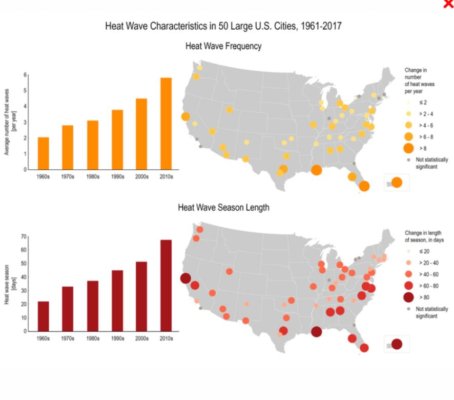
The chart below shows heat wave trends: the number of heat waves happening in a year, in yellow, followed by the length of the heat wave season, in red. The figures start in the 60’s and continue up until 2010. you may not be able to read the fine print, but it’s clear enough that everything is trending UP. Higher temps, longer seasons.

So what exactly is a heat wave?

For the chart, “heat wave” is defined as follows: a period of two or more consecutive days where the daily minimum apparent temperature (actual temperature adjusted for humidity) in a particular city exceeds the 85th percentile of historical July and August temperatures (1981–2010) for that city.

Glad I’m not in San Francisco!

OK. But chances are that you will experience a heat wave at some point. And it could be deadly. According to the Centers for Disease Control and Prevention, on average, over 600 people die in the U.S. each year from complications related to extreme heat. That’s more than tornadoes, hurricanes, flooding, lightning or any other weather event combined! (on average, remember)

What do we need to know?

Maybe you can turn this into a little quiz?

  1. Which is more dangerous, hot days or hot nights? Answer: nights can be the most dangerous. If the body can’t cool down, your heart has to work overtime to try to regulate your body temperature.
  2. Which is more important, heat or humidity? Answer: It’s the combination. Normally, your body cools when it sweats. If humidity is too high, you can’t sweat. Watch for the expression “heat index.” It combines temperature and humidity.
  3. Why are cities more dangerous than rural areas in a heat wave? Answer 1: When there’s no breeze, air in a city degrades. Pollution is captured. People with respiratory difficulty suffer. Answer 2. Asphalt and concrete store daytime heat and release it at night, adding to the hot temps mentioned in Question 1.

Why aren’t they turning on their A/C in S.F.?

Easy question. Answer? Because only 36% of homes in SF have air conditioning!  And today, just across the water in the East Bay, in Lafayette and Walnut Creek, where air conditioning may be more widespread, there have been repeated power outages!

Wait. Power outages, too?!

Yes. The science goes something like this.

Hot weather means more people want air conditioning, so they demand more power. More power flowing through wires makes them hot. Outside heat makes them hot, too. The hotter they get, the less power they can carry. When wires (made of metal) get hot, they droop and ultimately may even hit bushes or the ground. Short circuit! The line goes down. The demand for power stays high and power is now directed through other wires. They start getting overloaded, getting hotter, etc., etc.

The system may experience a brownout (partial loss of power) or a blackout (complete loss of power), often created on purpose by the utility company to protect the system.

During a heat wave, take these sensible steps.

  1. Pay attention to the weather report so you know a heat wave is coming. Get an NOAA radio.
  2. Have plenty of water in your emergency supplies. Be sure you and everyone in your family stays well hydrated.
  3. If you don’t have air conditioning, find out where you can go that does: library, mall, movie theater.
  4. Protect the interior of your home from direct rays of the sun and from outdoor heat.  Use shades, awnings, temporary reflectors in the windows.
  5. If possible, cool off the house at night.  See if you can create cross ventilation by strategic opening of windows and doors. Shut the house down as heat begins to build.
  6. Cook outside.
  7. Wrap a damp towel around your neck. Wrap your whole body with a damp sheet. Evaporation works!
  8. Sit with your feet in a bucket of water – or a baby wading pool.
  9. Wear light clothing. Postpone your outdoor exercise!
  10. Never leave children or pets in a closed car.

Take action if you see someone getting ill from the heat.

The Red Cross describes three heat-related conditions. Know the symptoms and how to respond.

Heat Cramps – Usually occur in legs or abdomen. Get person to a cool place, gently massage the cramps. Give liquids (sports drinks, fruit juice, water).

Heat Exhaustion – Affects people working in the heat.  Signs: face is pale; headache, nausea, dizziness, weakness. Get person to cooler place. Loosen or remove clothing. Apply damp cloths. Fan or spray. Give small amounts of liquid.

Heat Stroke – This is life threatening. Body is overwhelmed and stops functioning. Signs: high body temperature, skin is hot and red. May be in and out of consciousness. Rapid, weak pulse, rapid breathing.  May vomit. Call 911 and apply rapid cooling measures: cold bath up to neck, wrap with ice-water-doused towels, spray with cold water.

Make some preparations NOW.

Learn the signs of the heat-related conditions above so you won’t have to hesitate to help someone. Be sure you have plenty of water stored in case the power goes out. Be ready to block windows using cardboard or cardboard covered with aluminum foil.

And consider investing in battery-operated fans.

Portable fans are convenient and could make all the difference for comfort – and even health — in a heat wave. Don’t be fooled thinking that they will blow as powerful a stream of air as a big electric powered fan – but the convenience of being able to place a fan right in front of you can’t be underestimated. And if the power is out, you’re really going to need that fan.

I’ve used “personal fans” in an office setting, those with a 4 in. diameter and a couple of speeds. Fine for taking the edge off, but in a real heat wave you may want a larger blade.  If you intend to use a fan to keep a baby cool, consider the models that have a heavy-duty clip.

Some fans operate on rechargeable batteries, others on regular batteries. Typically, the more batteries required, the longer the fan will run. If you select the low speed, your batteries will last longer, of course.

Here are a few battery-operated fans that have received good reviews. You might want to get a couple of different ones, and then, if you need more, get another of the one you like best! Click the image or the link to check prices at Amazon.

1-This first example uses 6 D batteries; it can also run on AC power using the adapter that comes with it. Very compact.

O2COOL Treva 10-Inch Portable Desktop Air Circulation Battery Fan – 2 Cooling Speeds – with AC Adapter

2-Here’s a second example. It’s slightly smaller, but has more options including a swivel head and 3 speeds.

Battery Operated Fan, viniper Rechargeable Fan : 180° Rotation and 3 Speeds Strong Wind Portable USB Quiet Fan, Optimised Battery & Longer Working Hours, Strong Cooling (6.2 inch, White)

3-This tower fan intrigued me because I own an electric tower fan and use it frequently right over my desk. This one looks as though it could be directed to provide a breeze for two people! Naturally, it’s larger – and costs more.

OPOLAR [2019 New] Cordless Rechargeable Oscillating Tower Fan, 5000mAh Battery Operated Desk Fan, with 3-12H Working Hours, Quick Charge, for Travel, Camping and Outdoor Activities

4-And if you need the reassurance that the fan won’t creep or get knocked over, here’s one with a clip – and 4 speeds.

OPOLAR 10000mAh 8-Inch Rechargeable Battery Operated Clip on Fan, 4 Speeds Fast Air Circulating USB Fan, Sturdy Clamp Portable for Outdoor Camping Tent Golf Cart or Treadmill Personal Office Desk

I have lived through plenty of hot summers, but only experienced one heat-related incident. That was enough to make me serious about being sure it doesn’t happen again. I have my own fans at the ready!

Virginia
Your Emergency Plan Guide team

The incident? I was volunteering at a Rotary Club BBQ fund-raiser, busy managing the baseball toss. Back and forth, pick up the balls, joke with the players, etc. All of a sudden I realized my vision was narrowing, I felt I was going to throw up, and I couldn’t walk without paying VERY close attention. Heat exhaustion! I made it to a bench in the shade and just lay there sipping on a bottle of water, not really moving, and after a half-hour or so felt pretty much back to normal. To this day I remember the hardness of that bench!