
Toilet News: The Three P’s of What to Flush

 Today is September 1. Today, in Japan, hundreds of thousands of people are taking place in a disaster drill on the anniversary of the 1923 Great Kanto Earthquake. And this year, they are being encouraged to stockpile toilet paper.
Japan’s disaster planning may have started in earnest in 1923, when 140,000 people were killed in Tokyo alone. And planning has intensified as a result of the 2011 Fukushima tsunami and resulting atomic power plant catastrophe.
But why a campaign to . . .
Stockpile toilet paper?
It turns out that some 40% of all toilet paper in Japan comes from one region – a region that is earthquake prone. According to government reports, within a month after the 2011 earthquake, toilet paper shortages began.
“Along with food and water, toilet paper was among the first items to disappear from store shelves,” said Toshiyuki Hashimoto, an industry ministry official in charge of paper products.
As part of this year’s campaign, paper manufacturers have come up with a special, 500 ft. roll of tightly compacted toilet paper. Price? Around $5 for a six-pack, that should last a family of four for a month.
No toilet paper in your house?
And in the U.S.? What do you do when you run out of toilet paper?
Most people reach for a tissue.
The problem? Kleenex, or tissue paper, is designed to hold together when wet – so it can block your toilet (if you are lucky enough in an emergency to have workable plumbing).
What about baby-wipes?
These are great for your baby, and for your emergency kit – soft, strong. But again, unless they are specifically labeled as “flushable,” they too will clog the system . . . and really mess up a septic tank.
And even the flushable variety is creating problems in many systems, because they take too long to disintegrate.
Anything else at hand?
We’ve heard of people using other items as toilet paper in an emergency: paper towels, newspaper, the Yellow Pages (Who has a phone directory anymore?), Sears and Roebuck catalog (stopped being published in 1993) and even corn husks. (Corn husks?)
The point is, consider how much toilet paper (or wipes) your family would need in an emergency. Flatten rolls so they will take up less room. This is something you really don’t want to run out of.
If you’re interested in buying something specifically for your emergency supplies, try Amazon for “compact” toilet paper.
Oh, and to get back to the . . .
Three P’s of what to flush?
Whether it’s every day, or in an emergency, the answer is the same: pee, poop and (toilet) paper. Period.
Your Emergency Plan Guide Team — Virginia Nicols
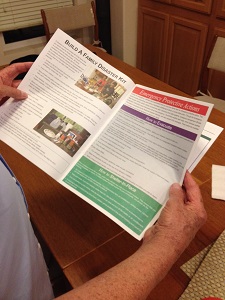 • My friend Russell sent me a copy of a booklet passed out at his kids’ school. You’ll see it in the picture. It is packed with valuable information, pulled from a variety of sources. Because it IS so packed, though, no child would ever start reading it. Even a parent would be hard pressed to get through it. The booklet could answer questions 1 and 2 above.

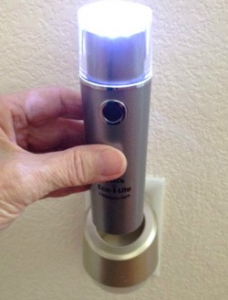 At about 4:30 p.m. last Saturday, with temperatures hovering around 92 degrees, I was working at my desk when WHAM!, the power went off.
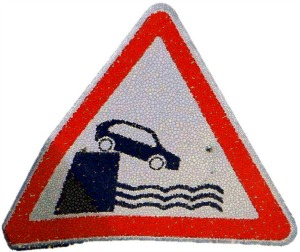 Some 400 people drown each year in the U.S. from being trapped in sinking cars. Don’t be one of them.
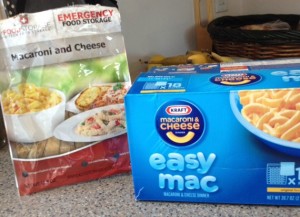



 Setting: In the rental office, talking to the woman behind the desk.

 One of my daughters is an executive and works in Beverly Hills, California. With no real public transit available she is forced to drive over 100 miles to and from work, spending a total of almost four hours on the road every day. Every morning she sets out in her executive clothing and footwear and with a list of business phone calls to make along the way.
 Rebuilding in disaster-prone areas is a big issue.
 If someone said to evacuate RIGHT NOW, would you be ready?